Chicken Parmesan Recipe: 7 Easy Steps for a Foolproof Crispy Dinner
Chicken parmesan recipe done right means a crust that holds its crunch after the sauce goes on, chicken that stays tender through the bake, and mozzarella that melts into every ridge of the breadcrumb coating. This version uses pantry staples, takes 35 minutes from start to finish, and hits a result that makes delivery look like a downgrade. Work through these seven steps once and the method becomes automatic.
Snippet answer: Chicken parmesan recipe is a breaded chicken breast pan-fried until golden, then topped with marinara sauce and shredded mozzarella and baked at 400 F for 12 to 15 minutes. The total process takes about 35 minutes and produces a crispy exterior with juicy meat and a rich, melted cheese topping.
Why You Will Love This Chicken Parmesan Recipe
- The crust stays genuinely crunchy because the chicken is fried before the sauce is added, not after — the coating sets in hot oil first, so the baking step finishes the cooking without softening what the pan built.
- Total time is 35 minutes, which puts this in realistic weeknight territory rather than a project you save for the weekend.
- Every component has a reason: the flour layer gives the egg something to grip, the egg binds the breadcrumbs, and the Parmesan in the coating adds a sharp, nutty depth that plain breadcrumbs alone cannot.
- The breaded chicken can be prepped and refrigerated uncovered on a wire rack up to 8 hours in advance, and that resting time actually improves the crust when it fries.
- This is the kind of meal that earns repeat requests — reliable enough to become a regular rotation dish without any adjustment.
Recipe Snapshot
Servings: 4. Difficulty: Medium. Cuisine: Italian-American. Course: Main Dish. Prep Time: 15 minutes. Cook Time: 20 minutes. Total Time: 35 minutes.
Ingredients You Will Need For Chicken Parmesan Recipe
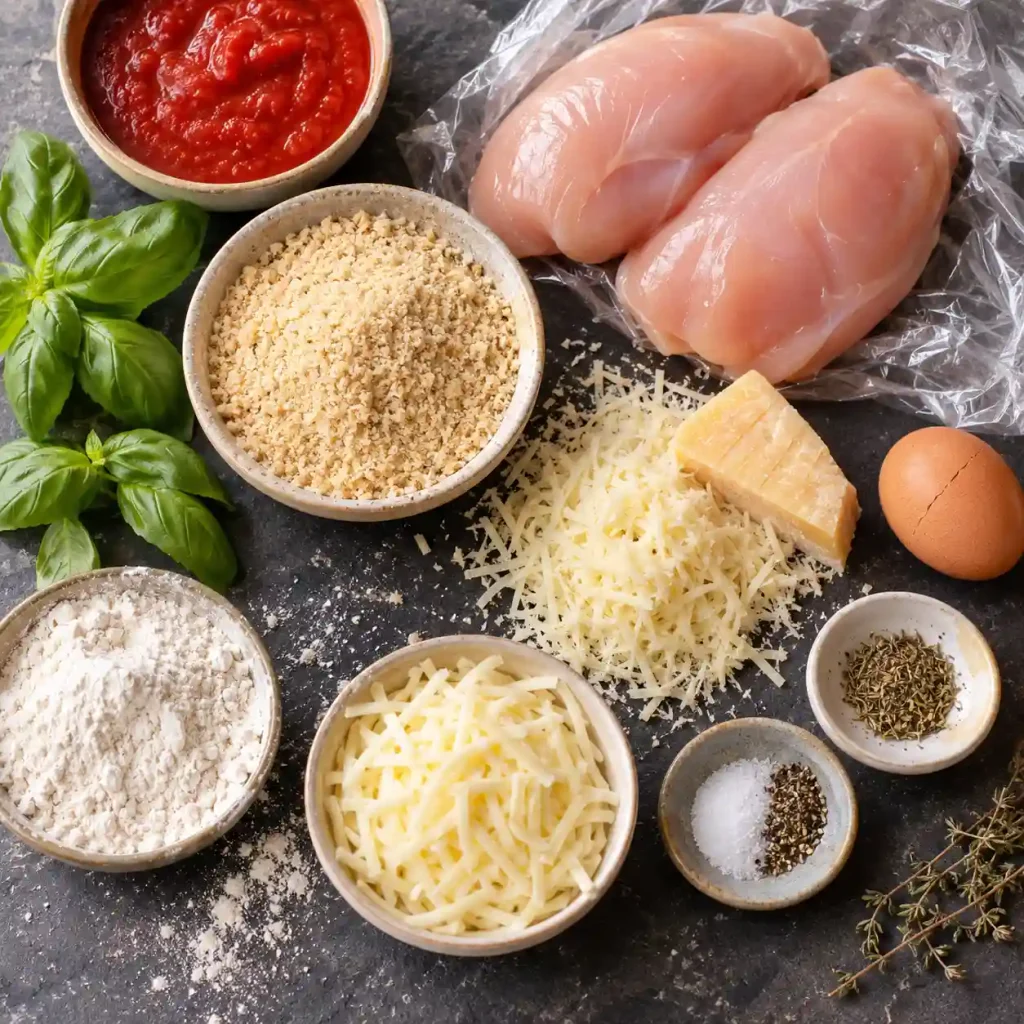
- 4 boneless, skinless chicken breasts (about 6 oz each) – pound to a consistent 1/2 inch thickness so every piece cooks at the same rate
- 1 cup Italian seasoned breadcrumbs – the built-in seasoning saves time and layers flavor directly into the crust
- 1/2 cup finely grated Parmesan cheese – adds sharpness and helps the coating brown more deeply in the pan
- 2 large eggs, beaten – the binding layer that holds the breadcrumbs to the surface of the chicken
- 1/2 cup all-purpose flour – creates the dry base the egg can actually cling to
- 1 1/2 cups marinara sauce – use a thick store-bought version; runny sauce spreads too far and softens the crust
- 1 1/2 cups shredded low-moisture mozzarella, halal-certified – low-moisture mozzarella melts evenly without releasing water onto the plate
- 2 tablespoons olive oil – for pan-frying; any neutral oil works if olive oil is unavailable
- 1 teaspoon garlic powder – blends into the breading without the risk of burning that fresh garlic carries
- 1 teaspoon dried Italian seasoning – provides consistent herbal depth throughout the crust
- 3/4 teaspoon salt and 1/2 teaspoon black pepper – for seasoning the chicken itself, which the coating cannot do on its own
Recipe Timing
Prep Time: 15 minutes. Cook Time: 20 minutes. Total Time: 35 minutes. Total Time is confirmed as Prep Time plus Cook Time.
Easy Substitutions and Halal Alternatives
No Italian breadcrumbs? Use plain breadcrumbs with 1/2 teaspoon each of garlic powder and dried oregano — the crust comes out nearly identical. No Parmesan? Pecorino Romano swaps directly and gives a slightly sharper result. For dairy-free, replace Parmesan with nutritional yeast and use a certified dairy-free shredded mozzarella — the crust still crisps in the pan and the dish bakes well. For full halal compliance, confirm your cheeses use microbial rennet rather than animal rennet, or look for a halal-certified label.
Allergen Information
This recipe contains gluten (flour and breadcrumbs), eggs, and dairy (Parmesan and mozzarella). Check all ingredient labels carefully, particularly for shared-facility allergens.
How To Make Chicken Parmesan Step by Step
Step 1: Place each chicken breast between two sheets of plastic wrap and pound to an even 1/2 inch thickness using a meat mallet or the base of a heavy skillet. Even thickness is the single biggest variable in whether the chicken cooks through without drying out at the thinner edges. Once pounded, season both sides generously with salt, pepper, garlic powder, and Italian seasoning.
Step 2: Set up your breading station with three shallow dishes in a row — flour in the first, beaten eggs in the second, and the breadcrumbs combined with the Parmesan in the third. Having them in order left to right keeps the process clean and stops you from mixing the coatings.
Step 3: Work each chicken breast through the station in order: a thin dusting of flour (shake off anything that does not stick), a pass through the egg wash, then press firmly into the breadcrumb-Parmesan mixture on both sides until fully covered. Press with an even hand — gentle enough to coat well, not so hard that the crumbs compress into a paste.
You are past the trickiest coordination point in this recipe. Getting an even coating without clumping or bare patches takes focus, and you have managed it. The crust should look uniform with no raw chicken surface showing through anywhere.
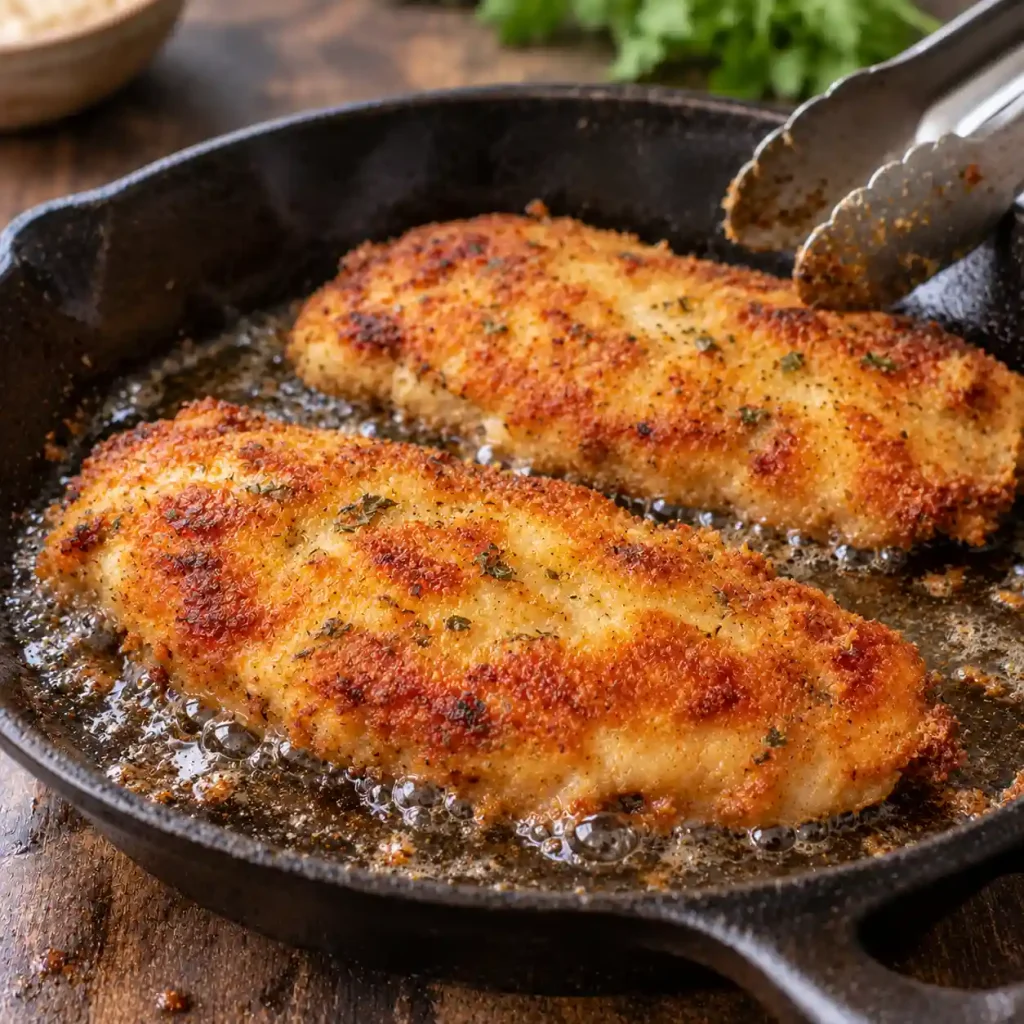
Step 4: Heat the olive oil in an oven-safe skillet over medium-high until it shimmers visibly. Add the breaded chicken and fry for 3 to 4 minutes per side until the crust is a deep, even gold. Do not press the chicken down into the pan and do not attempt to flip it early — a properly formed crust releases on its own once it is ready.
FOOD SAFETY NOTE: Chicken must reach a minimum internal temperature of 165 F (74 C). USDA guidelines recommend confirming this with an instant-read thermometer inserted at the thickest part. Wash hands and any surface that contacted raw chicken before proceeding to the next step.
Why this works: Frying first builds a sealed, crunchy crust that traps moisture inside the meat. If you baked the breaded chicken without frying first, the coating would steam as the oven heated it and turn soft and pale rather than developing real crunch.
Step 5: Spoon about 2 tablespoons of marinara directly onto each piece of chicken in the pan, then cover each one with a generous handful of shredded mozzarella. Keep the sauce layer thin and even — too much sauce sitting on the crust during baking is the most direct route to a soggy result.
Solid work. The hardest decisions in this recipe are behind you, and this is the moment where the dish starts looking like the finished thing.
Step 6: Preheat your oven to 400 F (200 C) if you have not already started it. Transfer the skillet to the oven and bake for 12 to 15 minutes until the cheese is fully melted and beginning to bubble at the edges. Switch to broil for the final 2 minutes to get a golden, slightly blistered cheese surface. Stay in front of the oven at this stage — broilers work in under a minute and the gap between golden and burnt is narrow.
Step 7: Pull the skillet from the oven and let the chicken rest for 3 to 5 minutes before cutting into it. Resting gives the juices inside the meat time to redistribute rather than running out immediately when you slice. Add a few loosely placed basil leaves and serve over pasta or alongside garlic bread.
Pro Tips While Making Chicken Parmesan Recipe
If the breading slides off during frying, the most common cause is moisture on the chicken surface before it touched the flour. Pat each breast completely dry with a paper towel before the first coating — this one step determines whether the crust bonds or peels. If the mozzarella is not browning under the broiler, move the oven rack one level higher and watch closely for the final 2 minutes. If your sauce spreads too thin when you spoon it, reduce it for a minute in a small pan before applying — thicker sauce stays where you put it.
Best Tips For Perfect Chicken Parmesan Every Time
Pound the chicken to an even 1/2 inch before anything else. Uneven thickness means the thin edges overcook while the thick center finishes, and no amount of technique in the later steps compensates for that basic difference in the meat.
The most common beginner mistake is flipping the chicken too soon during frying. A properly formed, set crust lifts cleanly from the pan on its own when it is ready. If it resists, give it another 30 seconds before trying again rather than forcing it and tearing the coating.
To keep this dish at its best for a larger group, bread all pieces up to 8 hours ahead and refrigerate them uncovered on a wire rack. The airflow over the surface helps the coating dry slightly, which produces a noticeably crispier result when the chicken hits the hot oil.
The oven is the only reheating method worth using for this chicken parmesan recipe. Place leftovers on a wire rack over a baking sheet at 350 F for 10 to 12 minutes uncovered. The microwave turns the crust chewy and the cheese rubbery, which undoes everything the original cooking process achieved.
Chicken parmesan freezes well when the pieces are frozen before the sauce and cheese are added. Wrap each fried and baked breast tightly in foil, store for up to 2 months, and apply sauce and mozzarella fresh during the final 10 minutes of reheating from frozen. Freezing with toppings already applied leaves you with a soft, saturated crust after thawing.
To scale this recipe for 8 people, double every quantity and use two baking dishes side by side rather than one crowded pan. Steam buildup from packed pieces is enough on its own to soften the crust during the bake.
Common Mistakes and Troubleshooting
A soggy crust has three likely causes: oil that was not hot enough when the chicken went in, a sauce layer that was too thick, or the dish being covered while it rested. All three are fixable — start with oil that shimmers, keep the sauce thin and even, and always rest uncovered on a wire rack or flat surface with airflow underneath.
Dry, overcooked chicken is almost always the result of uneven thickness or too long in the oven. Pull the chicken when it hits 165 F internally rather than timing it by the clock — thin pieces may reach that temperature well before the 15-minute mark.
Cheese that slides to one side or pools at the base is a sign the mozzarella contained too much moisture. Pre-shredded low-moisture mozzarella from a bag melts evenly and stays put. Fresh ball mozzarella releases too much water for this preparation and is better suited to dishes where liquid is welcome.
A bland result despite following the recipe almost always traces back to unseasoned chicken underneath the coating. The breadcrumb-Parmesan crust adds surface flavor but cannot season the meat — both layers need attention separately.
Delicious Variations of Chicken Parmesan To Try
For a spicy version, swap the marinara for arrabiata sauce and add 1/2 teaspoon of red chili flakes directly into the breadcrumb mixture. Heat comes through at every layer without the sharpness being concentrated in just the sauce.
A milder, kid-friendly option uses a low-sodium, slightly sweet marinara and adds an extra handful of mozzarella so the overall flavor tilts toward creamy rather than tangy. Kids tend to eat this version without renegotiation.
For a dairy-free result, replace the Parmesan in the crust with nutritional yeast and use a plant-based shredded mozzarella. The crust still crisps in the pan and the bake goes exactly as written — no adjustment to timing or temperature needed.
A lighter baked version skips the frying step entirely. Spray the breaded chicken generously with cooking spray and bake at 425 F for 18 to 20 minutes before adding sauce and cheese. The crust will not be as pronounced, but the dish is noticeably lighter and still satisfying.
For a restaurant-style upgrade, make the sauce from scratch with canned San Marzano tomatoes, olive oil, fresh garlic, and torn basil simmered for 15 minutes, then layer fresh buffalo mozzarella instead of shredded. Broil only until the cheese just begins to melt at the edges rather than fully bubbling — the result looks significantly more refined.
Serving Suggestion
Serve over spaghetti with extra marinara spooned alongside, which is the most natural pairing and gives the pasta something to absorb at the base. Garlic bread rounds out the meal without extra cooking time. A simple arugula salad with lemon juice and olive oil works well as a side because the bitterness and acidity cut through the richness of the cheese. For plating, angle the chicken slightly over the pasta rather than laying it flat — this shows the layers of crust, sauce, and cheese from the side rather than hiding them.
Storage, Reheating and Freezing
Store leftovers in an airtight container in the refrigerator for up to 3 days. If stacking pieces, separate them with parchment paper so the cheese does not bond them together during storage. To reheat, place on a wire rack over a baking sheet in a 350 F oven for 10 to 12 minutes uncovered — this is the only method that brings the crust back to a reasonable texture. For freezing, wrap each piece individually in foil without sauce or cheese and store in a freezer bag for up to 2 months. When reheating from frozen, bake at 375 F for 20 to 25 minutes and add sauce and mozzarella during the final 10 minutes.
Frequently Asked Questions About Chicken Parmesan Recipe
Can I make the chicken parmesan recipe ahead of time?
Bread the chicken and refrigerate it uncovered on a wire rack for up to 8 hours before frying. The cold, dry air exposure sets the coating and results in a crispier crust when it hits the hot oil. Fry and bake as directed on the day of serving. Follow this approach and your result will be just as good as a same-day prep, with less active time on a busy evening.
How do I make chicken parmesan without fresh mozzarella?
Pre-shredded low-moisture mozzarella from a bag is actually the better choice for this preparation. It melts at an even rate, does not release excess water onto the plate, and covers the surface consistently across every piece. Use about 1 1/2 cups total and distribute it generously over the sauce layer before baking. The easy chicken parmesan for weeknight dinner comes out with clean, fully melted coverage that holds through to the last bite.
Can I freeze chicken parmesan?
Freeze the pieces before adding sauce and cheese for the cleanest result. Wrap each fried and baked breast individually in foil and store in a labeled freezer bag for up to 2 months. Reheat from frozen at 375 F for 20 to 25 minutes and add sauce and shredded mozzarella during the final 10 minutes. Freezing with toppings already applied leaves the crust soft and waterlogged after thawing, which does not recover in the oven.
How long does chicken parmesan last in the fridge?
This chicken parmesan recipe stays good for up to 3 days when stored in an airtight container in the refrigerator. After that point, the breading softens considerably and the texture loses most of what made it worth eating in the first place. Reheat in the oven rather than the microwave to recover as much of the original crust as possible. Eat it within 3 days and it tastes close to the day it was made.
Why is my chicken parmesan recipe turning out soggy?
The three most common causes are oil that was not fully hot before the chicken went in, a sauce layer that was applied too thickly, and covering the dish while it rested after baking. Make sure the oil shimmers before the chicken touches it, apply the sauce in a controlled, thin layer, and always rest the finished dish uncovered. Fix those three points and the crust on your chicken parmesan recipe will hold its texture from pan to plate.
Can I make this chicken parmesan recipe gluten-free or dairy-free?
For gluten-free, replace the all-purpose flour with rice flour or a certified gluten-free blend and use gluten-free Italian breadcrumbs — the crust still develops color and texture in the pan. For dairy-free, use nutritional yeast in place of Parmesan in the coating and a plant-based shredded mozzarella for the topping. Both substitutions follow the same technique without any change to timing or oven temperature. The dish comes out fully recognizable either way.
Conclusion
This chicken parmesan recipe is reliable by design. The seven steps build on each other logically — dry chicken, proper breading order, hot oil, thin sauce, a quick broil — and once you have run through it once, the whole process takes less mental effort the next time. The combination of a crunchy crust, tangy marinara, and melted mozzarella lands consistently at 35 minutes. Double the batch if you want leftovers that hold up well through the week.
Chicken Parmesan Recipe
Ingredients
Method
- Pound chicken to 1/2 inch thickness. Season both sides with salt, pepper, garlic powder, and Italian seasoning.
- Set up three shallow dishes: flour, beaten eggs, breadcrumbs mixed with Parmesan.
- Coat each piece in flour, then egg, then press into the breadcrumb mixture on both sides.
- Heat olive oil in an oven-safe skillet over medium-high until shimmering. Fry chicken 3-4 minutes per side until deep golden.
- Spoon 2 tablespoons marinara over each piece, then top with shredded mozzarella.
- Bake at 400 F (200 C) for 12-15 minutes. Broil for the final 2 minutes until cheese is golden.
- Rest 3-5 minutes. Garnish with basil and serve immediately.
Notes
Calories: 490 | Protein: 52g | Fat: 18g | Carbs: 25g | Fiber: 2g | Sodium: 910mg
Nutrition values are estimates only and may vary based on specific ingredients used.