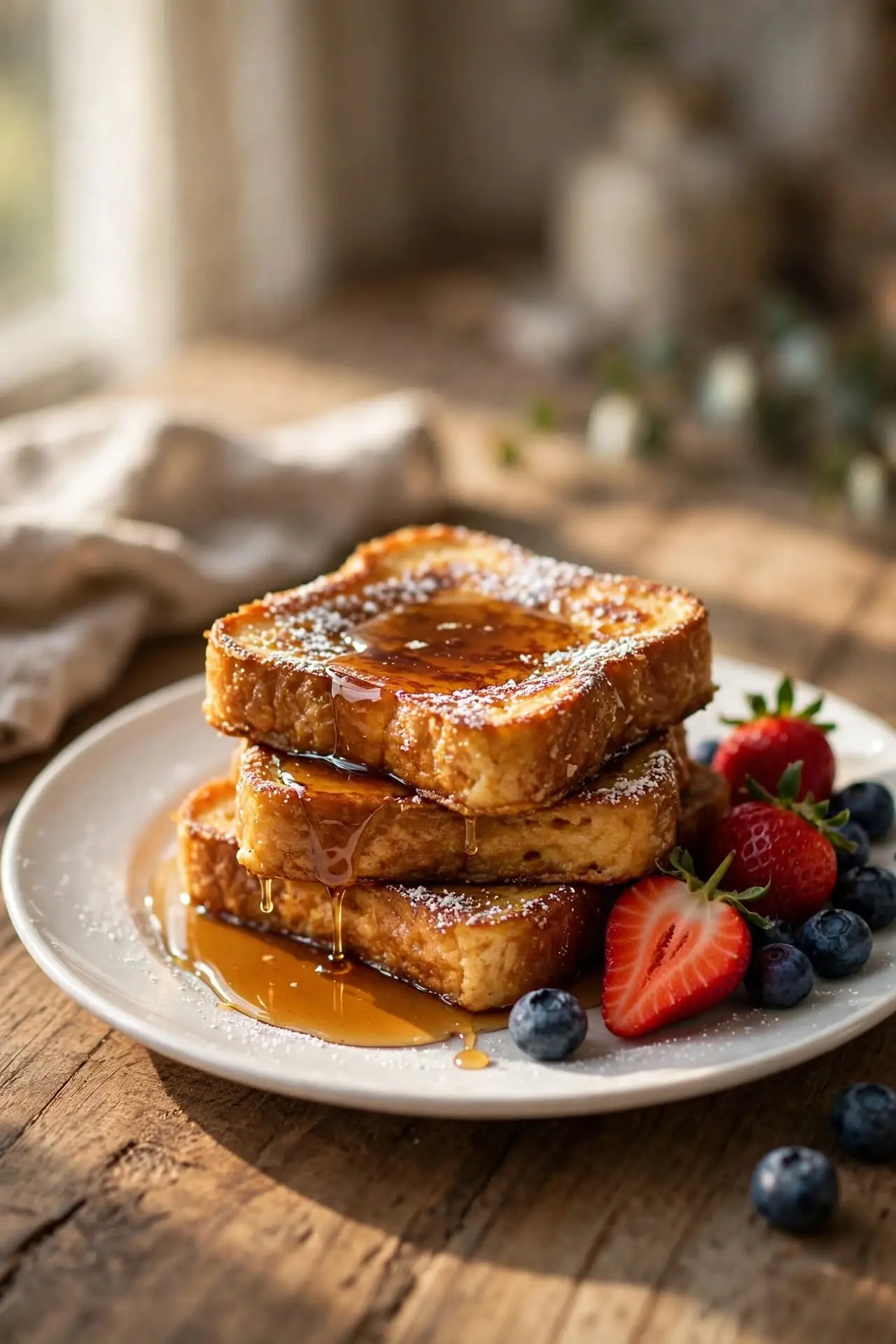
Classic French Toast Recipe — Custardy, Golden, and Worth Every Bite
There’s a specific moment on a slow weekend morning when you open the fridge, see half a loaf of bread and a carton of eggs, and realize breakfast can be genuinely good without any real effort. That’s French toast. Done right, it has a crisp golden crust and a soft, almost pudding-like inside, and it comes together in under 30 minutes with ingredients you already have.
This French toast recipe uses a simple custard ratio that works every single time. The bread gets properly soaked, the pan gets properly hot, and you end up with slices that are rich without being eggy, sweet without being cloying, and sturdy enough to hold up to toppings.
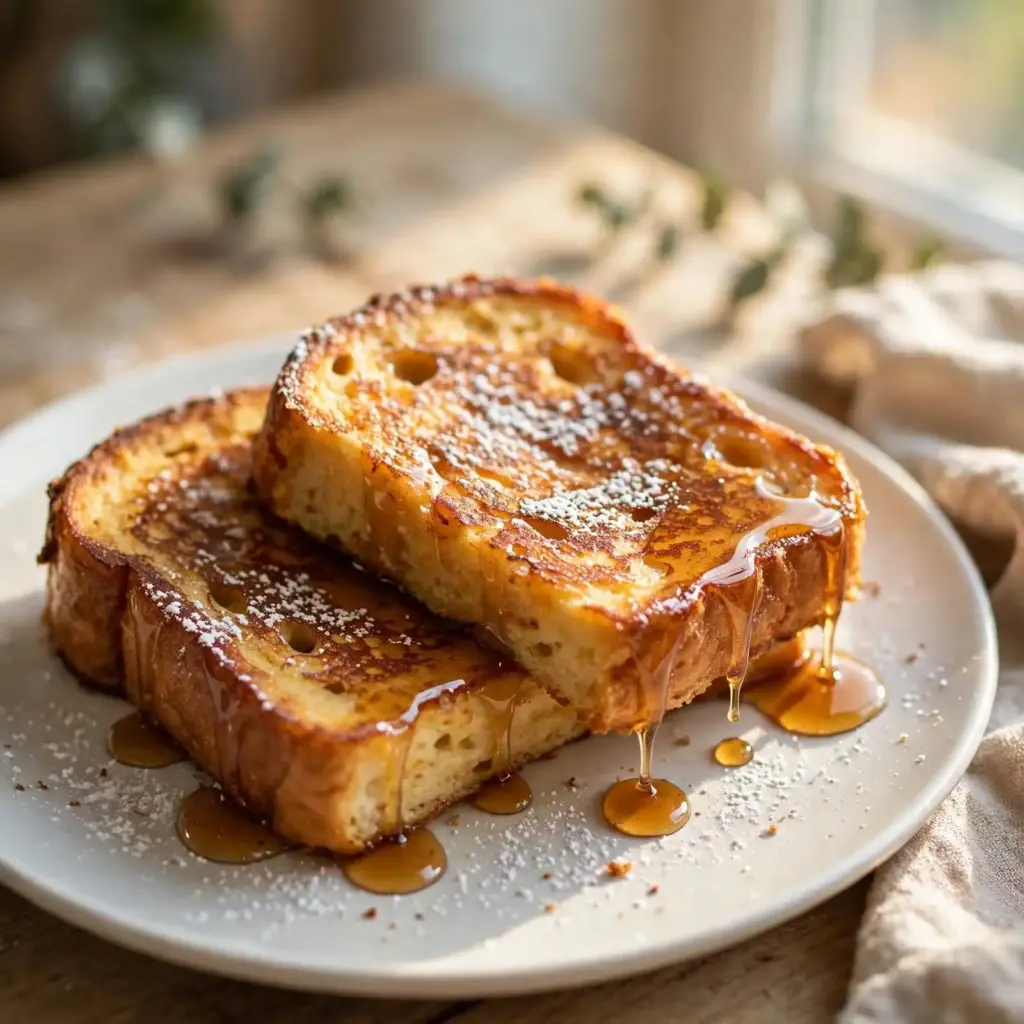
Why You’ll Love This French Toast Recipe
- Ready in 25 minutes. From cracking eggs to plating, the whole process fits inside a short morning window without rushing.
- No special bread required. Brioche is ideal, but regular sandwich bread works fine as long as it’s thick enough to soak without falling apart.
- The custard ratio is forgiving. The 4-egg to 1/2-cup milk formula gives you a rich soak that works whether your bread is fresh or slightly stale.
- Genuinely crispy outside, soft inside. The right pan temperature and butter combination creates that contrast without burning the edges.
- Scales easily. Double or halve the custard for a crowd or a solo plate, and the method stays exactly the same.
Ingredients You’ll Need
Recipe Timing
| Servings | 4 (2 slices per person) |
| Difficulty | Easy |
| Course | Breakfast / Brunch |
| Cuisine | American |
| Prep Time | 10 minutes |
| Cook Time | 15 minutes |
| Total Time | 25 minutes |
Choose your bread carefully. Thick-cut brioche, challah, or Texas toast gives the best result. You want slices at least 3/4 inch thick. If your bread is fresh from the bag, leave the slices out for 15 to 20 minutes uncovered so they dry out slightly. Stale bread absorbs the custard more evenly and holds its shape during cooking.
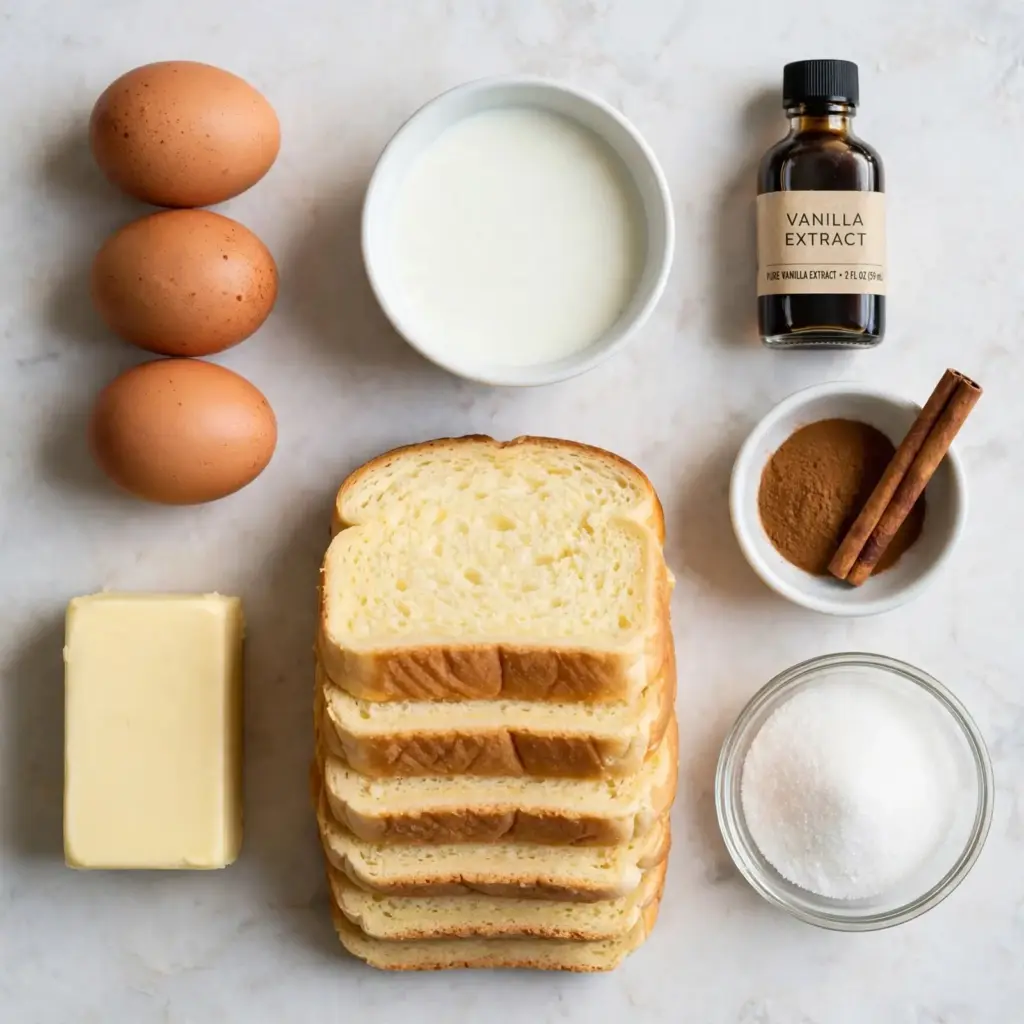
- 4 large eggs — The base of the custard. Whole eggs give richer flavor than just yolks. Use room-temperature eggs if possible; they blend into the milk more smoothly.
- 1/2 cup whole milk — Whole milk gives a creamier soak. For an even richer result, replace 2 tablespoons of milk with heavy cream.
- 1 tsp vanilla extract — Pure vanilla, not imitation, makes a noticeable difference here because the flavor is not masked by heat.
- 1 tsp ground cinnamon — Mix it directly into the custard so it distributes evenly through every bite.
- 1 tbsp granulated sugar — Just enough to give the crust a slight caramelization. Skip it if you prefer unsweetened toast and want to control sweetness with toppings.
- Pinch of fine salt — Balances the sweetness and lifts all the other flavors.
- 8 slices thick-cut bread — Brioche or challah preferred. Texas toast slices (pre-cut from the bakery section) work well too.
- 2 to 3 tbsp unsalted butter — For cooking. Salted butter burns more easily; stick with unsalted so you can control the heat. Add a small splash of neutral oil to the pan if the butter starts browning too fast.
Allergen & Dietary Disclosure
This recipe contains eggs, dairy (milk and butter), and gluten (bread). It is not suitable for egg allergies, dairy allergies, or celiac disease as written.
Dairy-free: Swap whole milk for full-fat oat milk or coconut milk (the kind from a carton, not the canned version). Use a dairy-free butter substitute like vegan butter for cooking. The result is slightly less rich but still very good.
Gluten-free: Use certified gluten-free thick-cut sandwich bread. The texture is denser, so reduce soaking time by about 30 seconds per side.
Egg-free: A custard-based soak is not easily replicated without eggs for French toast. A flaxseed “egg” (1 tbsp ground flax with 3 tbsp water per egg) can work but produces a chewier, less custardy result.
Note: Cross-contamination is possible if ingredients are processed in shared facilities. Always check packaging if you are cooking for someone with a severe allergy.
Step-by-Step Directions
Step 1: Make the Custard
Crack all four eggs into a wide, shallow bowl — a pasta bowl or pie dish works perfectly, since you need enough room to lay a full bread slice flat. Add the milk, vanilla, cinnamon, sugar, and salt. Whisk everything together until the yolks are fully broken and the cinnamon is evenly distributed, about 30 to 45 seconds. The custard should look uniform, with no streaks of egg white.
Chef’s Note: A wide, shallow container makes soaking much easier than a deep bowl. You want the bread to sit flat in the custard, not stand on its edge.
Step 2: Prep the Bread
Lay your bread slices out in a single layer on a clean surface or cutting board. If they feel very soft and fresh, let them sit uncovered for 10 minutes before soaking. Slightly dry bread absorbs the custard without getting soggy in the middle.
Step 3: Soak the Bread
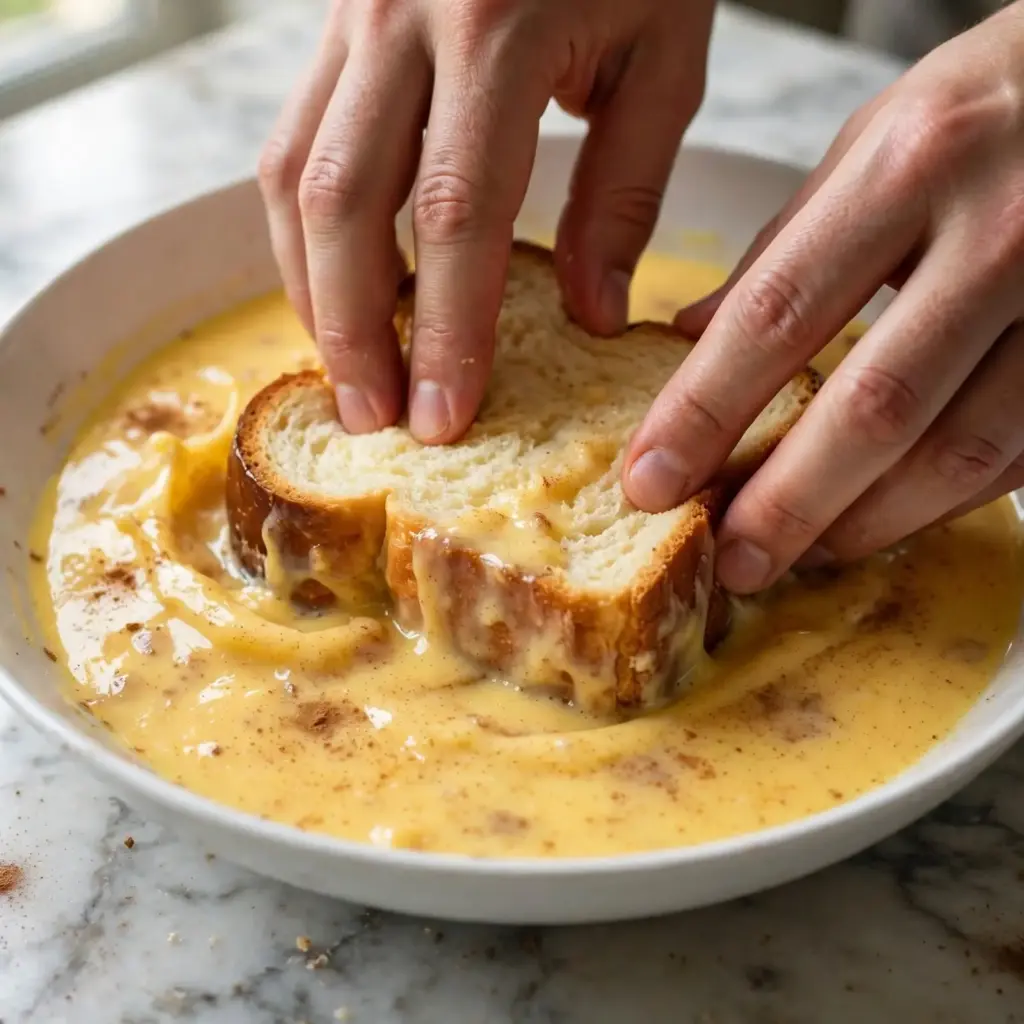
Place one or two slices into the custard at a time. Let each side soak for 20 to 30 seconds, then flip. For thick brioche or challah, give each side a full 30 seconds. Press down lightly with your hand so the custard reaches the center of each slice. Lift the soaked slice and let any excess drip off for a second before it goes into the pan.
Chef’s Note: Under-soaking is the most common mistake. If the bread is not soaked through to the center, the inside cooks dry rather than custardy. Err on the side of slightly more time, not less.
Step 4: Heat the Pan
Set a large non-stick or cast iron skillet over medium heat. Add 1 tablespoon of butter and let it melt fully. The butter should foam slightly but not turn brown. If it browns immediately, lower the heat and wait 30 seconds before adding the bread. The right temperature gives you a golden crust in 2 to 3 minutes per side, not a pale soggy one at low heat or a burned crust at high heat.
Step 5: Cook the Toast
Place the soaked bread slices into the pan without crowding them. Cook for 2 to 3 minutes without moving them. When the bottom is deep golden brown, flip once with a spatula. Cook the second side for another 2 minutes. The sides of the bread should look set and slightly firm, not wet or raw-looking.
Chef’s Note: Resist the urge to press down on the bread while it cooks. Pressing forces out the custard you worked to get in there.
Add a fresh 1/2 tablespoon of butter to the pan between batches so each round gets the same golden crust.

Step 6: Plate and Serve
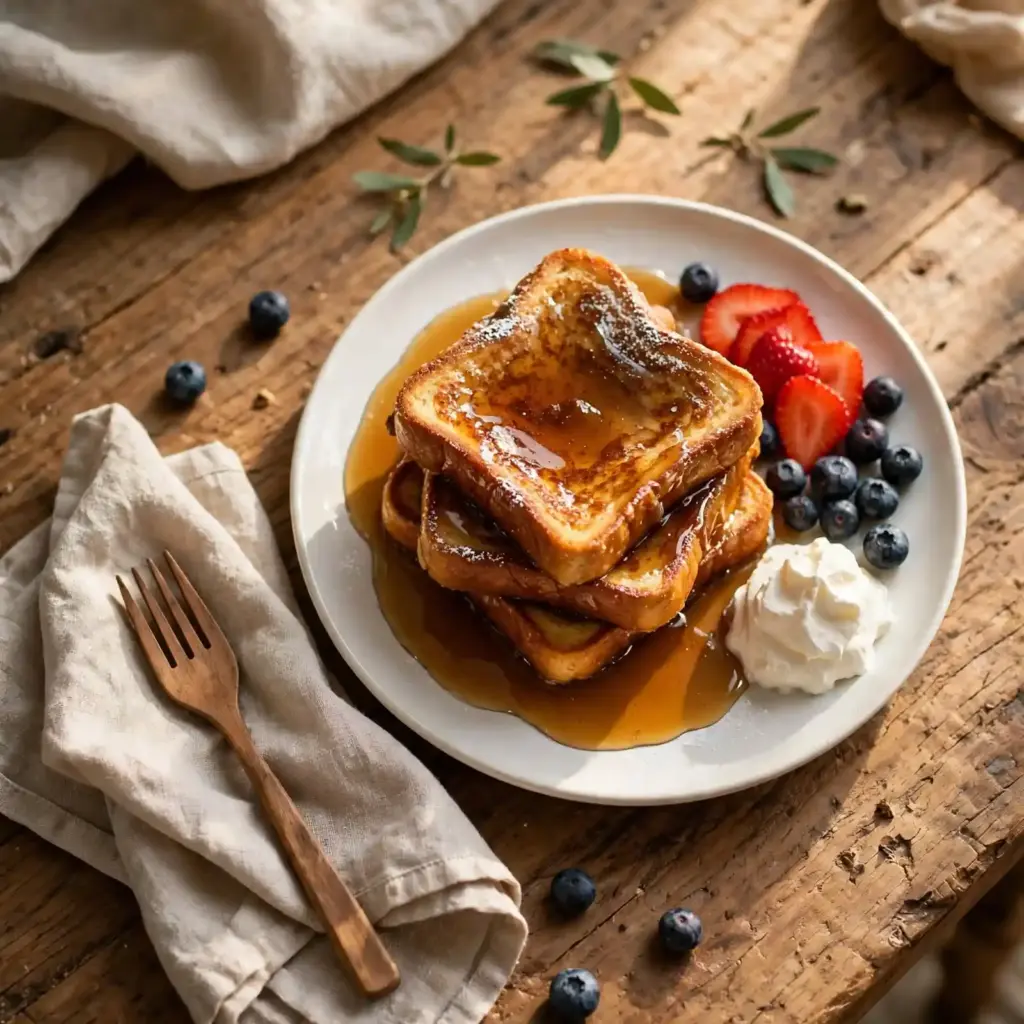
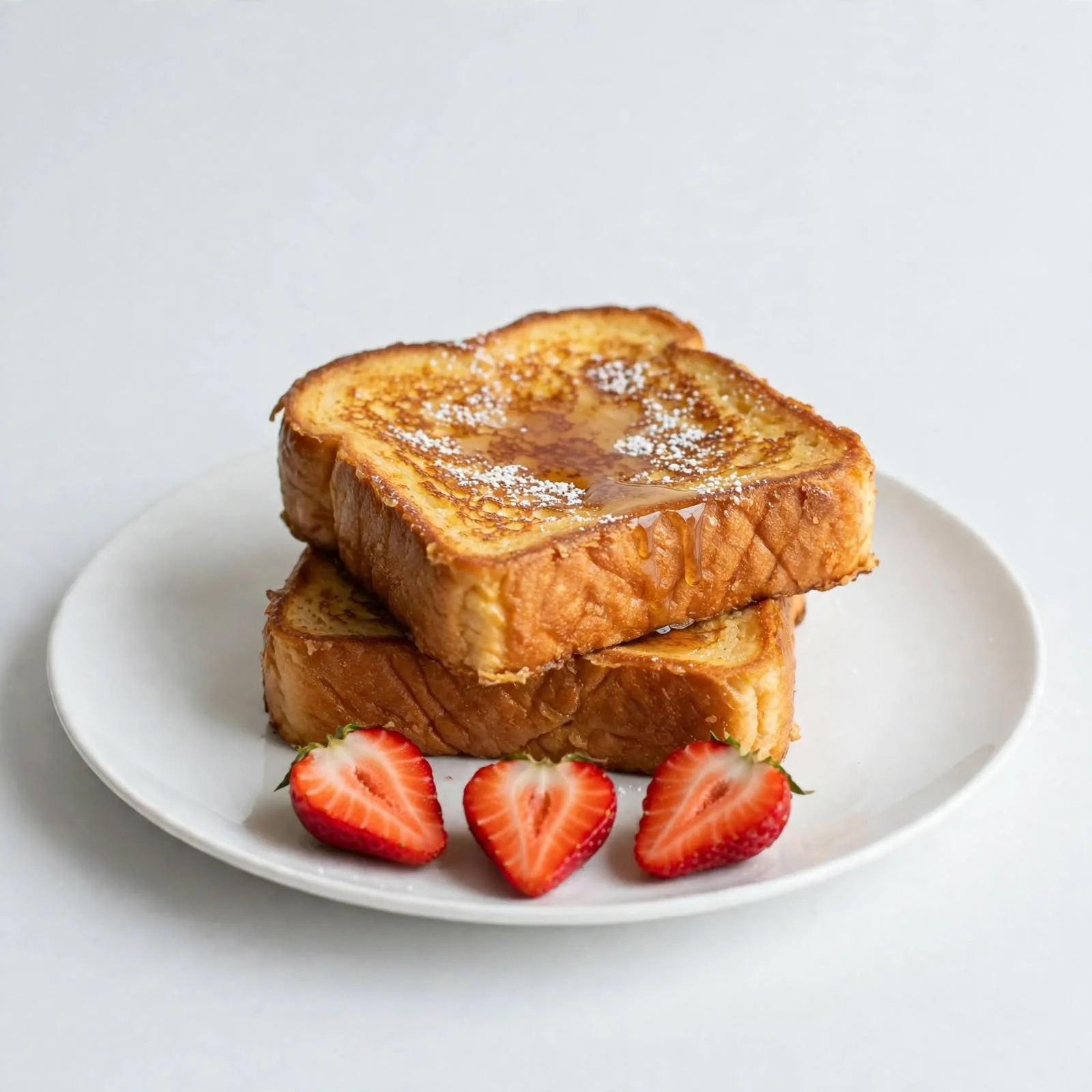
Transfer cooked slices to a plate as they finish. Serve immediately with maple syrup, powdered sugar, fresh berries, or whipped cream. French toast is best eaten right off the pan while the crust is still crispy.
Common Mistakes & Troubleshooting
| Problem | Cause | Solution |
|---|---|---|
| Inside is dry and eggy | Bread not soaked long enough | Soak each side for a full 30 seconds; press down gently so custard penetrates the center |
| Outside burns before inside cooks | Heat too high | Use medium heat, not medium-high; add a splash of neutral oil with the butter to raise smoke point |
| Bread falls apart in the pan | Bread too fresh or over-soaked | Let bread sit out for 10-15 minutes to dry slightly; limit soak to 30 seconds per side |
| Crust is pale and rubbery | Pan not hot enough before adding bread | Let butter melt and foam before adding slices; test with a small bread corner first |
| Cinnamon clumping in custard | Added cinnamon after whisking | Add cinnamon before the eggs and whisk together from the start |
Variations & Substitutions
Stuffed French Toast: Spread cream cheese and a spoonful of strawberry jam between two slices before soaking, then press the edges together gently. Soak for slightly less time since the double-layer is heavier.
Crunchy Cornflake Coating: After soaking, press each side into crushed cornflakes before they go into the pan. It adds a crunch that holds up well under syrup.
Banana and Cardamom: Swap cinnamon for 1/2 tsp ground cardamom and serve with sliced caramelized bananas (cook in butter and a pinch of brown sugar for 2 minutes).
Savory Version: Leave out the sugar, vanilla, and cinnamon. Add 1/4 tsp black pepper and a pinch of garlic powder to the custard. Serve with sauteed mushrooms and a fried egg on top.
Dairy-Free: Full-fat oat milk and vegan butter produce the closest result to the original. Avoid watery almond milk, which makes the custard too thin.
Gluten-Free: Certified GF thick sandwich bread works here. Reduce soak time to 20 seconds per side, as GF bread absorbs liquid faster and can get waterlogged.
Serving Suggestions
- Maple syrup and salted butter — The classic combination works because the salt in the butter cuts the sweetness of the syrup.
- Fresh fruit compote — Simmer mixed berries with a teaspoon of sugar and a squeeze of lemon for 5 minutes. Spoon over the top while warm.
- Whipped cream and sliced bananas — Works especially well with the cardamom variation.
- Greek yogurt and honey — A lighter option that adds protein and a subtle tang.
- Crispy beef or chicken sausage links on the side — The savory contrast makes the sweetness of the toast land better.
- A hot cup of chai or black coffee — The spice in the toast pairs naturally with both.
Tips for the Best Results
- Use day-old or slightly dry bread. This single change has the biggest impact on the final texture. Fresh, soft bread goes mushy; slightly dried bread soaks up the custard cleanly.
- Keep slices off the pan until it’s ready. A cold or barely-warm pan gives the bread time to release moisture before a crust forms, which leads to sogginess. Wait for the butter to foam.
- Work in batches and keep finished slices warm. Place cooked slices on a wire rack in a 200°F (95°C) oven while you finish the rest. A plate stacked with hot toast traps steam and softens the crust.
- Taste your custard before soaking. Dip a finger in and taste it. It should be lightly sweet with clear vanilla and cinnamon notes. Adjust before the bread goes in, not after.
- Rest time is not optional for thick bread. After flipping, give thick brioche a full 2 minutes on the second side before checking. Pulling it off too early leaves the center underdone.
Storage Tips
Refrigerator
Cooked French toast keeps well in an airtight container or zip-lock bag in the fridge for up to 3 days. Stack slices with a small piece of parchment paper between them to prevent sticking.
Freezer
Lay cooled slices flat on a baking sheet and freeze for 1 hour until firm, then transfer to a freezer bag. Stored this way, they last up to 2 months without freezer burn or sticking together. Label the bag with the date.
Reheating
For the best texture, reheat in a dry non-stick pan over medium-low heat for 1 to 2 minutes per side. A toaster works for thinner slices. Microwaving is the fastest option but softens the crust, so only use it when time is the priority.
Make-ahead tip: The custard can be whisked together the night before and stored covered in the fridge. Give it a quick stir before using it in the morning.
Nutrition Information
Per serving (2 slices), approximate values based on brioche bread and whole milk:
| Nutrient | Amount |
|---|---|
| Calories | 390 kcal |
| Protein | 13g |
| Carbohydrates | 42g |
| Fiber | 2g |
| Sugar | 11g |
| Total Fat | 18g |
| Saturated Fat | 7g |
| Cholesterol | 210mg |
| Sodium | 340mg |
| Calcium | 120mg |
| Iron | 2.5mg |
| Potassium | 190mg |
Nutrition values are approximate and may vary based on brands and portion sizes.
Why This Recipe Works
This custard ratio, 4 eggs to 1/2 cup milk, hits the sweet spot between too eggy and too wet. More milk dilutes the richness; fewer eggs make the soak watery. The tablespoon of sugar is deliberate — it’s enough to encourage caramelization on the crust without making the toast taste like dessert before toppings go on.
Cooking in butter at medium heat (not medium-high) allows the crust to form gradually, which means the inside has time to set before the outside burns. The small amount of salt in the custard is not optional — it suppresses any bitter egg notes that can come through when eggs cook at higher temperatures.
The bread choice matters more than any single technique. I’ve made this with everything from soft sandwich bread to day-old sourdough, and thick, slightly dried bread consistently outperforms fresh bread. The structure holds during soaking, the custard distributes evenly, and you get that distinct custardy center that separates good French toast from average French toast.
Note: Specific testing notes and timing were developed during recipe development. If you find your stove runs hot or cold, adjust the heat one notch up or down on your first batch and treat it as a test slice.
Frequently Asked Questions
Can I make French toast ahead of time?
Yes. Cook the French toast fully, let it cool on a wire rack, then freeze flat on a baking sheet before transferring to a bag. Reheat in a pan or toaster straight from frozen. Refrigerated slices reheat well in a pan within 3 days. The custard can also be prepped the night before and refrigerated until morning.
Why does my French toast turn out soggy in the middle?
Usually one of two things: the bread was too fresh (and too soft to hold the custard without getting waterlogged), or the pan wasn’t hot enough when the bread went in. Let your bread dry out slightly before soaking, and make sure the butter is foaming before you add the slices.
Can I use skim milk instead of whole milk?
You can, but the result is noticeably thinner and less custardy. For best results, stick with whole milk. If you want even richer custard, replace 2 tablespoons of milk with heavy cream.
How do I know when French toast is fully cooked?
The outside should be deep golden brown on both sides. Press the center gently with a spatula — it should feel set and spring back slightly, not wet and squishy. For thick brioche, 2 to 3 minutes per side at medium heat is usually right.
Is this recipe safe for people with egg allergies?
No. The custard base is eggs, so this recipe cannot be made egg-free and produce the same result. A flaxseed egg substitute can work for a vegan version, but the texture is chewier and the inside will not have the same custardy quality.
Can I use regular sandwich bread?
Yes, but go thicker. If your sandwich bread is thin (standard pre-sliced), use two slices pressed together lightly with the custard between them, or reduce soak time to 15 seconds per side to avoid sogginess. Thick Texas toast slices from the bakery section are a solid budget option.
What’s the best bread for French toast?
Brioche is the standard for a reason: the butter and egg content in the bread itself add richness before the custard goes on. Challah is a close second. If you want something more affordable and widely available, Texas toast (pre-cut thick white bread) works well and absorbs the custard without falling apart.

Conclusion
French toast is one of those recipes where the method matters more than the ingredient list. Get the custard ratio right, let your bread dry out slightly, and cook at a steady medium heat — the results are consistently good. This French toast recipe doesn’t need a special occasion or fancy toppings to be worth making. A weekend morning, a pan, and 25 minutes is all it takes.
If you loved this recipe, save it to your breakfast recipes Pinterest board so you can find it easily later!
Classic French Toast
Ingredients
Method
- Whisk eggs, milk, vanilla, cinnamon, sugar, and salt together in a wide shallow bowl until fully combined with no streaks of egg white.
- Lay bread slices out on a flat surface. If the bread is very fresh, let it sit uncovered for 10 minutes to dry slightly.
- Dip each slice into the custard, letting it soak 20 to 30 seconds per side. Press down gently so the custard soaks through to the center. Let excess drip off before cooking.
- Melt 1 tablespoon butter in a large non-stick or cast iron skillet over medium heat. Wait until the butter foams before adding bread.
- Cook bread slices for 2 to 3 minutes per side until deep golden brown. Do not press down during cooking. Add a fresh 1/2 tablespoon of butter between each batch.
- Plate immediately and serve with maple syrup, fresh berries, or powdered sugar.
Notes
- Day-old or slightly dried bread absorbs custard more evenly than fresh bread and holds its shape better in the pan.
- For a richer custard, replace 2 tablespoons of milk with heavy cream.
- Keep finished slices warm on a wire rack in a 200°F (95°C) oven while cooking remaining batches.
- The custard mixture can be made the night before and refrigerated, covered, until morning.
Allergens: Contains eggs, dairy (milk, butter), and gluten (bread). Not suitable for egg, dairy, or gluten allergies as written. See article for substitution options.
Not guaranteed safe for any specific allergy. Always verify ingredient labels. -
Nutrition (per serving, approximate):
Calories: 390 kcal | Protein: 13g | Carbs: 42g | Fiber: 2g | Sugar: 11g | Fat: 18g | Saturated Fat: 7g | Cholesterol: 210mg | Sodium: 340mg | Calcium: 120mg | Iron: 2.5mg | Potassium: 190mg Nutrition values are approximate and may vary based on brands and portion sizes.