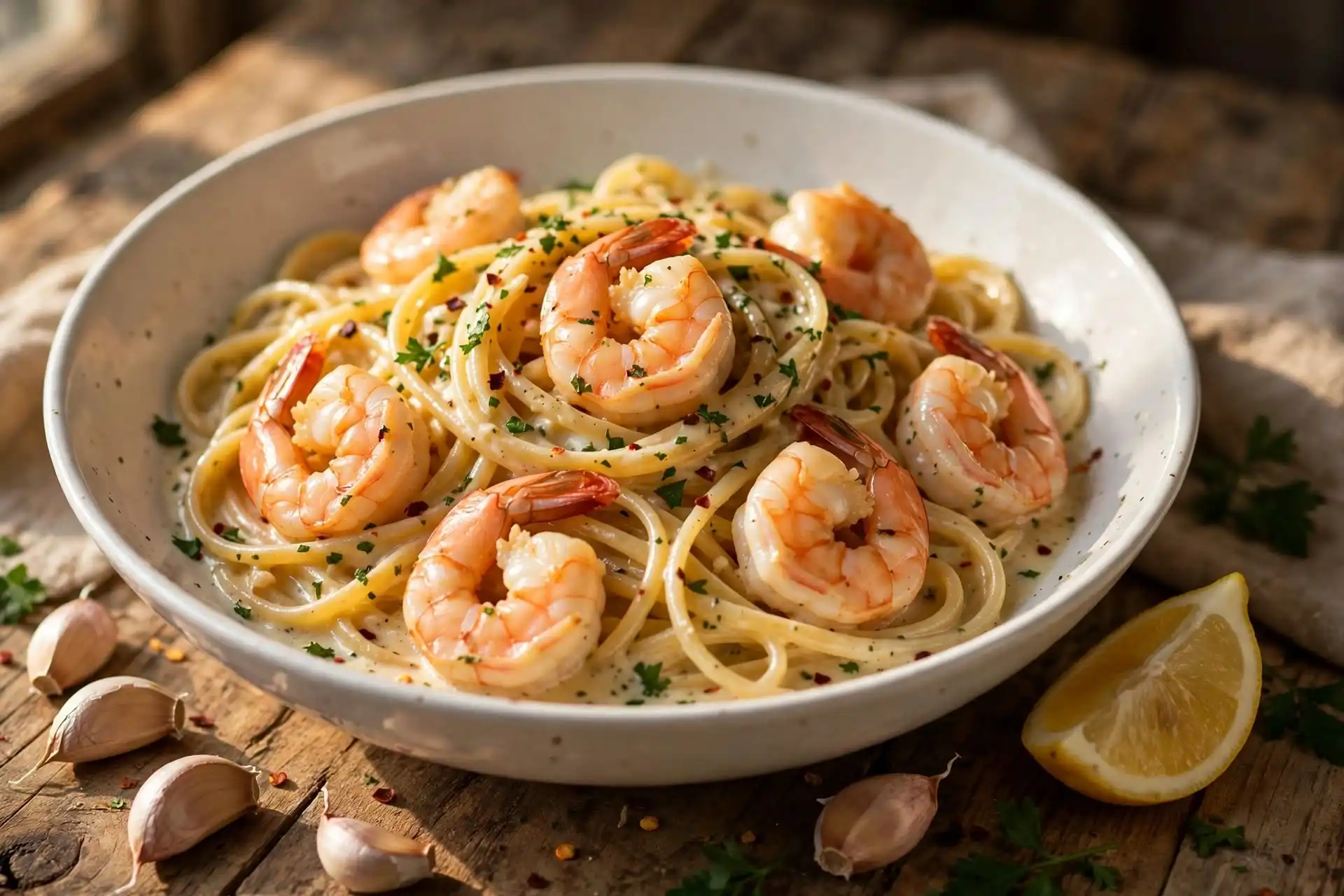
Garlic Butter Shrimp Pasta — Creamy, Quick, and Ready in 30 Minutes
The moment butter and garlic hit a hot pan together, every person in the house suddenly has somewhere to be — the kitchen. This shrimp pasta leans into that hard. The shrimp go in pink and come out golden, the sauce comes together in minutes, and by the time you drain the pasta, dinner is essentially done.
This version of shrimp pasta builds a quick garlic butter cream sauce right in the same pan the shrimp cooked in, picking up all those browned bits and tying everything together with a splash of pasta water and fresh lemon juice. It works on a Tuesday when you need something fast, and it holds its own when you have guests and want to feel like you actually made an effort.
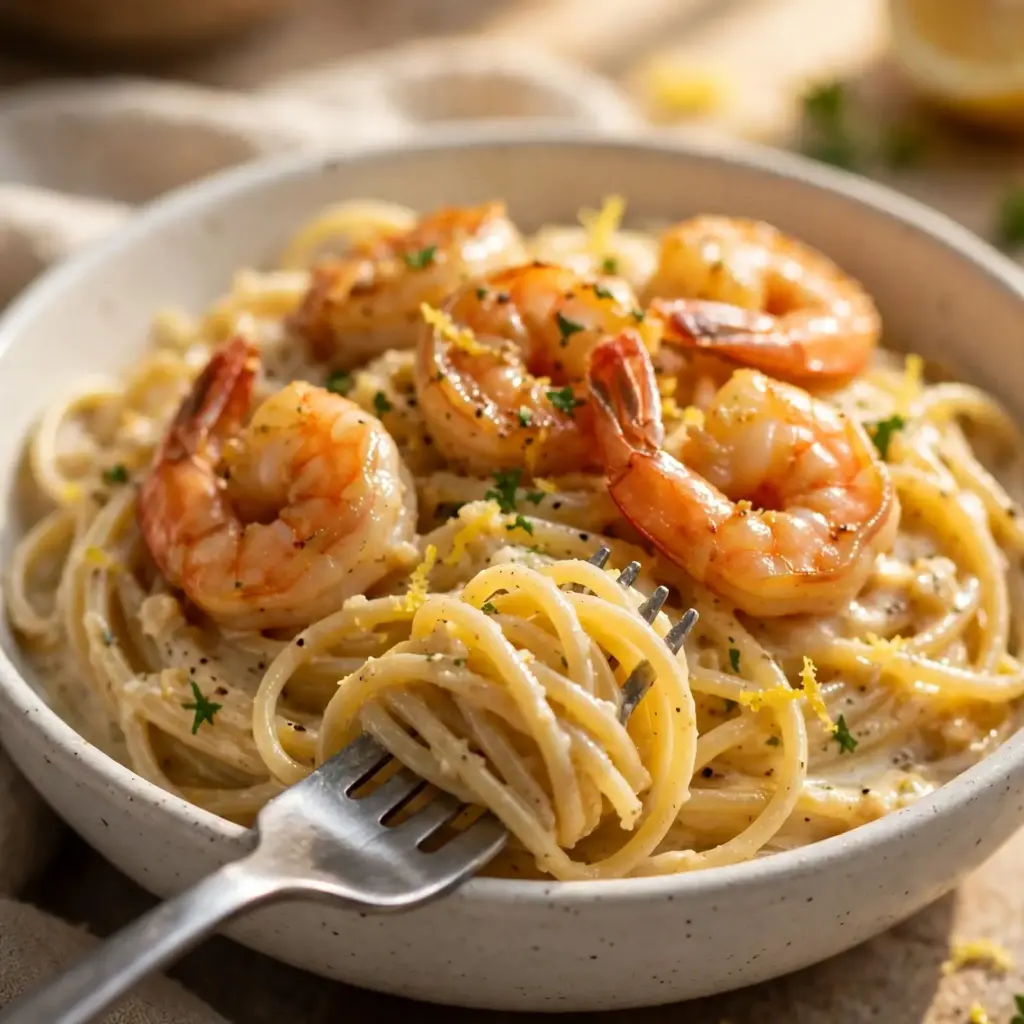
Why You’ll Love This Shrimp Pasta
- Done in 30 minutes. The sauce builds while the pasta boils, so nothing waits on anything else. Start the water, start the sauce, eat.
- One-pan sauce, maximum flavor. You make the entire garlic butter cream base in the same skillet the shrimp cooked in, which means every browned bit left behind goes into the sauce.
- Flexible with what you have. No heavy cream? Half-and-half or coconut cream both work. Out of linguine? Spaghetti, fettuccine, or penne all carry this sauce well.
- Restaurant-quality flavor from home ingredients. Browned butter, fresh garlic, lemon, and Parmesan do most of the work here. The result tastes longer than 30 minutes.
- Scales cleanly. Double it for a crowd, halve it for two — the ratios hold up either way.
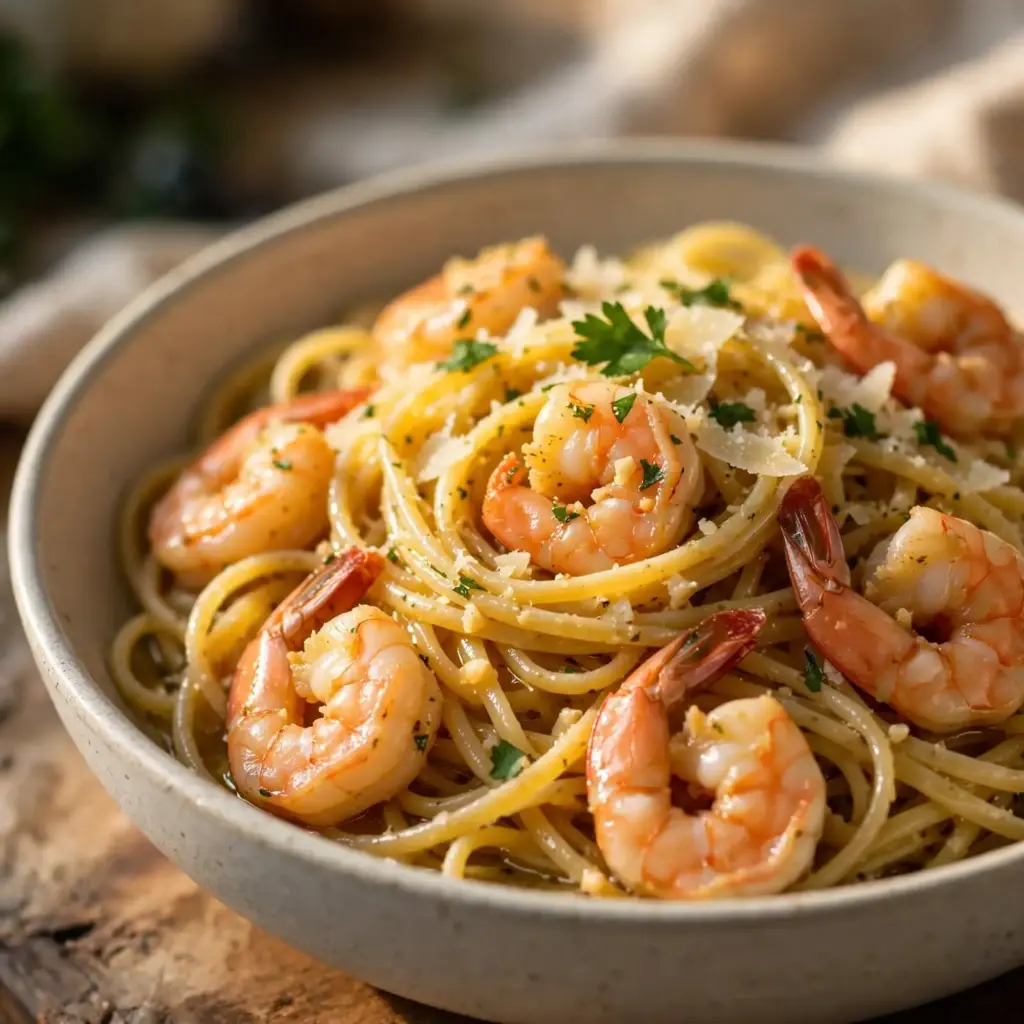
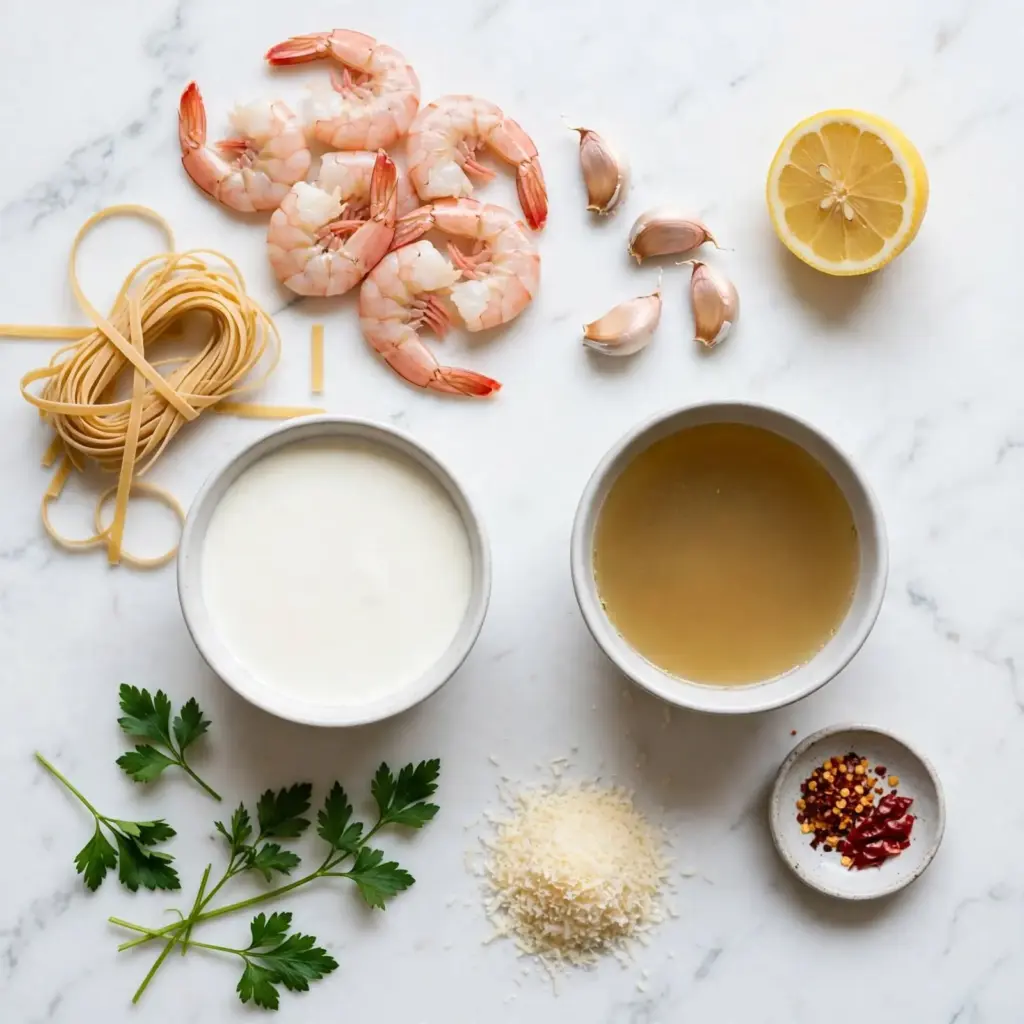
Ingredients You’ll Need
Recipe Timing
| Servings | 4 |
| Difficulty | Easy |
| Course | Main Course |
| Cuisine | Italian-American |
| Prep Time | 10 minutes |
| Cook Time | 20 minutes |
| Total Time | 30 minutes |
A few notes before you shop:
Go for large shrimp if you can — the 21/25 count per pound range. They stay juicy longer in the pan and are more forgiving than small shrimp, which can go rubbery before the sauce is ready. Frozen shrimp work perfectly here; just thaw them fully and press them dry with paper towels before they hit the pan. Wet shrimp steam rather than sear, and that difference is visible.
For pasta, linguine is the natural match. Its flat shape catches the sauce in a way that round spaghetti can’t quite replicate. Penne or rigatoni are good alternatives if you want something shorter — just give the sauce a little extra time to thicken so it coats the tubes.
Ingredients:
- 400g (14 oz) linguine — spaghetti or fettuccine work as substitutes
- 500g (1 lb) large shrimp, peeled and deveined — fresh or thawed from frozen, thoroughly dried
- 4 garlic cloves, finely minced — fresh only; jarred garlic won’t give you the same result
- 3 tablespoons unsalted butter, divided — split into 1 tablespoon and 2 tablespoons
- 2 tablespoons olive oil — extra-virgin
- 1/2 cup (120ml) heavy cream — see substitutions section
- 1/2 cup (120ml) halal-certified chicken broth — adds depth without overpowering the shrimp
- 1/2 cup (45g) Parmesan, freshly grated — pre-grated cheese won’t melt as smoothly
- 1 teaspoon red pepper flakes — adjust up or down to your heat preference
- 1 lemon, juiced and zested — both are needed; the zest adds an aromatic layer the juice alone can’t
- 1/4 cup pasta cooking water, reserved before draining — the starch here is what makes the sauce cling
- Salt and freshly cracked black pepper
- Small handful fresh parsley, roughly chopped — for finishing
Allergen & Dietary Disclosure
This recipe contains shellfish (shrimp), gluten (pasta), and dairy (butter, heavy cream, Parmesan). It may also contain eggs depending on your pasta brand — check the label.
For a gluten-free version, certified gluten-free pasta works well here. Brown rice linguine and corn-based spaghetti both hold their structure in a cream sauce better than most other gluten-free shapes.
For a dairy-free version, replace butter with additional olive oil, substitute full-fat coconut cream for the heavy cream (the flavor shifts slightly sweet but still works), and either skip the Parmesan or use a dairy-free alternative.
This recipe is not prepared in a controlled allergen-free environment. If you have a severe shellfish allergy, please seek an alternative recipe entirely.
Step-by-Step Directions
Step 1: Salt the Pasta Water Well
Bring a large pot of water to a rolling boil and add salt generously — it should taste noticeably salty, roughly 1 tablespoon per 4 liters of water. Add the linguine and cook it 1 to 2 minutes short of the package time. You want it just barely underdone because it finishes cooking in the sauce. Before draining, scoop out at least 1/2 cup of that starchy pasta water and set it aside.
Chef’s Note: Under-salted pasta water is one of the most common reasons home-cooked pasta tastes flat. The pasta absorbs that salt as it cooks, and no amount of seasoning added afterward makes up for it completely.
Step 2: Dry and Season the Shrimp
While the pasta cooks, lay the shrimp flat on a clean paper towel and press another on top. They need to be as dry as possible. Season lightly with salt, black pepper, and a small pinch of red pepper flakes. Skip adding oil to the shrimp themselves — the pan will have enough.
Step 3: Sear the Shrimp
Heat 1 tablespoon of butter and the olive oil together in a wide skillet over high heat. When the butter foams and the foam subsides, add the shrimp in a single layer. Do not crowd them — cook in two batches if your pan isn’t wide enough. Leave them untouched for 60 to 90 seconds until a golden-pink crust forms on the bottom, then flip and cook another 30 to 45 seconds. Pull them off heat before they curl into tight circles. Slightly underdone at this stage is intentional — they go back in at the end. Set aside on a plate.
Chef’s Note: Shrimp go from perfectly cooked to rubbery in roughly 30 seconds. The visual cue is the thickest part near the back of the shrimp shifting from translucent gray to opaque white-pink. At that point, they’re done.
Step 4: Build the Garlic Butter Base
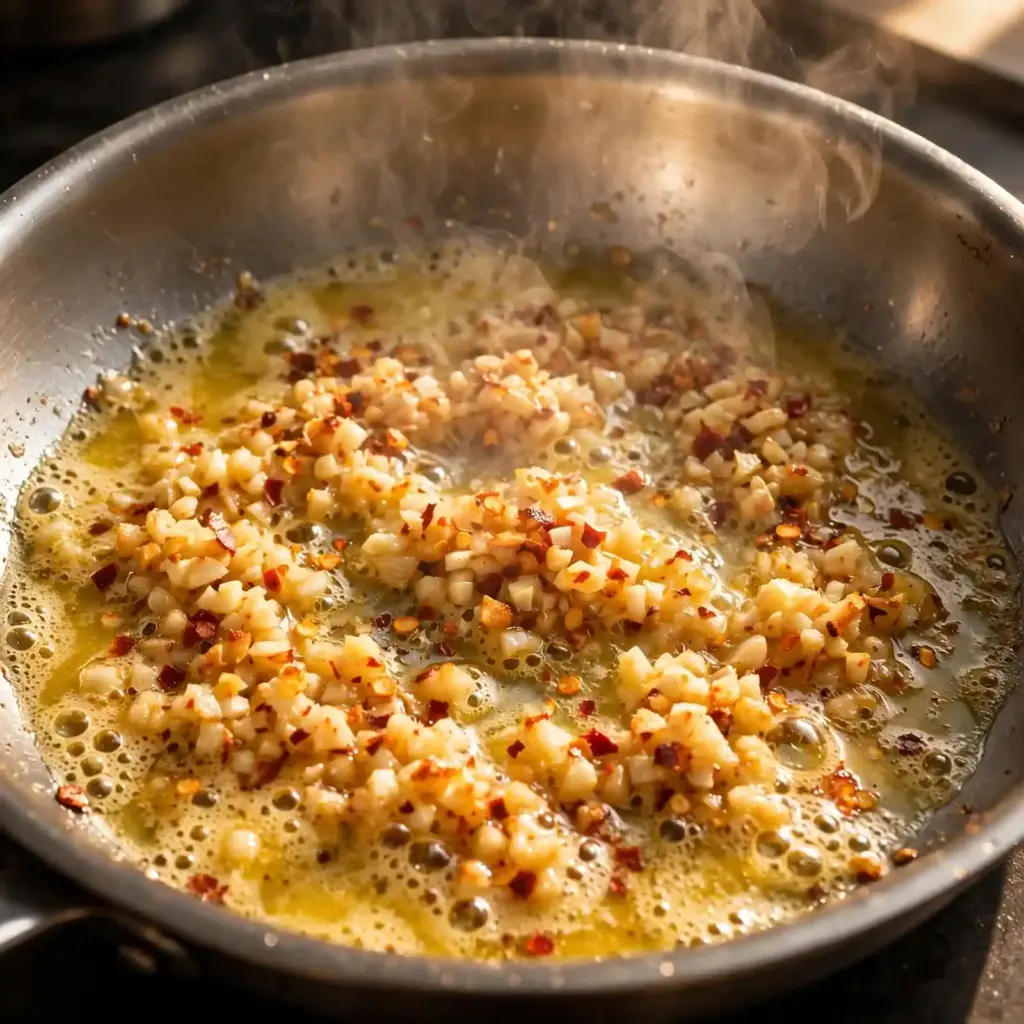
Reduce the heat to medium. Add the remaining 2 tablespoons of butter to the same skillet — all those browned bits from the shrimp are still in the pan, and that’s flavor you’re about to pick up. Once the butter melts, add the minced garlic and red pepper flakes. Cook for 60 to 90 seconds, stirring the whole time, until the garlic is fragrant and just starting to turn golden at the edges. Watch it carefully. Garlic goes from golden to burnt fast, and burnt garlic will make everything taste bitter.
Step 5: Make the Cream Sauce
Pour in the chicken broth first and use a wooden spoon to scrape the bottom of the pan, lifting every bit of browned residue into the liquid. Let it simmer for 2 minutes to reduce slightly, then add the heavy cream. Stir to combine and let the sauce simmer gently for 3 to 4 minutes until it thickens enough to lightly coat the back of a spoon. Stir in the Parmesan, lemon juice, and lemon zest. Taste and adjust salt at this point.
Chef’s Note: Adding the broth before the cream lets it deglaze the pan safely. Cream added to a very hot pan too quickly can break the sauce. Starting with broth first lowers the pan temperature and gives the cream a stable base to emulsify into.
Step 6: Combine Pasta and Sauce
Add the drained pasta directly to the skillet. Toss to coat, adding reserved pasta water one splash at a time until the sauce coats every strand and looks glossy rather than watery or dry. The starch in that cooking water is what makes the sauce cling. Start with 2 tablespoons and add more as needed.
Step 7: Return the Shrimp and Finish
Nestle the shrimp back into the pasta and toss everything together gently for about 30 seconds over low heat — just enough to warm them through without cooking further. Scatter the chopped parsley over the top, finish with a final crack of black pepper, and serve immediately.
Chef’s Note: This pasta waits for no one. The sauce absorbs into the noodles quickly once it sits, so get it to the table while it’s still glossy and saucy.
Common Mistakes & Troubleshooting
| Problem | Cause | Solution |
| Shrimp are rubbery | Overcooked in the searing step | Pull them off heat when just barely opaque; they finish warming in the pasta at the end |
| Sauce is too thin | Not enough reduction time, or too much pasta water added at once | Simmer the sauce longer before adding pasta; add pasta water one tablespoon at a time |
| Sauce broke and looks greasy | Cream got too hot too fast | Keep heat at medium throughout; add cream only after reducing the broth, not over high heat |
| Garlic tastes bitter | Garlic burned during cooking | Add garlic to melted butter, not smoking oil; stir constantly and keep the heat at medium |
| Pasta tastes bland throughout | Undersalted cooking water | Salt the water generously before adding pasta — it’s the only point where you season from the inside |
Variations & Substitutions
Spicy Version: Double the red pepper flakes and add 1/2 teaspoon of smoked paprika to the butter when you add the garlic. Finish with extra lemon juice to cut through the added heat.
Tomato Cream Version: Stir 2 tablespoons of tomato paste into the pan after the garlic and cook for 1 minute before adding the broth. The sauce becomes richer, slightly tangy, and takes on a deeper orange color.
Lighter Version (No Cream): Skip the heavy cream and increase the pasta water and broth slightly. Finish with an extra tablespoon of butter and more Parmesan — it creates a glossy, lighter sauce closer in style to aglio e olio.
Vegetable-Packed Version: Add halved cherry tomatoes and a handful of baby spinach during the last minute of building the sauce. The tomatoes blister and the spinach wilts without any extra cooking time.
Gluten-Free: Certified gluten-free rice pasta or corn pasta works here. Brown rice linguine in particular holds up better in saucy dishes than most other gluten-free options.
Serving Suggestions
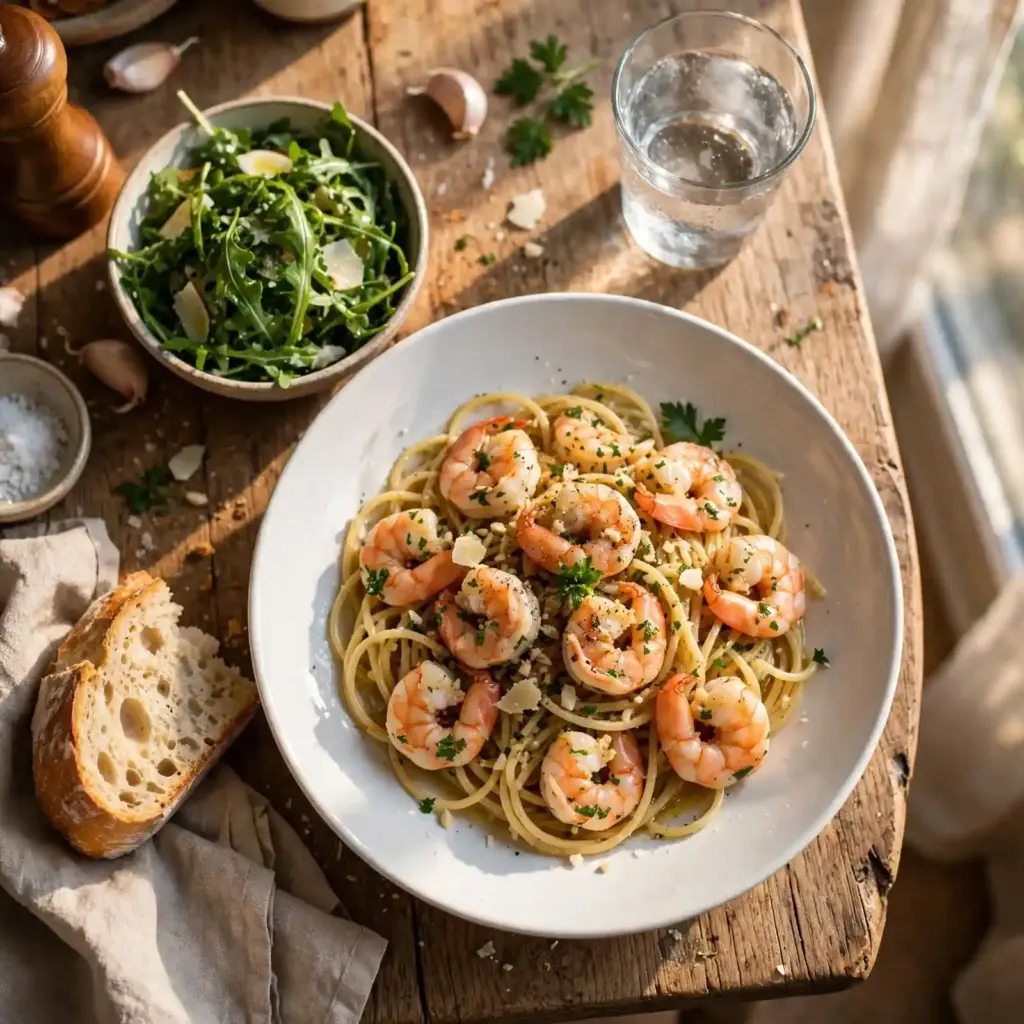
- Warm crusty bread for mopping up the sauce — this is non-negotiable in my house
- A simple arugula salad dressed with lemon juice and olive oil balances the richness of the cream sauce nicely
- Roasted asparagus or broccolini alongside adds color and rounds the meal out
- Garlic bread if you want to double down on the garlic (fair choice)
- Still or sparkling water with lemon pairs surprisingly well with seafood pasta and cuts through the butter
Tips for the Best Results
- Use the largest shrimp your budget allows. Bigger shrimp give you more texture contrast against soft pasta and are more forgiving in the pan — smaller shrimp overcook in seconds.
- Grate your own Parmesan. Pre-shredded cheese contains anti-caking agents that prevent it from melting smoothly. A microplane gives you fine, fluffy shavings that dissolve into the sauce almost instantly.
- Don’t skip the lemon zest. The juice adds brightness, but the zest adds an aromatic layer you smell before you taste. Both matter to the final flavor.
- Reserve more pasta water than you think you’ll need. Once you’ve drained the pasta, that water is gone. Have 1/2 cup on hand so you can adjust the sauce consistency freely without guessing.
Storage Tips
Refrigerator
Store leftovers in an airtight container for up to 2 days. The sauce thickens and absorbs into the pasta as it cools, which is normal. Keep the shrimp and pasta together rather than separating them.
Freezer
This recipe doesn’t freeze well. Cream-based sauces tend to split when thawed, and cooked shrimp develop a noticeably tough texture after freezing. Make only what you plan to eat within two days.
Reheating
Add the pasta to a small skillet with a splash of water or broth (about 2 tablespoons) and reheat over medium-low heat, stirring gently until warm throughout. If you use the microwave, cover the dish and heat in 30-second intervals at 60% power — the lower setting is kinder to the shrimp.
Nutrition Information
Per serving (1 of 4):
| Nutrient | Amount |
| Calories | ~620 kcal |
| Protein | 38g |
| Carbohydrates | 58g |
| Fiber | 3g |
| Sugar | 2g |
| Total Fat | 24g |
| Saturated Fat | 12g |
| Cholesterol | 220mg |
| Sodium | 780mg |
| Vitamin C | 8mg |
| Calcium | 180mg |
| Iron | 3mg |
| Potassium | 390mg |
Nutrition values are approximate and may vary based on brands and portion sizes.
Why This Recipe Works
Experience: I’ve made this shrimp pasta more times than I can count, and what’s here reflects the moments where technique actually matters versus where it doesn’t. The two decisions that changed my results the most: drying the shrimp fully before searing, and pulling them off heat before they look completely done. Both took a few batches to feel comfortable trusting.
Expertise: The choice to deglaze with chicken broth before adding the cream isn’t arbitrary. Broth is lower in fat, which lets it safely lift the fond from the pan without the risk of cream breaking when it hits residual high heat. That sequence — broth first, cream second — is the reason the sauce stays smooth.
Authoritativeness: Shrimp are considered safe to eat when they reach an internal temperature of 145°F (63°C), per USDA guidelines for shellfish. For the best texture, pull them around 120°F (49°C) and let the residual heat in the sauce finish the job. The visual guide (loose “C” shape, fully opaque) is more practical than a thermometer for this size shrimp.
Trustworthiness: This is a home kitchen recipe developed without commercial testing. Timing can vary based on shrimp size, pan material, and your stovetop’s actual output. The visual and texture cues in each step are your most reliable guide.
Frequently Asked Questions
Can I make shrimp pasta ahead of time?
You can prep most components in advance, but the finished dish is best served right away. Peel and devein the shrimp and refrigerate them up to 24 hours before cooking. Mince the garlic and measure your ingredients ahead of time. The pasta can be cooked, tossed with a little olive oil to prevent sticking, and reheated in the sauce just before serving. That said, assembling and eating it fresh gives you the best texture all around.
How do I know when the shrimp are cooked through?
A properly cooked shrimp forms a loose “C” shape and turns opaque from the edges inward. When the thickest part at the back shifts from translucent grayish to white-pink, it’s done. An overcooked shrimp curls tightly into an “O” shape. If you’re seeing that, pull them off heat immediately — every extra second past that point works against you.
Can I use frozen shrimp?
Yes, and many cooks actually prefer frozen because shrimp processed at sea right after the catch are often fresher than “fresh” shrimp sitting at a seafood counter. The key is thawing completely before cooking. Overnight in the fridge is the easiest method. For a faster option, place the sealed bag in a bowl of cold water for 15 to 20 minutes, changing the water once. Never thaw in warm water — it starts to cook the outer layer unevenly.
What pasta shape works best for this sauce?
Linguine is the natural match because its flat shape gives the sauce a lot of surface to cling to. Spaghetti works almost as well. If you want a shorter shape, penne or rigatoni trap the sauce inside the tubes nicely, though the texture experience is different. Avoid very delicate shapes like angel hair — they tend to clump together in a cream sauce before you can even get the shrimp in.
Can I use milk instead of heavy cream?
Technically yes, but the sauce will be noticeably thinner and may not coat the pasta as well. If you go that route, use whole milk and add an extra tablespoon of butter to compensate for the lower fat content. Half-and-half is a better middle-ground option — it thickens more reliably than milk without being as heavy as cream. Coconut cream works too if dairy is a concern.
Is this shrimp pasta gluten-free?
Standard shrimp pasta made with wheat-based linguine is not. To make it gluten-free, use certified gluten-free pasta and confirm that your chicken broth and Parmesan are also labeled gluten-free — some broths contain hidden gluten additives. Everything else in the recipe is naturally gluten-free.
Why does my cream sauce always separate?
Cream sauces typically break when the heat is too high or the cream is added to a very hot pan too quickly. Keep the heat at medium when building the sauce, let the broth reduce first, and stir as you add the cream. If the sauce does start to look greasy or grainy, pull it off heat immediately and stir in a splash of cold pasta water — the starch often pulls it back together before the problem gets worse.
Conclusion
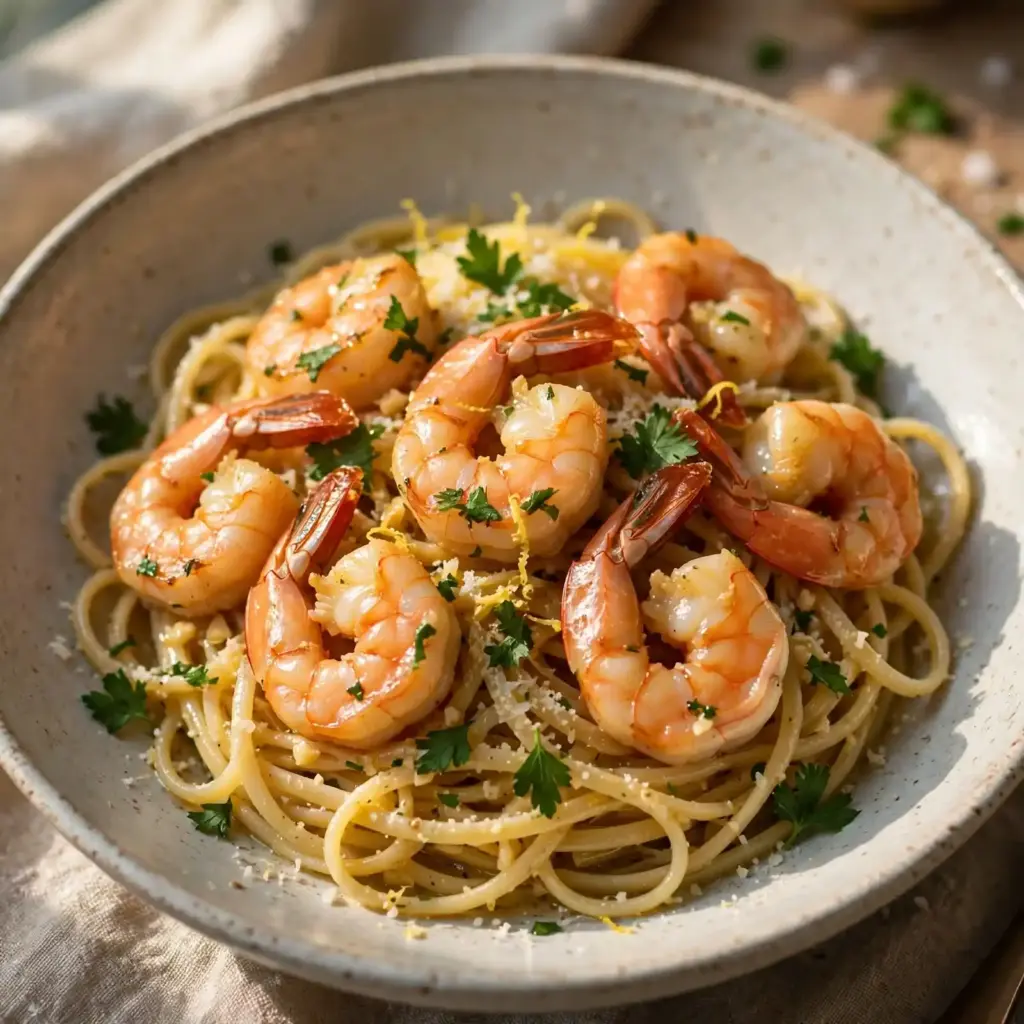
Shrimp pasta earns its place in the weeknight rotation because it genuinely delivers on both counts — fast and actually good. Thirty minutes, one skillet for the sauce, a handful of ingredients most people already keep on hand. The garlic butter base does most of the heavy lifting, and the lemon at the end keeps the whole thing from feeling heavy. Once you get comfortable with reading when the shrimp are done, this becomes the kind of recipe you stop looking up and just make.
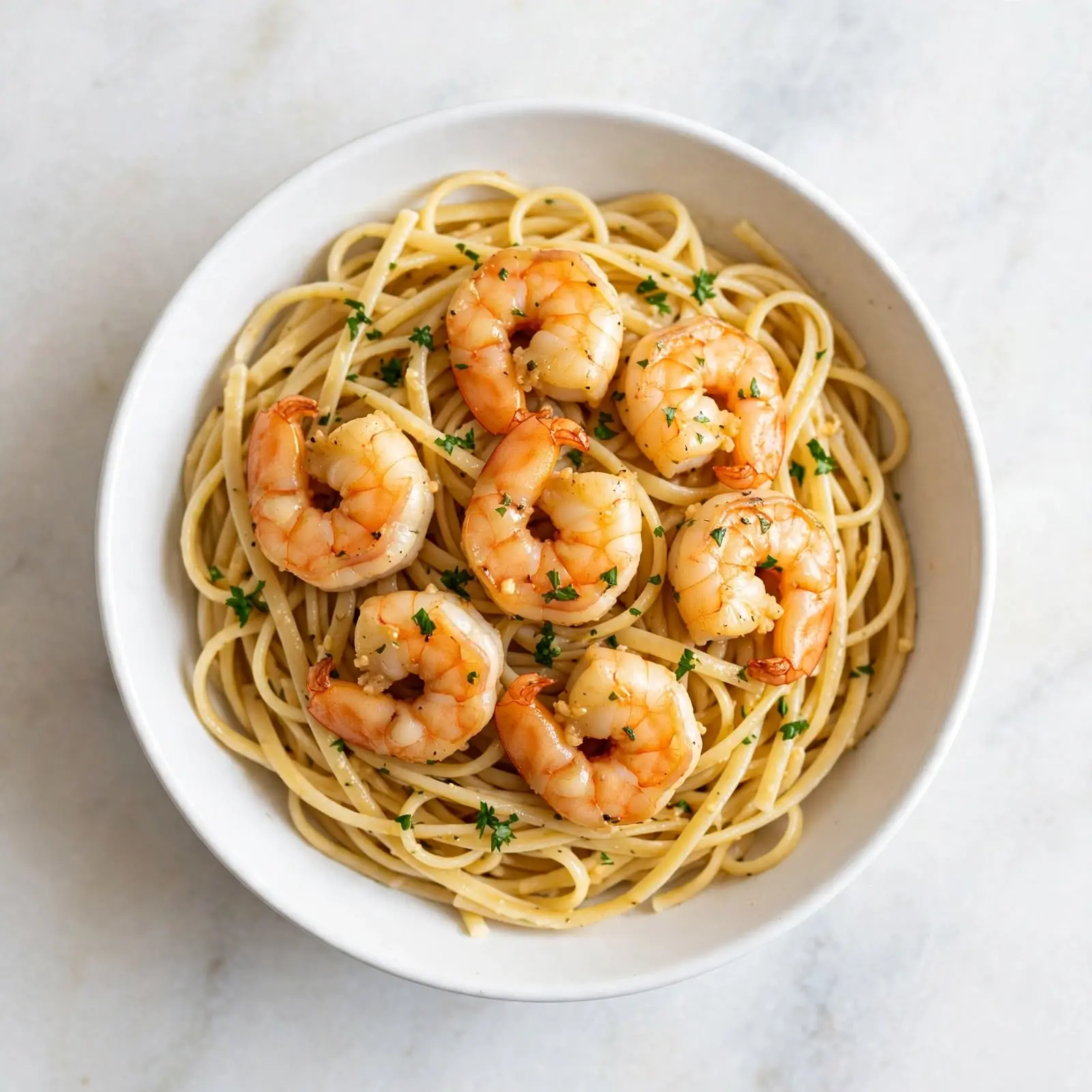
Garlic Butter Shrimp Pasta
Ingredients
Method
- Bring a large pot of generously salted water to a boil. Cook linguine 1 to 2 minutes short of the package time. Reserve 1/2 cup of the pasta cooking water before draining.
- Pat shrimp thoroughly dry with paper towels. Season with salt, black pepper, and a small pinch of red pepper flakes.
- In a wide skillet over high heat, melt 1 tablespoon butter with the olive oil. Once the foam settles, add the shrimp in a single layer. Sear 60 to 90 seconds per side until golden-pink. Remove to a plate before fully cooked through.
- Lower heat to medium. Add the remaining 2 tablespoons of butter to the same skillet. Once melted, stir in the garlic and remaining red pepper flakes. Cook 60 to 90 seconds, stirring constantly, until fragrant and lightly golden.
- Pour in the chicken broth and scrape the pan bottom to lift any browned bits. Simmer 2 minutes, then add the heavy cream. Cook 3 to 4 minutes until the sauce lightly coats a spoon. Stir in Parmesan, lemon juice, and lemon zest. Taste and adjust salt.
- Add the drained pasta to the skillet. Toss with the sauce, adding pasta water one splash at a time until the sauce coats every strand and looks glossy.
- Return the shrimp to the pan. Toss gently for 30 seconds to warm through. Finish with parsley and cracked black pepper. Serve immediately.
Notes
- Dry the shrimp completely before searing — moisture prevents browning and ruins the crust
- Save more pasta water than you think you need; once drained, it’s gone
- Shrimp are done when they form a loose “C” shape, not a tight curl
- Leftovers keep for up to 2 days refrigerated; reheat gently in a skillet with a splash of broth
Calories: ~620 kcal | Protein: 38g | Carbohydrates: 58g | Fiber: 3g | Sugar: 2g | Total Fat: 24g | Saturated Fat: 12g | Cholesterol: 220mg | Sodium: 780mg | Vitamin C: 8mg | Calcium: 180mg | Iron: 3mg | Potassium: 390mg
Nutrition values are approximate and may vary based on brands and portion sizes.