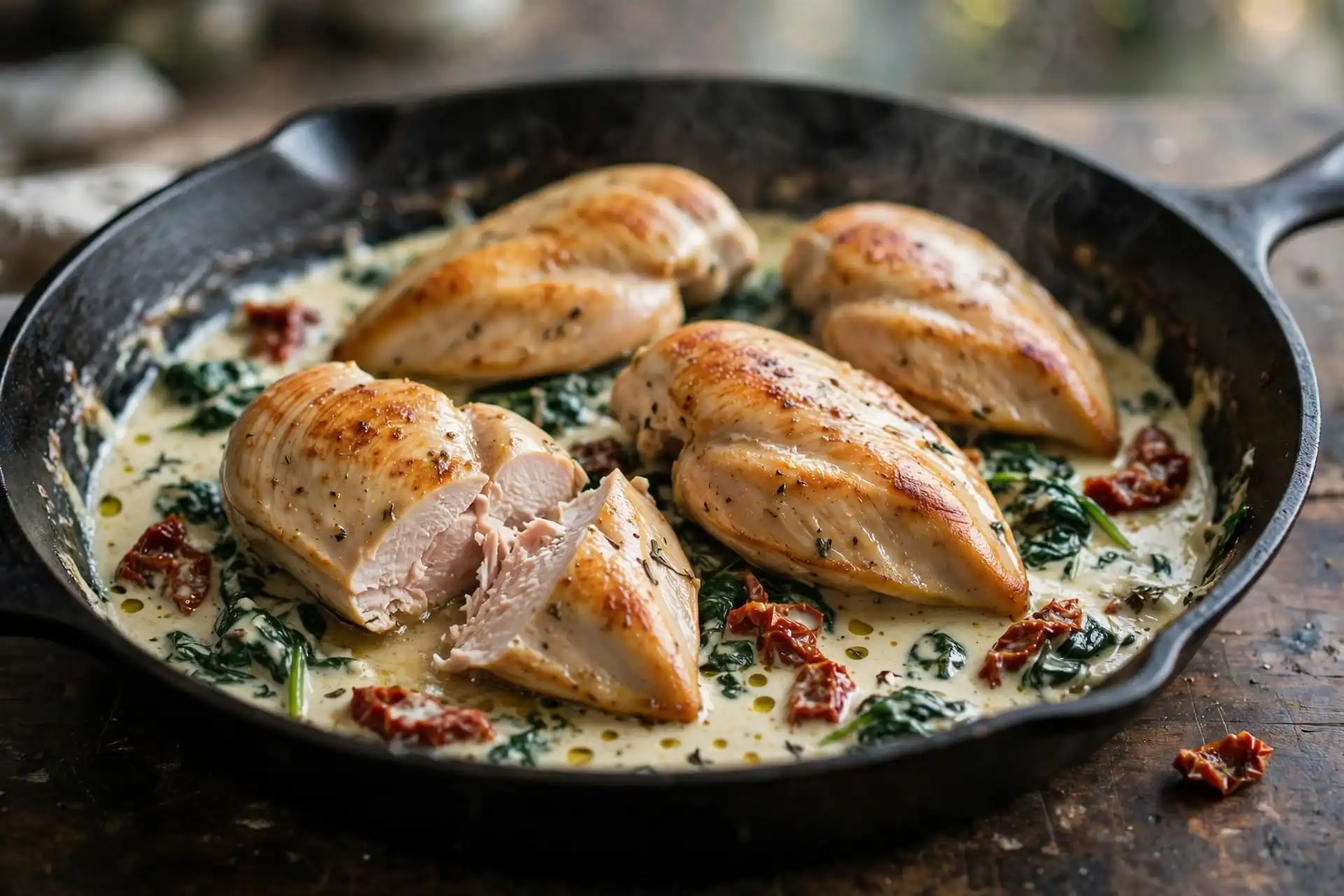
Tuscan Chicken Recipe: 7 Easy Steps for an Ultimate Creamy Dish
Tuscan chicken is one of those weeknight dinners that looks far more involved than it actually is. This tuscan chicken recipe comes together in a single skillet in about 40 minutes, with golden-seared chicken, a silky garlic cream sauce, and sun-dried tomatoes that do the heavy lifting on flavor.My family has requested this on rotation ever since the first time I made it, which says everything about how easy it is to get right.The result is rich without feeling heavy, deeply savory, and the kind of dish that disappears from the plate before you have finished serving. The homemade version beats any restaurant plate, with a sauce you can actually taste and control.
Tuscan chicken is pan-seared chicken simmered in a creamy garlic and Parmesan sauce with sun-dried tomatoes and baby spinach, all cooked in one pan. Season and sear the chicken first, build the sauce in the same skillet, then simmer everything together until the sauce thickens and coats a spoon. The whole process takes 40 minutes from start to finish.
Why You Will Love This Tuscan Chicken
- One pan, one cleanup. The entire recipe lives in a single skillet from the first sear to the final simmer, which means less time at the sink and more time at the table.
- Ready in 40 minutes flat. Even on the most hectic evenings, this meal fits comfortably into the schedule without any shortcuts in flavor.
- A sauce worth eating on its own. The garlic cream sauce thickens around the Parmesan and clings to every bite, silky and slightly tangy from the concentrated sun-dried tomatoes.
- Flexible with what you have. Swap chicken thighs for breasts, add mushrooms, or dial up the heat with extra chili flakes and the dish still delivers.
- Impressive enough for a dinner table. It looks and tastes like restaurant food, but the technique is completely beginner-friendly.
Recipe Snapshot
Servings: 4
Difficulty: Easy
Cuisine: Italian-American
Course: Main Dish
Prep Time: 10 minutes
Cook Time: 30 minutes
Total Time: 40 minutes
Ingredients You Will Need For Tuscan Chicken
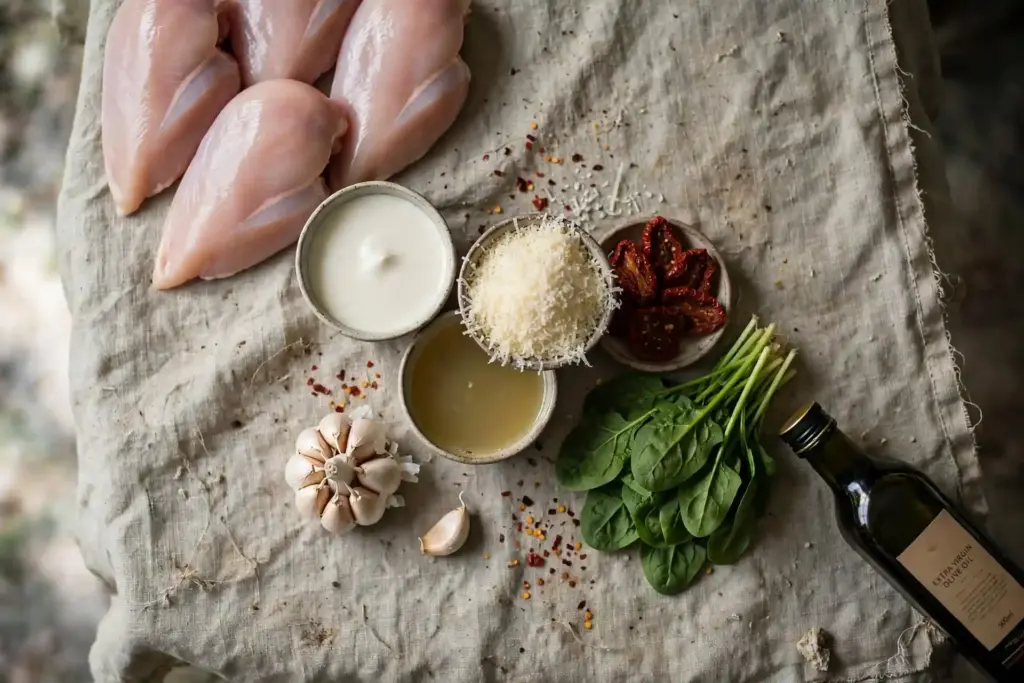
- 4 boneless, skinless chicken breasts (around 170g / 6oz each): flatten slightly with a mallet for even cooking
- 1 teaspoon kosher salt: season right before searing for the best surface crust
- 1/2 teaspoon black pepper: freshly cracked works better here than pre-ground
- 1 teaspoon Italian seasoning: gives the spice rub its herby base note
- 2 tablespoons olive oil: use a light olive oil for high-heat searing, not extra-virgin
- 4 garlic cloves, minced: fresh only, nothing from a jar
- 1/3 cup sun-dried tomatoes, oil-packed and drained: adds concentrated sweetness and a slight tang
- 1 cup heavy cream: full-fat gives the sauce its silky body and proper thickness
- 1/4 cup chicken broth: thins the sauce slightly and adds savory depth
- 1/2 cup Parmesan cheese, freshly grated: pre-packaged will not melt as smoothly into the sauce
- 2 cups fresh baby spinach: wilts down significantly, do not hold back
- 1/2 teaspoon red pepper flakes (optional, halal): skip entirely for a mild version
- 2 tablespoons fresh basil leaves, loosely torn: add right at the end so they stay bright
Recipe Timing
Prep Time: 10 minutes
Cook Time: 30 minutes
Total Time: 40 minutes (10 + 30 = 40, confirmed)
Easy Substitutions and Halal Alternatives
No heavy cream? Use full-fat coconut cream as a 1:1 swap. The sauce carries a very subtle sweetness, but the garlic and Parmesan balance it out in the finished dish.
No sun-dried tomatoes? Use fresh cherry tomatoes, halved, and cook them down for a few extra minutes. The flavor reads lighter and fresher rather than concentrated.
No fresh spinach? Frozen spinach works fine. Thaw it completely and squeeze out the excess moisture before adding it to the pan, otherwise the sauce becomes watery.
No Parmesan? Grana Padano substitutes well with a slightly milder flavor. The sauce will still thicken and coat the chicken.
Allergen Information
This recipe contains dairy from the heavy cream and Parmesan cheese. It is naturally free from gluten, eggs, tree nuts, peanuts, and shellfish. Always check individual ingredient labels for manufacturing cross-contamination notes, especially on the Parmesan and chicken broth.
How To Make Tuscan Chicken Step by Step
Step 1: Prepare and season the chicken.
Pat each chicken breast completely dry with a paper towel before anything else. Surface moisture prevents browning, and you need a proper sear here for the crust that flavors the entire sauce. Season both sides with the salt, pepper, and Italian seasoning, pressing gently into the meat so it adheres before it hits the hot pan.
FOOD SAFETY NOTE: Raw chicken can carry bacteria including Salmonella. Use a dedicated cutting board for the chicken and wash your hands thoroughly after handling it. Keep raw chicken away from other prepped ingredients on your work surface. USDA guidelines recommend cooking chicken to a safe internal temperature of 165°F (74°C), which you will confirm in Step 7.
Step 2: Sear the chicken until golden.
Heat the olive oil in a large skillet over medium-high heat until it shimmers. Place the chicken breasts in the pan and leave them completely undisturbed for 4 to 5 minutes until a deep golden crust forms on the bottom. Flip once and cook another 4 minutes. The chicken does not need to be fully cooked through at this stage.
Why this works: Leaving the chicken untouched allows the Maillard reaction to happen properly, building the brown crust that flavors both the chicken and the sauce. Moving it around breaks the crust before it sets and you end up with steamed rather than seared meat, which costs you the depth of flavor the entire dish depends on.
Step 3: Set the chicken aside and sauté the garlic.
Remove the chicken from the pan and rest it on a plate. Turn the heat down to medium and add the minced garlic to the same skillet, using all the residual fat. Cook for about 60 seconds, stirring frequently, until it turns fragrant and very lightly golden at the edges. Watch it closely here because garlic goes from perfectly cooked to bitter in under 30 seconds.
You are doing great so far. Getting the garlic right is the trickiest moment in this whole recipe and you just handled it.
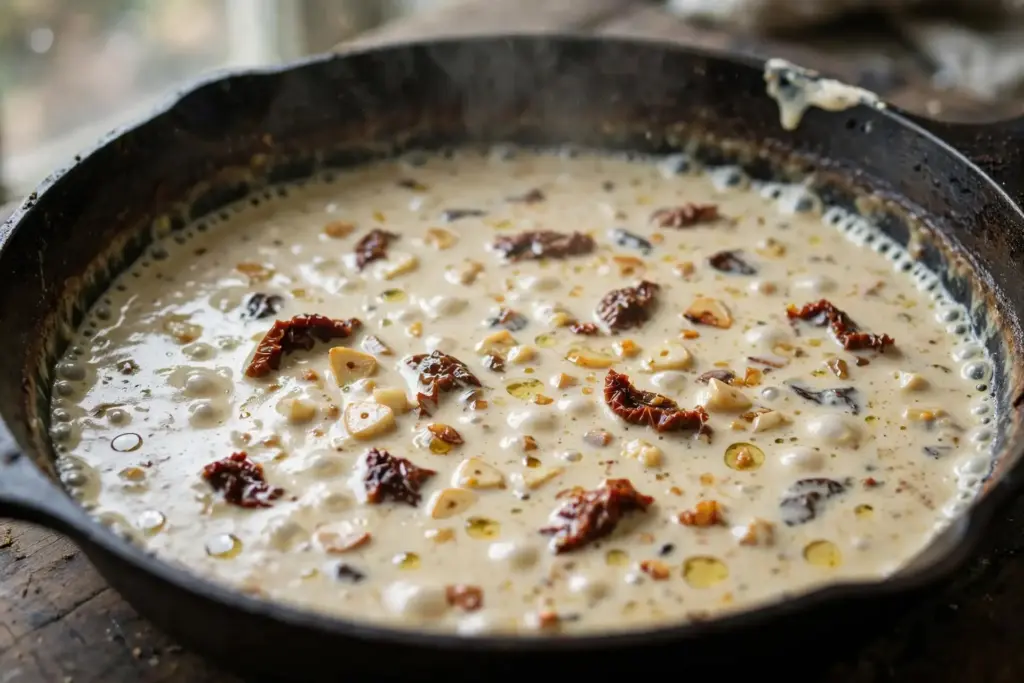
Step 4: Add the sun-dried tomatoes.
Stir the drained sun-dried tomatoes into the garlic and cook for about 60 seconds. This short burst of heat draws out the concentrated flavor and helps it bloom into the fat before the cream goes in.
Step 5: Pour in the cream and broth, then add the Parmesan.
Pour the heavy cream and chicken broth into the skillet and stir to combine. Bring the liquid to a gentle simmer over medium heat, then add the grated Parmesan and stir until it melts fully into the sauce. The sauce starts thickening within 2 to 3 minutes as the cheese integrates and the cream reduces.
The sauce may look thin at first. This is completely normal and it comes together quickly once the Parmesan dissolves, so give it a full 2 to 3 minutes before making any adjustments.
Step 6: Wilt the spinach into the sauce.
Add the fresh spinach to the pan in handfuls, stirring each addition into the sauce before adding the next. It wilts down fast, usually within 60 to 90 seconds total. Taste the sauce now and adjust the salt and pepper to your preference.
Step 7: Return the chicken and finish simmering.
Nestle the chicken breasts back into the sauce, spooning some of it over the top. Simmer on medium-low for 7 to 10 minutes, until the chicken reads 165°F (74°C) on an instant-read thermometer. The sauce thickens further during this final simmer and coats the chicken with a glossy, creamy finish by the time it is done.
Pro Tips While Making Tuscan Chicken
If the sauce thickens too fast before the chicken is cooked through, add a small splash of chicken broth and stir gently. This keeps the sauce from catching on the bottom and maintains the smooth texture through the full cooking time.
If the garlic darkens too quickly in Step 3, pull the pan off the heat for a moment. The residual heat will finish it without burning, which keeps the tuscan chicken sauce tasting clean and sweet rather than harsh.
Best Tips For Perfect Tuscan Chicken Every Time
Butterfly or pound thick chicken breasts to an even thickness before cooking. Uneven cuts mean the thinner end overcooks while the center is still underdone. Five minutes of prep here makes a real difference in the final texture of every piece.
The most common beginner mistake is skipping the step of drying the chicken thoroughly before searing. Moisture on the surface creates steam in the pan and the chicken turns pale rather than golden. A thorough dry with a paper towel takes 30 seconds and changes the entire result.
If you are cooking for a crowd, double the sauce ingredients. The cream sauce scales easily and having extra means no one leaves the table without a generous pour over their plate. For the searing stage, work in two batches so the pan is never crowded.
Warm leftover chicken gently in a skillet over low heat with a small splash of chicken broth. The added liquid prevents the cream sauce from separating as it heats up, which is the main challenge with reheating any cream-based dish.
This recipe can be frozen, though cream-based sauces tend to separate after thawing. Freeze the cooked chicken and sauce together in an airtight container for up to 2 months, then thaw overnight in the fridge before reheating slowly over low heat with a splash of broth stirred in.
To scale this recipe down for two people, halve all the ingredients and use a smaller skillet. The cooking times stay the same since they are determined by the thickness of the chicken, not the total quantity.
Common Mistakes and Troubleshooting
A thin, watery sauce usually comes from adding the spinach before the cream has had time to reduce, or from not simmering long enough after the Parmesan goes in. Let the sauce reduce undisturbed for a full 2 to 3 minutes before adding any extra liquid or adjusting seasoning.
A grainy or broken sauce means the cream was added over heat that was too high. Heavy cream separates when brought to a hard boil. Turn the heat to medium before the cream goes in and stir the Parmesan in gradually rather than all at once. If the sauce has already broken, whisk in a small splash of cold broth over low heat and stir vigorously until it comes back together.
Dry, tough chicken usually cooked at too high a temperature during the final simmer. After the initial sear, the finish should happen over medium-low. That gentle heat cooks the chicken through without drying it out, and it also keeps the sauce from scorching.
Burnt garlic makes the whole sauce taste bitter, and that bitterness does not fade during cooking. If this happens, discard the garlic, wipe the pan, and start the sauce step again with fresh. Staying close to the stove during Step 3 is the better move.
Delicious Variations of Tuscan Chicken To Try
A spicy version works well by adding an extra teaspoon of red pepper flakes and a pinch of smoked paprika to the seasoning mix before searing. The heat cuts through the richness of the cream and gives the finished sauce a more assertive, warming character.
For a mild, kid-friendly option, skip the red pepper flakes entirely and replace the sun-dried tomatoes with roasted cherry tomatoes. The sauce stays sweet and gentle, and the color remains appealing without any sharp tomato intensity.
A dairy-free version uses full-fat coconut cream in place of the heavy cream and nutritional yeast in place of the Parmesan. The sauce carries a faint sweetness from the coconut, but the garlic and herbs balance it out and the consistency holds up well.
For a gathering, bone-in chicken thighs work in place of breasts. They take a few extra minutes to cook through, but the skin crisps up well during the sear and the bone adds depth to the sauce during the final simmer.
A restaurant-style finish comes from stirring in a tablespoon of cold butter off the heat just before serving. This technique gives the sauce a glossy, polished sheen and an extra layer of richness that is hard to achieve any other way.
Serving Suggestions
Wide pasta noodles like pappardelle or rigatoni pair naturally with this dish because the grooves catch the cream sauce and the extra sauce from the pan doubles as a pasta sauce with no additional work. Creamy mashed potatoes and steamed rice both absorb the sauce well for a more filling plate. For something lighter, roasted broccoli or a simple arugula salad with lemon and olive oil works well alongside the richness of the chicken. When plating, spoon extra sauce generously over each piece and scatter a few torn basil leaves across the top for a finished, cohesive presentation.
Storage, Reheating and Freezing
Leftover chicken keeps in an airtight container in the fridge for up to 3 days. Keep the chicken submerged in the sauce during storage so the meat stays moist and the flavors continue to develop as it sits.
To reheat, place the chicken and sauce in a skillet over low heat and add a splash of chicken broth. Stir gently and let it warm for 5 to 7 minutes without rushing it. High heat causes cream-based sauces to separate and the texture is difficult to recover once it goes.
For longer storage, freeze the cooked chicken and sauce together in a sealed container for up to 2 months. Always thaw overnight in the fridge before reheating rather than going straight from frozen to heat. Warm slowly over low heat, stirring regularly, with a splash of broth added to bring the sauce back to a smooth, pourable consistency.
Frequently Asked Questions About Tuscan Chicken
Can I make tuscan chicken ahead of time?
Yes, tuscan chicken stores well in the fridge for up to 3 days, so cooking it completely in advance is a practical option for the week. Reheat gently in a skillet with a small splash of broth to keep the sauce smooth. The garlic and tomatoes actually deepen in flavor overnight, which makes the day-two version arguably better. Store the chicken fully submerged in the sauce so it does not dry out between the cooking day and serving. Done right, the make-ahead version of this tuscan chicken comes out just as satisfying as the freshly cooked original.
How do I make tuscan chicken without heavy cream?
Full-fat coconut cream is the most effective substitute and produces a sauce with a very similar consistency. Use it in a 1:1 swap and the texture stays silky and thick. The flavor carries a faint sweetness, but the garlic and Parmesan balance it out in the finished dish. Evaporated milk also works as a lighter option, though the sauce will be less rich and may need a minute longer to thicken. Either way, the creamy garlic base of this recipe stays intact and the result is still a satisfying plate.
Can I freeze tuscan chicken?
Tuscan chicken can be frozen for up to 2 months in a sealed airtight container, though cream-based sauces do tend to separate slightly after thawing. Always thaw overnight in the fridge before reheating rather than going from frozen straight to the stove. Warm it slowly over low heat in a skillet and stir consistently to bring the sauce back together. Adding a small splash of broth during reheating helps significantly. Properly thawed and reheated tuscan chicken comes out in good shape, though the sauce will be slightly less silky than freshly made.
How long does tuscan chicken last in the fridge?
Stored in a sealed container, tuscan chicken stays fresh in the refrigerator for up to 3 days. Keep the chicken submerged in the sauce between meals so the meat stays moist and does not dry out at the edges. After 3 days, both the sauce texture and the chicken quality start to decline noticeably and the dish is better frozen at that point than stretched further in the fridge. Proper storage keeps every leftover portion tasting close to the original.
Why is my tuscan chicken sauce turning out grainy?
A grainy sauce almost always means the cream was added over heat that was too high. Heavy cream curdles and separates when it hits a hard boil or a very hot pan. Turn the heat down to medium before the cream goes in and add the Parmesan gradually rather than all at once. If the sauce has already broken, a splash of cold broth whisked in over the lowest possible heat can often bring it back. Keeping steady medium heat from Step 5 onward is the single most effective way to keep the sauce consistently smooth every time.
Can I make this tuscan chicken gluten-free or dairy-free?
The base recipe is already naturally gluten-free as long as you check the labels on the Parmesan and chicken broth for added starches. For a dairy-free version, replace the heavy cream with full-fat coconut cream and use nutritional yeast or a dairy-free Parmesan alternative in place of the regular cheese. The sauce will be slightly different in flavor but the consistency stays close to the original. Both adaptations use the exact same technique with no changes to timing or method. Your tuscan chicken will still deliver the creamy, satisfying result you are looking for.
Conclusion
Tuscan chicken checks every box for a weeknight dinner: fast, satisfying, built on flavors that work together without much effort, and forgiving enough that even first attempts turn out well. The creamy garlic sauce and sun-dried tomatoes do most of the heavy lifting while the skillet does its job. Try it once and it earns a permanent place in the weekly rotation.
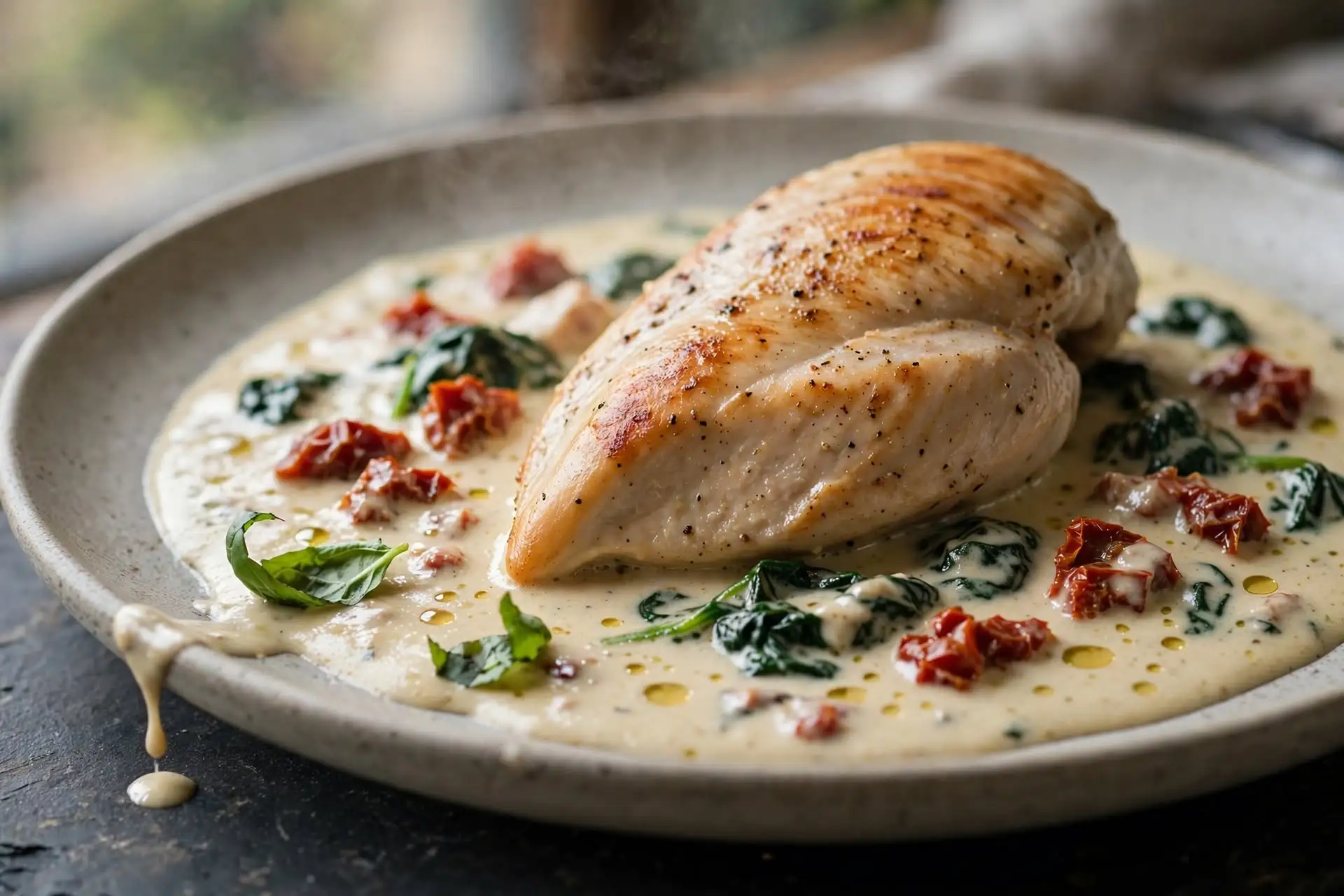
Tuscan Chicken
Ingredients
Method
- Pat chicken dry. Season both sides with salt, pepper, and Italian seasoning.
- Heat olive oil in a large skillet over medium-high. Sear chicken 4 to 5 minutes per side until golden. Remove from pan.
- Reduce heat to medium. Sauté garlic 60 seconds until fragrant and lightly golden.
- Add sun-dried tomatoes. Stir for 60 seconds.
- Pour in cream and broth. Bring to a gentle simmer. Add Parmesan and stir until melted and sauce begins to thicken, about 2 to 3 minutes.
- Add spinach in handfuls, stirring until fully wilted. Season to taste.
- Return chicken to the pan. Simmer on medium-low 7 to 10 minutes until internal temperature reaches 165°F (74°C). Garnish with torn basil and serve.
Notes
Calories: 490 | Protein: 42g | Fat: 31g | Carbs: 7g | Fiber: 1g | Sodium: 680mg
Nutrition values are estimates only and may vary based on specific ingredients used.