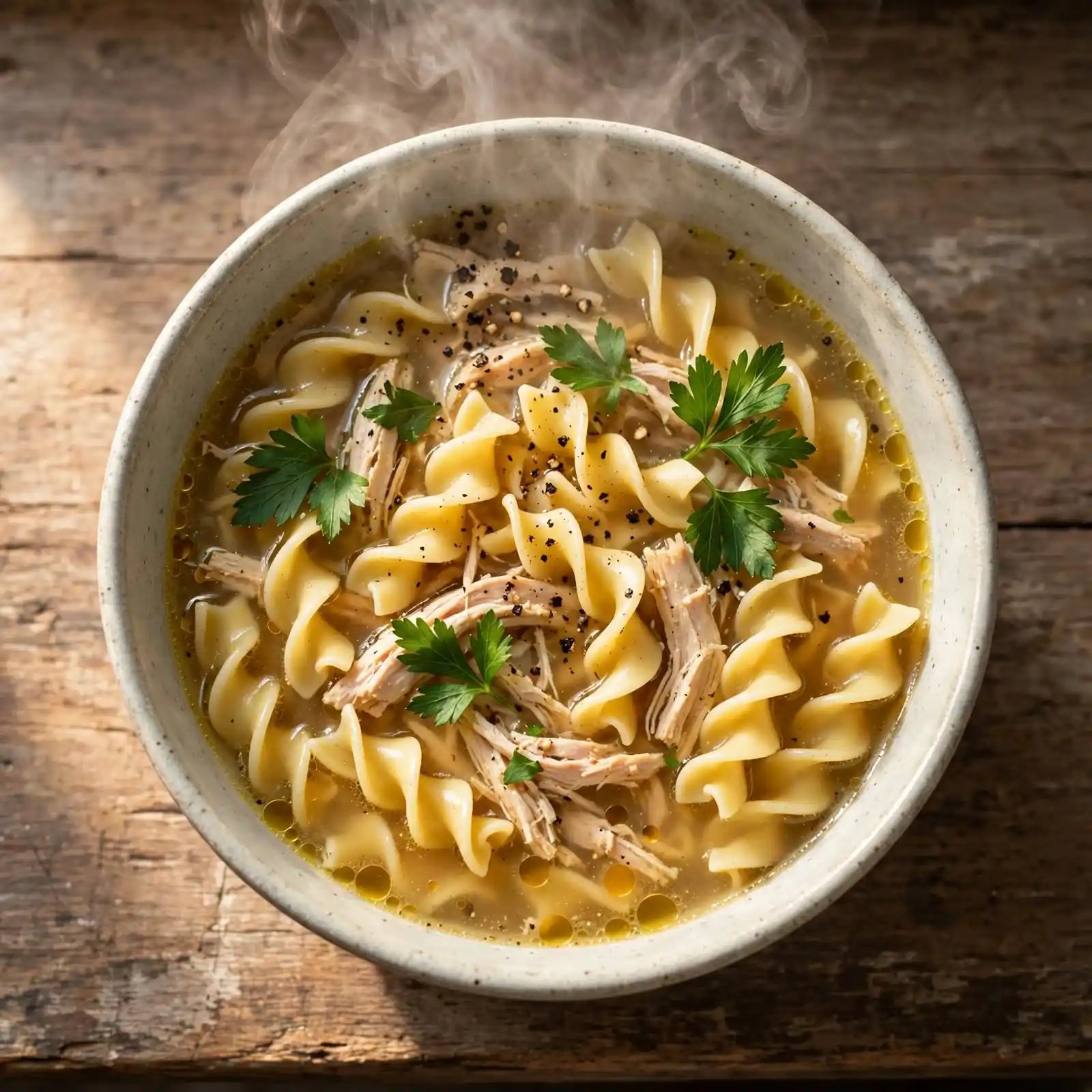
Chicken Noodle Recipe: 7 Easy Steps for an Ultimate Bowl
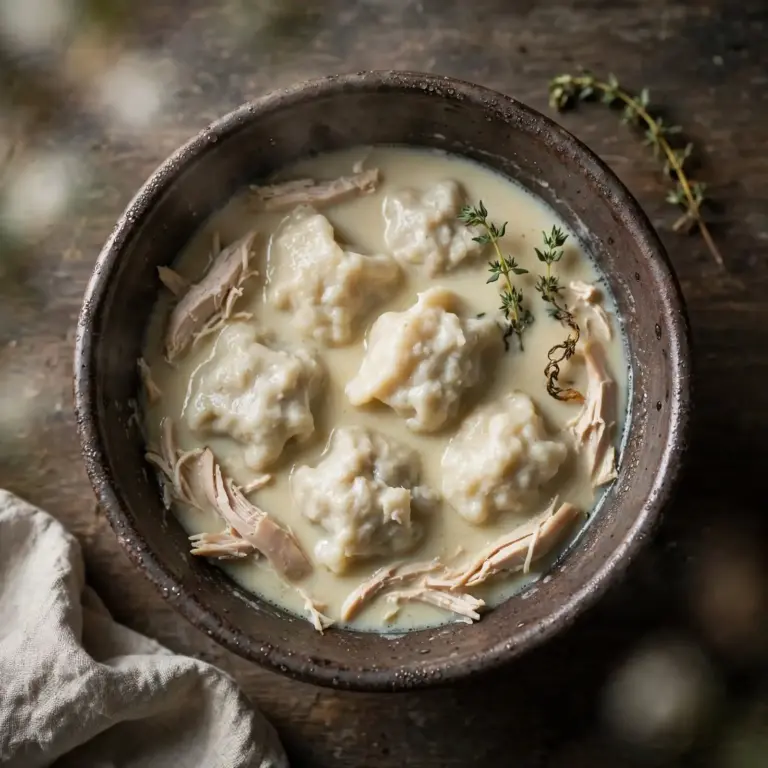
There is no weeknight meal more reliable than a good homemade chicken noodle recipe. This one builds a proper golden broth from scratch, with tender shredded chicken and egg noodles that hold their shape rather than going soft and waterlogged. The whole pot comes together in 45 minutes using a handful of ingredients you almost certainly already have. It works on a sick day, a cold evening, or any night you want a proper warm meal without much effort. Once you have made it this way, the canned version simply does not compare.
A chicken noodle recipe is a one-pot soup made by simmering chicken in aromatic broth, shredding it, and finishing with egg noodles until tender. To make it, sauté diced onion, carrot, and celery in a large pot, add raw chicken and broth, simmer until the chicken is cooked through, shred the meat, cook noodles directly in the broth, season, and serve hot.
Why You Will Love This Chicken Noodle Recipe
- The broth turns genuinely golden and full-bodied because the chicken simmers directly in it, releasing fat and collagen that no store-bought carton can replicate on its own.
- This is a true one-pot method from start to finish, which means no juggling multiple pans or draining a colander for the noodles.
- Cooking the noodles inside the broth means they absorb the flavor as they soften, rather than tasting like they were boiled in plain water and dropped in at the end.
- Every component adjusts easily: the noodle type, the vegetables, the seasoning, and the herbs can all be swapped based on what you have available.
- This dish scales up reliably and reheats well the next day, making it a strong choice for batch cooking during a busy week.
Recipe Snapshot
Servings: 4–6
Difficulty: Easy
Cuisine: American / Comfort Food
Course: Main
Prep Time: 15 minutes
Cook Time: 30 minutes
Total Time: 45 minutes
Ingredients You Will Need For Chicken Noodle Recipe
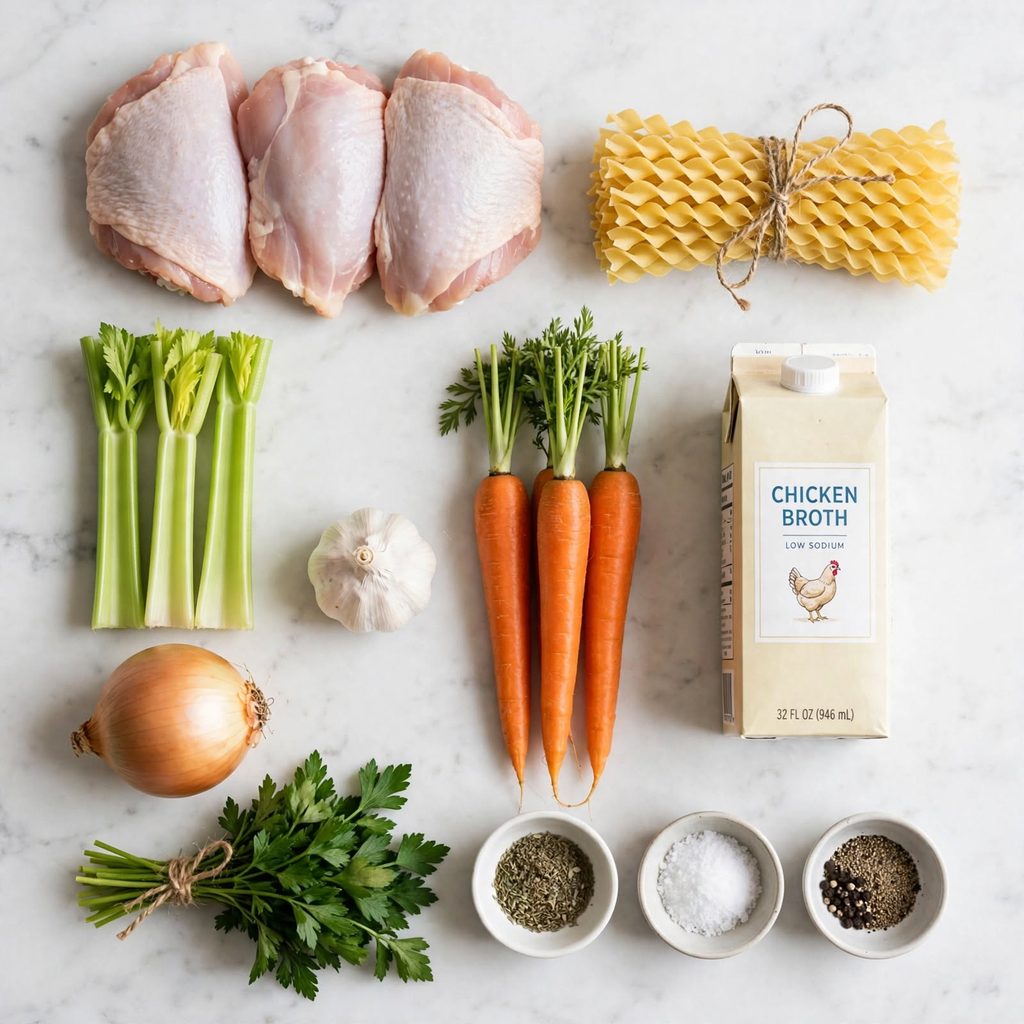
- 500g (about 1.1 lb) boneless chicken thighs — thighs stay moist during simmering and release far more fat and flavor into the broth than breast meat does
- 1.5 liters (6 cups) low-sodium chicken broth — using low-sodium lets you control the final salt level yourself rather than working around a pre-seasoned base
- 200g (7 oz) egg noodles — medium-width noodles hold up best in broth; thin varieties turn soft within minutes of cooking
- 2 medium carrots, peeled and sliced into 5mm rounds — even slicing means even cooking so nothing is crunchy while the rest of the soup is done
- 3 stalks celery, sliced — adds a subtle earthiness that rounds out the broth without drawing attention to itself
- 1 medium yellow onion, diced — forms the sweet aromatic base; yellow onion softens and sweetens more than white as it cooks
- 3 cloves garlic, minced — adds depth to the broth; add it a minute after the other vegetables to prevent burning
- 2 tablespoons olive oil — for sautéing the vegetables before the broth goes in
- 1 teaspoon dried thyme — pairs naturally with chicken and deepens the savory profile of the broth
- Salt and black pepper to taste — season after the noodles are cooked, once the broth has reduced slightly and concentrated
- Fresh flat-leaf parsley for garnish — halal, no restrictions; brightens the color and adds a clean finish to each bowl
Recipe Timing
Prep Time: 15 minutes
Cook Time: 30 minutes
Total Time: 45 minutes
Easy Substitutions and Halal Alternatives
No egg noodles? Use any short pasta like penne or fusilli, or swap for rice noodles for a gluten-free option — the result will be slightly lighter in texture but just as satisfying. No chicken thighs? Boneless breast works as a substitute — the result will be leaner and slightly less rich, so check doneness a few minutes earlier to prevent dryness. No fresh garlic? Half a teaspoon of garlic powder added with the dried thyme gives a gentler background flavor that still works well — the result will be milder rather than sharp. No celery? Simply leave it out or add one extra carrot — the result will be slightly sweeter but well-balanced.
Allergen Information
This recipe contains gluten (egg noodles) and celery. It does not contain dairy, nuts, or shellfish. For a gluten-free version, use certified gluten-free pasta or rice noodles and check your broth label, as some brands add wheat-based thickeners. Always review individual ingredient labels for potential cross-contamination.
How To Make Chicken Noodle Recipe Step by Step
Step 1: Peel and slice the carrots into 5mm rounds, dice the onion, slice the celery, mince the garlic, and cut the chicken thighs into three or four large chunks. Having everything prepped before the pot goes on the heat means nothing scorches while you are still at the cutting board. This takes about 15 minutes in total and is the only prep this recipe needs.
Step 2: Pour the olive oil into a large pot or Dutch oven and place it over medium heat. Once the oil shimmers, add the diced onion, sliced carrots, and celery. Cook for 5 to 6 minutes, stirring a couple of times, until the onion turns translucent and the vegetables begin to soften slightly at the edges.
Step 3: Add the minced garlic and dried thyme to the pot. Stir constantly for about 30 seconds until the garlic smells toasted rather than raw. This short step is where the aromatic base of the broth builds, and taking your time here is exactly what separates a flat soup from one that tastes like it simmered all afternoon.
Well done getting this far. The aromatic base is the most important technique step in the whole recipe, and it is already done.
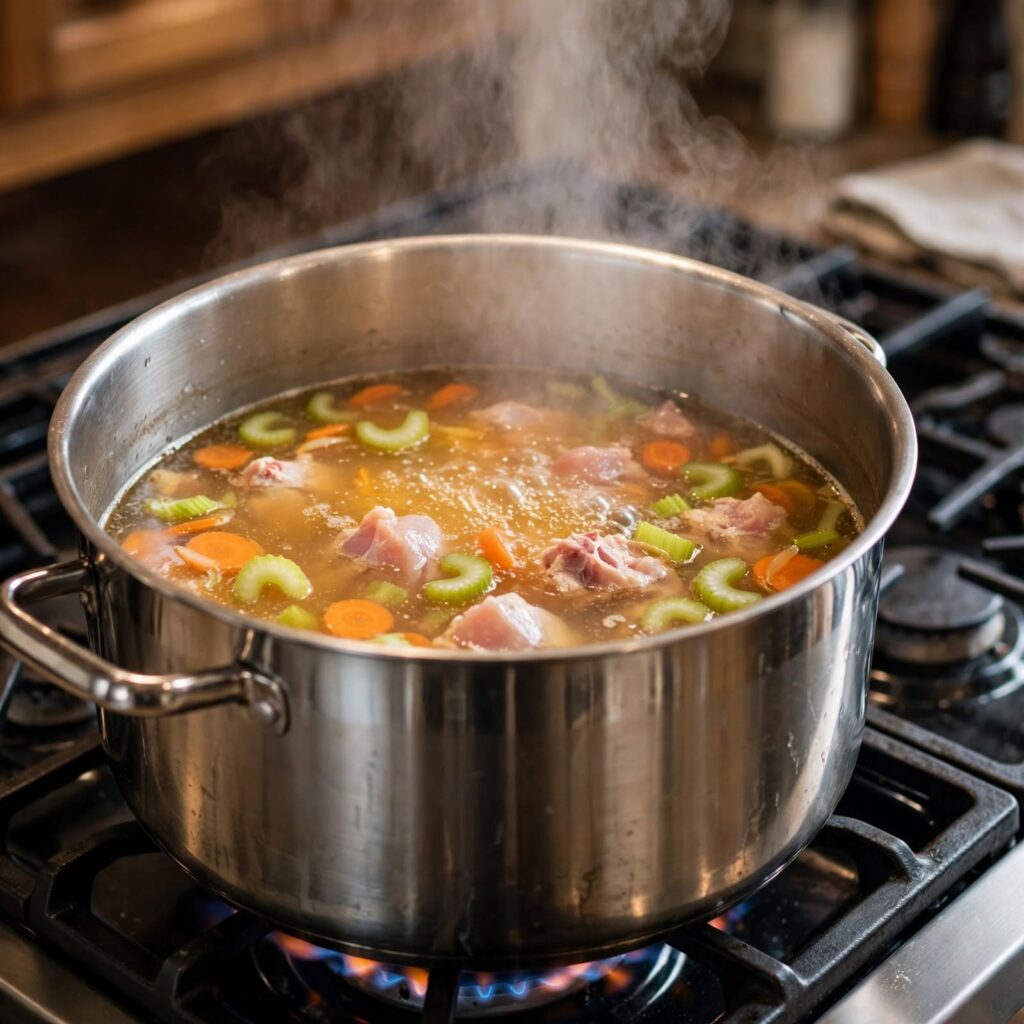
Step 4: Pour in the chicken broth and nestle the chicken pieces into the liquid. Bring everything to a boil over medium-high heat, then reduce to a steady simmer. Cook uncovered for 18 to 20 minutes, or until a meat thermometer inserted into the thickest piece reads 74°C (165°F) throughout.
Food Safety Note: Raw chicken must reach an internal temperature of 74°C (165°F) before it is safe to eat. Do not rely on color alone to judge doneness — use a thermometer. Wash your cutting board, knife, and any surfaces that contacted raw chicken immediately after prep.
Step 5: Lift the chicken pieces out of the pot with tongs and transfer them to a cutting board. Use two forks to pull the meat apart into bite-sized shreds, then return the shredded chicken to the pot. At this stage the thighs should come apart with almost no effort.
Why this works: Cooking the chicken whole in the broth first, then shredding it, allows the meat to release collagen and fat into the liquid as it simmers. That exchange is what gives the broth its golden color and rounded body. Adding pre-cooked chicken to plain stock skips that process entirely and produces a noticeably thinner, flatter result.
Step 6: Raise the heat slightly and add the egg noodles directly to the broth. Cook according to the packet directions, usually 6 to 8 minutes, stirring once or twice to prevent sticking. Taste the broth at this point and add salt and black pepper until the seasoning is right.
Step 7: Pull the pot off the heat as soon as the noodles are just tender — they should have a slight firmness at the center, not be fully soft. Ladle into bowls immediately, scatter fresh parsley on top, and serve. If you are not serving right away, keep the noodles slightly underdone, as they continue softening in the residual heat.
Pro Tips While Making Chicken Noodle Recipe
If the broth tastes flat before the noodles go in, simmer it uncovered for an extra 5 minutes — this concentrates the flavor and keeps your chicken noodle recipe from tasting like seasoned water. If the noodles absorb too much broth overnight, stir in a splash of extra chicken stock when reheating rather than plain water, which dilutes the taste. If the shredded chicken looks pale or slightly stringy once shredded, that is completely normal — the flavor is in the broth, not in the color of the meat.
Best Tips For Perfect Chicken Noodle Recipe Every Time
Use chicken thighs rather than breast meat for this soup. The extra fat in thigh meat melts into the broth during the simmering stage, producing that golden color and rounder flavor that breast meat simply does not deliver. If thighs are not available, add a teaspoon of olive oil directly to the broth before simmering to compensate for the missing fat.
The most common beginner mistake is adding noodles too early. Noodles sitting in hot broth for 20 or 30 minutes turn into a soft, starchy paste that breaks apart in the bowl. Add them only in the last 7 to 8 minutes, taste for doneness, and pull the pot off the heat the moment they reach tender.
To keep this dish fresh when serving a group, ladle the broth and chicken into a serving pot and keep the cooked noodles in a separate bowl on the side. Each person adds noodles to their own bowl, which means no one ends up with swollen, waterlogged pasta by the time everyone is ready to eat.
Reheating works best on the stovetop over medium-low heat with a splash of extra broth stirred in before it warms through. Microwaving works too — heat in 90-second rounds and stir between each one so the temperature distributes evenly.
This recipe freezes well as long as you store the broth and shredded chicken separately from the noodles. Cooked egg noodles frozen inside broth turn waterlogged and disintegrate completely on thawing. Freeze only the broth and chicken in an airtight container for up to 3 months, then cook fresh noodles directly in the reheated liquid each time.
Scaling up is straightforward: double every ingredient proportionally. When working with a larger batch, give the chicken an extra 4 to 5 minutes at the simmering stage, since a larger volume of cold meat takes longer to bring the broth back up to temperature.
Common Mistakes and Troubleshooting
Adding noodles to barely simmering or low-temperature liquid is the most common cause of problems with this dish. Noodles need actively boiling liquid to cook through evenly. When the temperature is too low, they absorb moisture unevenly and end up gummy and soft on the outside before the center ever reaches tender.
Using only chicken breast often produces a broth that tastes flat and pale. Breast meat is lean and releases very little fat during cooking. If it is all you have, drop a small piece of chicken skin into the simmering broth for 10 minutes, then remove it before adding the noodles — this adds back some of the missing richness without changing the recipe otherwise.
Seasoning at the start rather than the end is another frequent issue. The broth reduces as it cooks, concentrating whatever salt you added early. Always season after the noodles are done and you have tasted the finished pot, not at the beginning when the salt level is still changing.
Cutting vegetables too thick means they stay firm in the finished bowl. Carrot slices thicker than about 7mm will still have a raw snap by the time the chicken is fully cooked. Keeping them at 5mm or thinner ensures they finish cooking at the same time as everything else.
Delicious Variations of Chicken Noodle Recipe To Try
For a spicy version, stir in half a teaspoon of red chili flakes with the garlic and thyme, and finish each bowl with a drizzle of chili oil. The heat builds gradually and sits in the background of the broth rather than overpowering it.
A milder option suited to young children works well with small stelline pasta (tiny star shapes) instead of egg noodles. They are easier to eat from a spoon, cook quickly, and the rest of the base recipe stays exactly the same.
For a gluten-free and dairy-free variation, replace the egg noodles with certified gluten-free rice noodles and check your broth label for hidden wheat thickeners. Every other ingredient in this recipe is already naturally free from both.
A spring and summer version gets a lift from a tablespoon of fresh lemon juice and a handful of baby spinach stirred in at the very end. The lemon brightens the broth noticeably, and the spinach wilts in about 60 seconds without changing the texture of the soup.
For a restaurant-style upgrade, sear the chicken pieces in a little olive oil over high heat until golden on both sides before adding the broth. The fond left on the pot bottom adds a roasted depth to the liquid that straight simmering alone cannot produce.
Serving Suggestions
A sharp green salad with a vinegar-based dressing works well alongside a bowl of this soup, cutting through the richness of the broth without competing with it. Warm crusty bread or toasted sourdough on the side turns a bowl of soup into a full meal and handles the broth that gathers at the bottom far better than a spoon alone. For something more filling, serve over a small scoop of steamed rice if you have skipped the noodles or want extra bulk. A fresh lemon wedge beside each bowl lets people brighten their own portion individually at the table.
Storage, Reheating and Freezing
Store leftover soup in an airtight container in the fridge for up to 4 days. The noodles will continue absorbing liquid as it sits, so by day two the consistency will be noticeably thicker. Add a splash of extra chicken broth when reheating to loosen it. The flavor deepens overnight, and leftovers often taste better than the original serving.
Reheat on the stovetop over medium-low heat, stirring gently so the noodles do not break apart further. For microwave reheating, use 90-second intervals and stir between each round to distribute the heat evenly.
Freeze the broth and shredded chicken in a sealed container separately from any cooked noodles. Egg noodles frozen inside liquid turn waterlogged and fall apart completely on thawing. The broth and chicken keeps well in the freezer for up to 3 months. Cook a fresh batch of noodles directly in the reheated broth each time you serve from frozen.
Frequently Asked Questions About Chicken Noodle Recipe
Can I Make This Chicken Noodle Recipe Ahead of Time?
Yes, and it actually works better if you do. Prepare the broth and shredded chicken portion up to 2 days in advance and keep it in the fridge. When it is time to eat, bring the broth back to a full simmer, add the egg noodles, and cook them fresh for 7 to 8 minutes. This prevents the noodles from absorbing all the liquid overnight and turning soft and thick. The result tastes freshly made every single time you serve it.
How Do I Make This Soup Without Celery?
Simply leave the celery out and add one extra carrot to keep the vegetable ratio balanced. You can also replace it with diced fennel for a lightly sweet, anise-adjacent flavor that pairs well with chicken broth. Many home cooks skip the celery entirely and find the finished bowl barely changed. The broth still tastes full, savory, and satisfying without it.
Can I Freeze This Soup?
Yes, with one condition: freeze the broth and shredded chicken separately from the noodles. Egg noodles frozen inside liquid become waterlogged and break apart completely on thawing, losing all usable texture. The broth and chicken portion keeps well in a sealed container for up to 3 months. When reheating, bring the frozen broth and chicken to a full simmer, then cook fresh noodles directly in it. Following this method means your result comes out just as good as the day you made it.
How Long Does This Soup Last in the Fridge?
Stored correctly in an airtight container, this soup keeps for up to 4 days. By day two or three the noodles will have absorbed more liquid and the soup will be thicker than on day one. Add a small amount of extra broth when reheating to restore the original consistency. For the best results across several days, store the noodles and broth in separate containers.
Why Is My Chicken Noodle Recipe Turning Out Bland?
The most likely cause is under-seasoning at the end. If you used a low-sodium broth, you may need more salt than expected — the amount listed in any recipe is a starting point, not a fixed quantity. Taste the soup after the noodles finish cooking and season from there. A squeeze of fresh lemon juice also lifts the flavor considerably if the broth still tastes flat after salting. Getting this step right is the difference between a forgettable bowl and a genuinely satisfying chicken noodle recipe.
Can I Make This Gluten-Free or Dairy-Free?
For a gluten-free version, swap the egg noodles for certified gluten-free rice noodles or chickpea pasta, and verify your chicken broth label shows no wheat-based additives. This recipe contains no dairy at all, so it is already naturally dairy-free without any changes. Both swaps produce a finished bowl close enough to the original that most people at the table would not notice a difference.
Chicken Noodle Recipe Card
Recipe Name: Chicken Noodle Recipe
Cuisine: American / Comfort Food
Course: Main
Difficulty: Easy
Prep Time: 15 minutes
Cook Time: 30 minutes
Total Time: 45 minutes
Servings: 4–6
Ingredients:
- 500g boneless chicken thighs
- 1.5 liters low-sodium chicken broth
- 200g egg noodles
- 2 medium carrots, peeled and sliced into 5mm rounds
- 3 stalks celery, sliced
- 1 medium yellow onion, diced
- 3 cloves garlic, minced
- 2 tablespoons olive oil
- 1 teaspoon dried thyme
- Salt and black pepper to taste
- Fresh flat-leaf parsley for garnish
Instructions:
- Prep all vegetables and cut chicken thighs into large chunks.
- Heat olive oil in a large pot over medium heat. Sauté onion, carrots, and celery for 5–6 minutes until softened.
- Add garlic and thyme. Stir for 30 seconds until fragrant.
- Add broth and chicken. Bring to a boil, reduce to a simmer, cook 18–20 minutes until chicken reaches 74°C (165°F).
- Remove chicken, shred with two forks, return to pot.
- Add egg noodles and cook 6–8 minutes until just tender. Season with salt and pepper.
- Ladle into bowls, top with parsley, and serve.
Notes:
Store in the fridge for up to 4 days in a sealed container. Freeze broth and shredded chicken separately from noodles for up to 3 months. For a gluten-free version, use certified gluten-free rice noodles and verify the broth label.
Nutrition Per Serving (Estimate):
Calories: 385 | Protein: 29g | Fat: 12g | Carbs: 37g | Fiber: 3g | Sodium: 710mg
Nutrition values are estimates only and may vary based on specific ingredients used.
Conclusion
This chicken noodle recipe earns its place as a permanent fixture in any weeknight rotation. The ingredients are affordable, the method is straightforward, and the result is a proper golden bowl with tender chicken and well-cooked noodles that no canned product comes close to matching. Make it once and the steps become instinct. Ready in 45 minutes, good for several days, and reliable every time you need it.
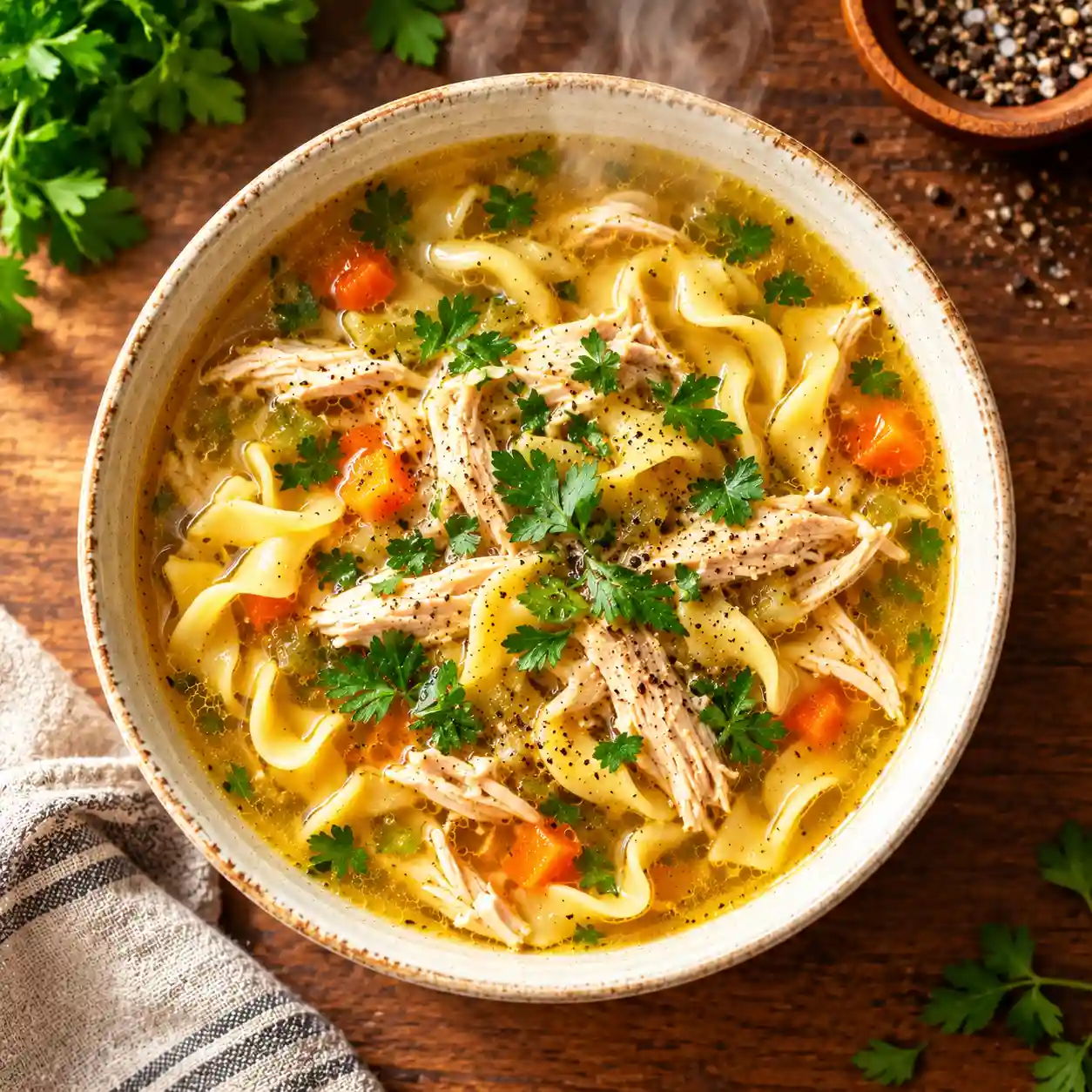
Chicken Noodle Recipe
Ingredients
Method
- Prep all vegetables and cut chicken thighs into large chunks.
- Heat olive oil in a large pot over medium heat. Sauté onion, carrots, and celery for 5–6 minutes until softened.
- Add garlic and thyme. Stir for 30 seconds until fragrant.
- Add broth and chicken. Bring to a boil, reduce to a simmer, cook 18–20 minutes until chicken reaches 74°C (165°F).
- Remove chicken, shred with two forks, return to pot.
- Add egg noodles and cook 6–8 minutes until just tender. Season with salt and pepper.
- Ladle into bowls, top with parsley, and serve.
Notes
Calories: 385 | Protein: 29g | Fat: 12g | Carbs: 37g | Fiber: 3g | Sodium: 710mg
Nutrition values are estimates only and may vary based on specific ingredients used.

2 Comments
Comments are closed.