Lasagna Soup Recipe: 8 Easy Steps, Foolproof Result
Lasagna soup packs everything people crave about a baked pan of lasagna into one pot: savory beef, tomato-rich broth, ribbons of tender pasta, and a crown of melted cheese. Ruffled noodle pieces soak up the seasoned liquid while spoonfuls of ricotta turn creamy as they swirl through each bowl. From the first chop of the onion to the final sprinkle of mozzarella, the whole thing takes about 45 minutes, with no layering, no oven, and no baking dish to scrub. Your kitchen will smell like a corner trattoria while you work. This pot delivers deeper flavor than any canned version or takeout container could manage.
Brown halal ground beef with onion and garlic, simmer it in tomato broth with broken lasagna noodles until tender, then finish each bowl with ricotta, mozzarella, and fresh basil. The whole pot is ready in about 45 minutes and tastes like layered lasagna in spoonable form.
Why You Will Love This Lasagna Soup
- Everything cooks in a single pot, so one wide pan and a wooden spoon replace a stack of dishes while tomato and garlic perfume the kitchen.
- Each spoonful carries a silky noodle ruffle, crumbly savory beef, and a cool dollop of ricotta that softens into the hot broth.
- Dinner reaches the table in 45 minutes from mostly pantry staples, far faster than the hour-plus bake of a classic pan.
- The broth turns glossy as the noodles release starch, and a splash of cream mellows the sharp edge of the tomato.
- Leftovers taste rounder the next day, because the herbs and tomato settle into one deep, savory flavor.
Recipe Snapshot
Course: Main
Cuisine: Italian-American
Difficulty: Easy
Servings: 6
Prep Time: 15 minutes
Cook Time: 30 minutes
Total Time: 45 minutes
Ingredients You Will Need For Lasagna Soup
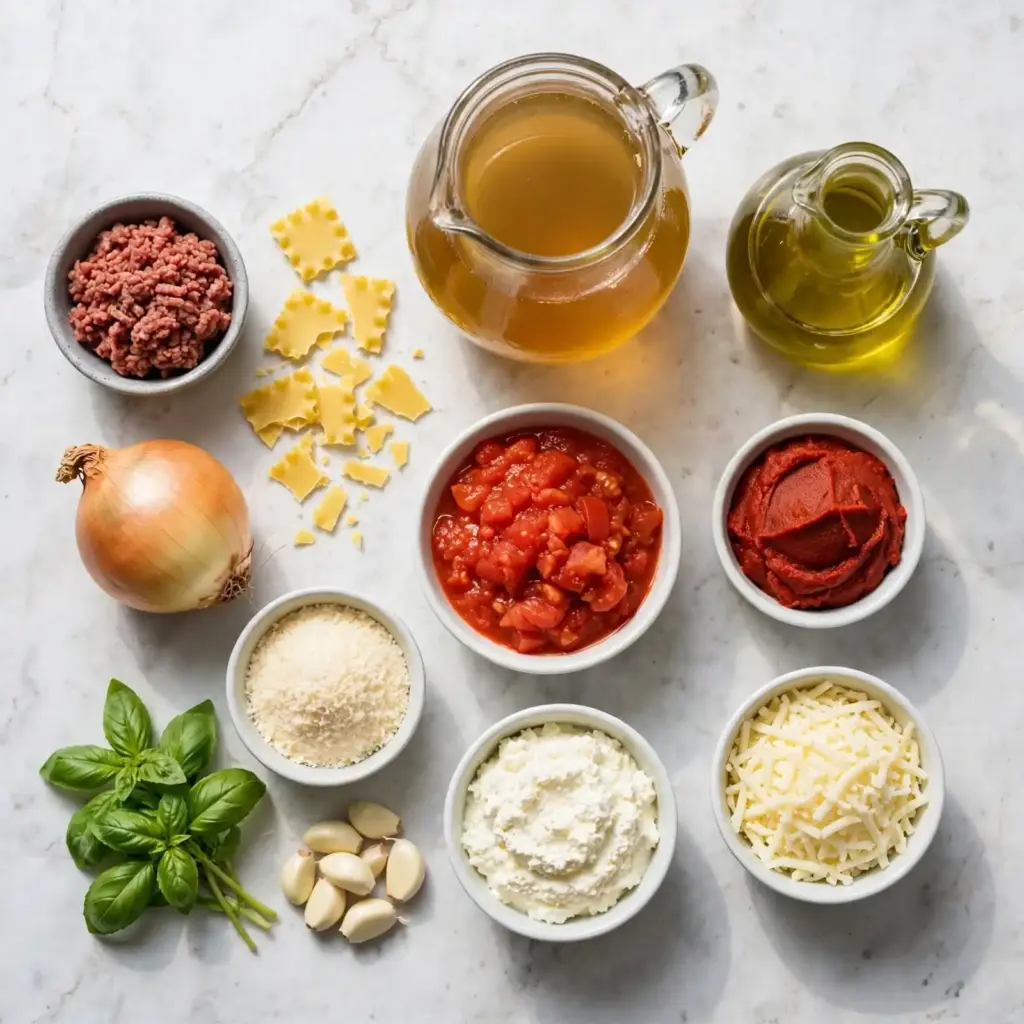
- 1 tablespoon olive oil — starts the flavor base; extra-virgin adds a fruity edge.
- 1 medium yellow onion, finely diced (about 1 cup) — melts into the broth; dice small so it disappears.
- 4 garlic cloves, minced — adds depth; stir in after the meat to avoid scorching.
- 1 pound (450 g) halal ground beef, 80/20 — supplies richness; the fat carries flavor.
- 2 teaspoons Italian seasoning — herby backbone; rub it between your fingers to wake it up.
- 1/4 teaspoon red pepper flakes — gentle warmth; leave out for sensitive palates.
- 2 tablespoons tomato paste — concentrated sweetness; cook until brick red.
- 1 can (14.5 oz / 411 g) crushed tomatoes — builds body; pick a brand with no added sugar.
- 4 cups (950 ml) halal-certified beef broth — savory liquid; low-sodium lets you control the salt.
- 8 dried lasagna noodles (about 6 oz / 170 g), broken into 1½-inch pieces — the star; tear by hand for ruffled edges.
- 1/2 cup (120 ml) heavy cream — adds silk; stir in over low heat.
- 1 cup (240 g) whole-milk ricotta — cool, creamy topping; whole-milk spoons best.
- 1/4 cup (25 g) grated Parmesan, halal-certified or vegetarian-rennet — salty depth; grate fresh.
- 1½ cups (150 g) shredded halal-certified mozzarella — stretchy finish; shred from a block for better melt.
- 1 teaspoon salt and 1/2 teaspoon black pepper — season in layers; taste before adding cheese.
- 2 tablespoons chopped fresh basil — bright finish; add at the very end.
Recipe Timing
Prep time is 15 minutes and cook time is 30 minutes, which makes the total time 45 minutes (15 + 30 = 45). Chop the onion, mince the garlic, and break the noodles while the pot heats, and the clock will stay right on that mark.
Easy Substitutions and Halal Alternatives
No heavy cream? Use full-fat coconut milk — the result will be dairy-free and just as velvety, with a faint sweetness. No regular lasagna noodles? Use gluten-free lasagna sheets — the result will be tender pieces that hold their shape if added for the last 8 minutes. No ricotta? Use smooth, blended cottage cheese as the budget swap — the result will be a tangier but equally creamy topping. No halal-certified Parmesan? Use a vegetarian-rennet hard cheese or 2 tablespoons of nutritional yeast — the result will be a nutty, savory finish with halal-friendly sourcing.
Allergen Information
This recipe contains milk (cream, ricotta, Parmesan, mozzarella) and wheat gluten (lasagna noodles). Check broth, tomato, and seasoning labels as well, since some brands add hidden allergens.
How To Make Lasagna Soup Step by Step
Step 1: Set a wide, heavy-bottomed pot over medium heat and warm the olive oil until it shimmers. Add the diced onion and stir for about 4 minutes, until the pieces turn soft, glossy, and translucent. Keep the color pale, because browned onion would muddy the clean tomato flavor later.
Step 2: Crumble the ground beef into the pot and press it apart with the back of your spoon. Let it sizzle for 6 to 7 minutes, stirring now and then, until the pink disappears and the edges pick up a deep brown crust. That crust is where the roasted, savory character of the whole pot begins.
FOOD SAFETY NOTE: USDA guidelines recommend cooking ground beef to an internal temperature of 160°F (71°C). Wash your hands, spoon, and cutting board with hot soapy water after touching the raw meat so nothing transfers to the basil or cheese.
Step 3: Stir in the garlic, tomato paste, Italian seasoning, red pepper flakes, salt, and pepper, then cook for 2 minutes. The paste will darken from bright red to a rusty brick color and cling to the beef while the garlic turns fragrant. Keep stirring so nothing catches on the bottom.
You are doing wonderfully, because the base is built and the trickiest flavor work is already finished. Everything from here is simply liquid, noodles, and patience.
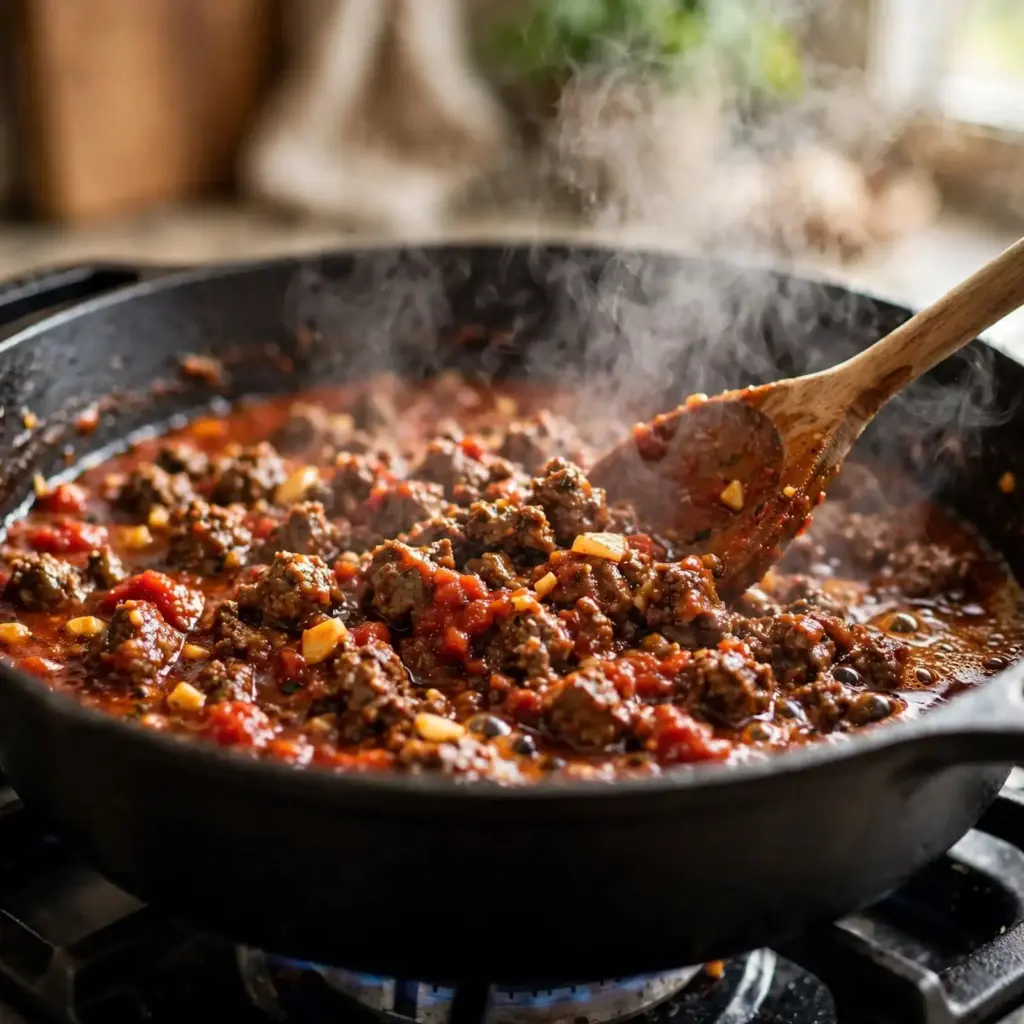
Step 4: Pour in the broth and crushed tomatoes, then scrape the bottom of the pot to loosen the browned bits. Raise the heat just until small bubbles break across the surface and the liquid smells rich and tomatoey, then settle it into a gentle simmer.
Why this works: Those browned bits, called fond, are concentrated flavor. Dissolving them into the liquid gives the broth the roasted depth of a lasagna baked in the oven.
Step 5: Slide the broken noodle pieces into the simmering broth and stir right away so they do not stick together. Simmer uncovered for 10 to 12 minutes, stirring every couple of minutes, until the pieces are tender with a slight bite. The liquid will thicken to a glossy, spoon-coating texture as the noodles release their starch.
You have got this, because the noodles are the last delicate stage and the pot already smells like dinner. A quick taste of one piece will tell you exactly when to move on.
Step 6: Reduce the heat to low and pour in the cream, stirring gently. The broth will shift from deep red to a soft, rosy orange and turn silky on the spoon. Keep the heat low so the cream blends in smoothly instead of splitting.
Step 7: Stir the ricotta and Parmesan together in a small bowl until smooth and spreadable. This cool, creamy mixture will melt gradually into each serving and keep the topping luscious. Set it beside the stove along with the mozzarella and basil.
Step 8: Ladle the soup into bowls and top each one with a spoonful of the ricotta mixture, a handful of mozzarella, and chopped basil. Rest a plate loosely over each bowl for 2 minutes so the cheese softens and begins to stretch. Serve right away while the steam is still rising.
Pro Tips While Making Lasagna Soup
If the noodles start sticking to the bottom, stir every few minutes and keep the heat at a gentle simmer — this keeps your soup from scorching and clumping. If the broth looks too thick once the noodles soften, loosen it with a splash of hot broth or water — this keeps your bowls spoonable instead of stodgy. If the ricotta looks grainy after heating, spoon it onto the bowls off the heat — this keeps your topping from turning dry.
Best Tips For Perfect Lasagna Soup Every Time
Break the noodles by hand rather than cutting them, because torn edges look ruffled and trap more of the sauce. Aim for pieces about 1½ inches wide so each one fits on a spoon alongside some beef.
The most common beginner mistake is boiling the noodles hard, which turns them mushy before the pot is done. Hold the broth at a gentle simmer and start tasting a piece at the 10-minute mark.
For a crowd, keep the pot on the lowest heat with the lid slightly ajar and add the cheeses to each bowl as you serve. Fresh ricotta and mozzarella on top keep the pot looking bright for latecomers.
Reheat leftovers on the stove over medium-low heat with a splash of broth, because the noodles absorb liquid overnight. A microwave works too if you heat in 60-second bursts and stir between each one.
Freezing works best for the beef and tomato base made without noodles, cream, or cheese, because cooked pasta turns soft and dairy can separate after thawing. Freeze that base for up to 3 months and add fresh noodles and dairy when you reheat.
To double the batch, use a larger pot, double every ingredient, and give the beef a few extra minutes so it browns instead of steams. To halve it, use a smaller pot, use 4 noodles, and start checking the pasta at 8 minutes.
Common Mistakes and Troubleshooting
Clumped noodles happen when the pieces go into the broth without a stir, so they fuse as they soften. Drop them in a few at a time and stir right away to keep every piece separate.
A watery lasagna soup usually means the tomato paste was not cooked down or the pot did not simmer long enough. Cook the paste until it darkens, and let the finished pot rest for 5 minutes so the starch can thicken the broth.
A greasy surface appears when the beef carries more fat than expected. Spoon off the extra fat after browning, or skim the top with a ladle before adding the cream.
Bland or overly salty broth traces back to the broth itself. Choose low-sodium broth, taste before the cheeses go in since Parmesan and mozzarella add salt, and adjust at the end.
Delicious Variations of Lasagna Soup To Try
For a spicy lasagna soup, raise the red pepper flakes to 1 teaspoon and stir in 1 tablespoon of harissa with the tomato paste. The smoky heat builds slowly, and extra cheese on top cools each bite.
For a mild, kid-friendly pot, skip the pepper flakes and swap the noodle pieces for mini pasta shells that small spoons scoop up easily. The gentler flavor wins over picky eaters without losing the creamy comfort.
For a dairy-free or gluten-free pot, use coconut milk, plant-based ricotta and mozzarella, and gluten-free noodles added for the last 8 minutes. The result stays creamy and satisfying, and the ricotta swap melts in much the same way.
For a cozy autumn or Eid-gathering version, stir in chopped roasted red peppers and 2 cups of baby spinach during the last 3 minutes. The sweet color and tender greens make the table look festive.
For a restaurant-style finish, ladle the soup into oven-safe bowls, add extra mozzarella, and broil for 2 minutes until the cheese blisters, then drizzle with olive oil and torn basil. Each bowl arrives bubbling and golden at the edges, the way a trattoria would send it out.
Serving Suggestions
Homemade lasagna soup tastes best beside a thick slice of toasted garlic bread, whose crisp crust is made for dunking into the tomato broth. A bright salad of romaine, cucumber, and lemon vinaigrette cuts through the richness of the cheese, while roasted zucchini adds a tender, savory side. For a polished look, ladle the soup into wide shallow bowls, set the ricotta slightly off-center, and finish with two basil leaves and a dusting of Parmesan so the white, red, and green stand out.
Storage, Reheating and Freezing
Cool the pot for about 30 minutes, then refrigerate leftover lasagna soup in an airtight container for up to 3 days. Keep the cheese toppings separate when you can, so each reheated bowl gets a fresh, creamy finish.
Reheat portions in a saucepan over medium-low heat with a splash of broth, stirring until steaming and hot throughout (USDA guidelines recommend 165°F / 74°C for leftovers). A microwave also works in 60-second bursts with a stir between each.
Freezing suits the beef and tomato base only, since cooked noodles turn soft and dairy can separate after thawing. Freeze that base for up to 3 months and add fresh noodles and cream when you warm it up.
Frequently Asked Questions About Lasagna Soup
Can I Make Lasagna Soup Ahead of Time?
Absolutely, and the base tastes even better after a night in the fridge as the herbs and tomato meld. Cook the beef, tomatoes, and broth up to 2 days ahead and refrigerate them. Bring the pot back to a simmer, then add fresh noodles and the cream just before serving. That routine gives you tender noodles and a rich, slow-simmered flavor on a busy evening.
How Do I Make This Soup Without Ricotta?
Blend 1 cup of cottage cheese with the Parmesan until smooth and use it exactly like ricotta. Cream cheese or mascarpone also works, adding a richer, slightly tangier finish. Stir either one into the bowls off the heat so it stays smooth. Follow this and every bowl will turn out creamy and satisfying.
Can I Freeze Lasagna Soup?
Yes, with one adjustment: freeze only the beef and tomato base. Cooked noodles turn soft and dairy can separate after thawing, so those two go in fresh. Freeze portions for up to 3 months, thaw overnight in the refrigerator, then simmer, add noodles, and finish with cream and cheese. Do it this way and a freezer batch tastes like it was made today.
How Long Does Leftover Soup Last in the Fridge?
Refrigerated in an airtight container within 2 hours of cooking, the soup keeps well for up to 3 days. The noodles keep absorbing broth, so add a splash of water or broth when you reheat. Heat it to 165°F (74°C), the temperature USDA guidelines recommend for leftovers. Stored this way, your lunch the next day tastes just as comforting.
Why Is My Lasagna Soup Turning Out Mushy?
Overcooked noodles are the usual cause, and heat control is the fix. Add the pieces only when the broth is at a gentle simmer, set a 10-minute timer, and taste one before going further. Pull the pot off the burner once the noodles are just tender, since they keep softening in the hot liquid. Master this timing and every bowl will have a pleasant bite.
Can I Make This Soup Gluten-Free or Dairy-Free?
Both are easy. For gluten-free, use gluten-free lasagna sheets and check the broth and seasoning labels. For dairy-free, swap in coconut milk for the cream and use plant-based ricotta and mozzarella. Make these swaps and the pot turns out just as cozy and flavorful.
Conclusion
This easy lasagna soup brings the comfort of a baked pan to your table in about 45 minutes, with creamy ricotta, tender noodles, and a rich tomato broth in every spoonful. Keep the simmer gentle, season in layers, and finish with fresh basil for the best result. Ladle it into wide bowls, pass the garlic bread, and enjoy every cheesy bite.
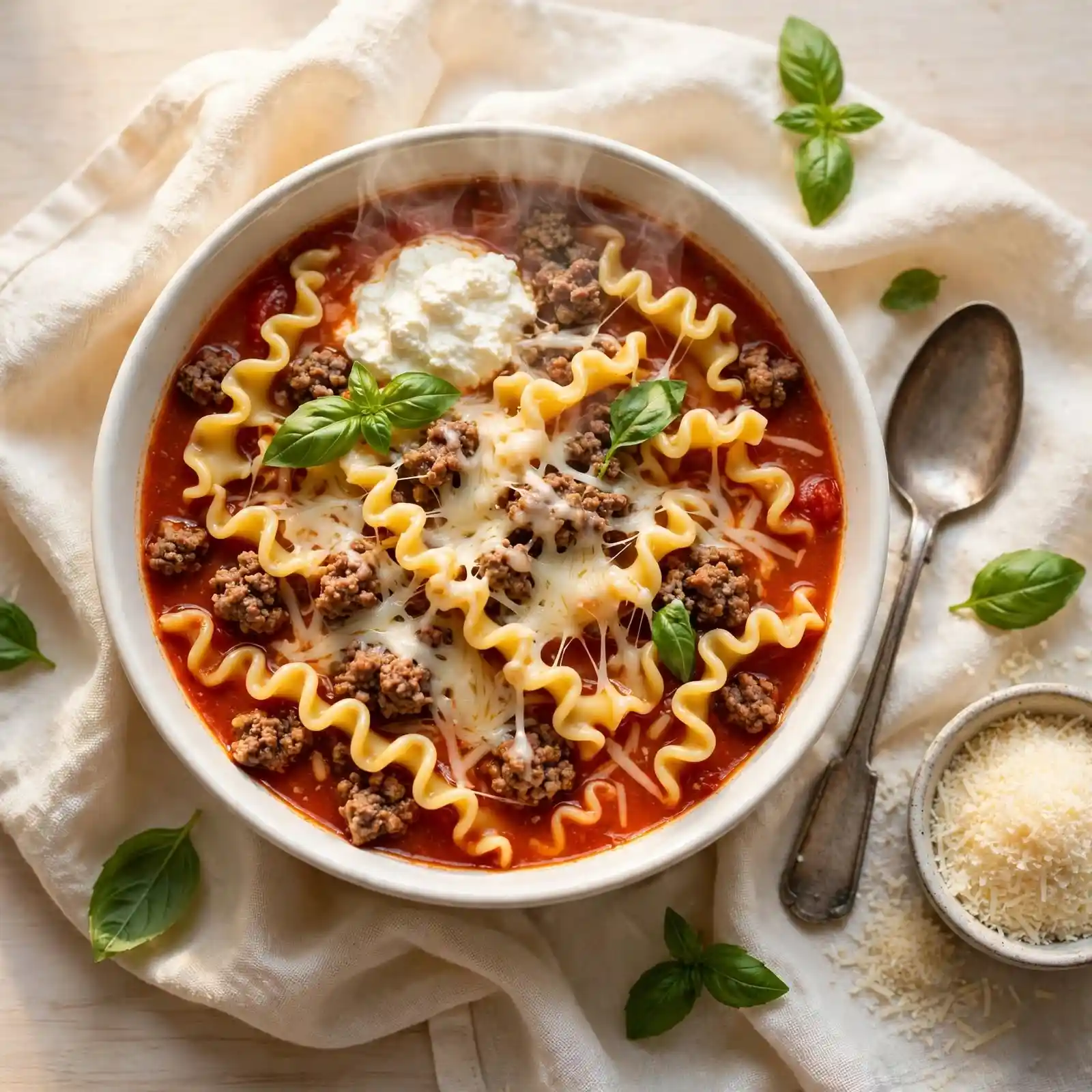
Lasagna Soup
Ingredients
Method
- Warm the oil in a wide pot over medium heat.
- Cook the onion for 4 minutes until soft.
- Brown the beef for 6 to 7 minutes until no pink remains.
- Stir in the garlic, tomato paste, seasoning, pepper flakes, salt, and pepper for 2 minutes.
- Pour in the broth and tomatoes, scraping up the browned bits, and bring to a gentle simmer.
- Add the noodle pieces and simmer 10 to 12 minutes until tender.
- Lower the heat and stir in the cream.
- Mix the ricotta and Parmesan, then ladle the soup into bowls and top with the ricotta mixture, mozzarella, and basil.




2 Comments
Comments are closed.