Chicken Spaghetti Recipe: 7 Easy Steps for an Ultimate Creamy Dinner
There is something genuinely satisfying about a dish that turns a handful of everyday ingredients into something the whole table goes quiet for. Chicken spaghetti does exactly that, pulling tender shredded chicken and perfectly cooked pasta into a rich, cheesy sauce that gets even better from the oven. It comes together in under 45 minutes, uses ingredients most kitchens already stock, and the baked finish develops a golden crust that takes it from simple weeknight food to something worth repeating every week. Make it once and it earns a permanent spot in your rotation.
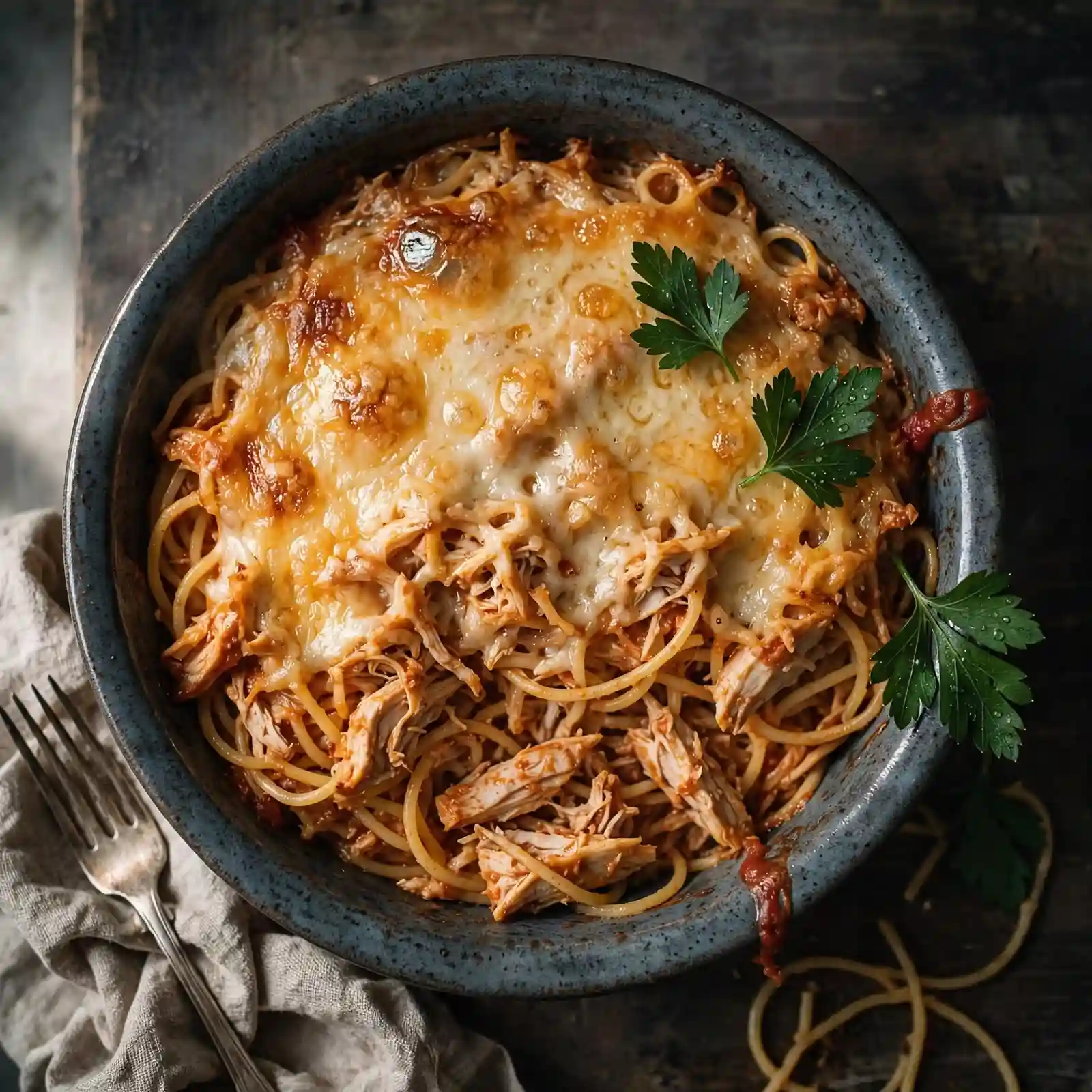
Chicken spaghetti is a baked pasta casserole made with cooked shredded chicken, spaghetti, and a creamy cheese sauce, finished in the oven until bubbly and golden on top. To make it, you cook the pasta and chicken, build a quick sauce on the stovetop, combine everything, and bake for 25 to 30 minutes.
Why You Will Love This Chicken Spaghetti
- The sauce coats every strand of pasta evenly rather than pooling at the bottom of the dish, so the first forkful and the last one taste the same.
- This easy chicken spaghetti recipe is done in 45 minutes start to finish, making it a realistic weeknight option even when the day has been long.
- The entire dish can be assembled a full day ahead, refrigerated unbaked, and pulled out when you need it. The overnight rest actually deepens the flavor.
- Leftovers reheat remarkably well. A splash of broth before reheating loosens the sauce and the pasta stays tender rather than turning dry or rubbery.
- One large baking dish comfortably serves six, and the recipe scales cleanly without any complicated adjustments.
Recipe Snapshot
Servings: 6
Difficulty: Easy
Cuisine: American
Course: Main
Prep Time: 15 minutes
Cook Time: 30 minutes
Total Time: 45 minutes
Ingredients You Will Need For Chicken Spaghetti
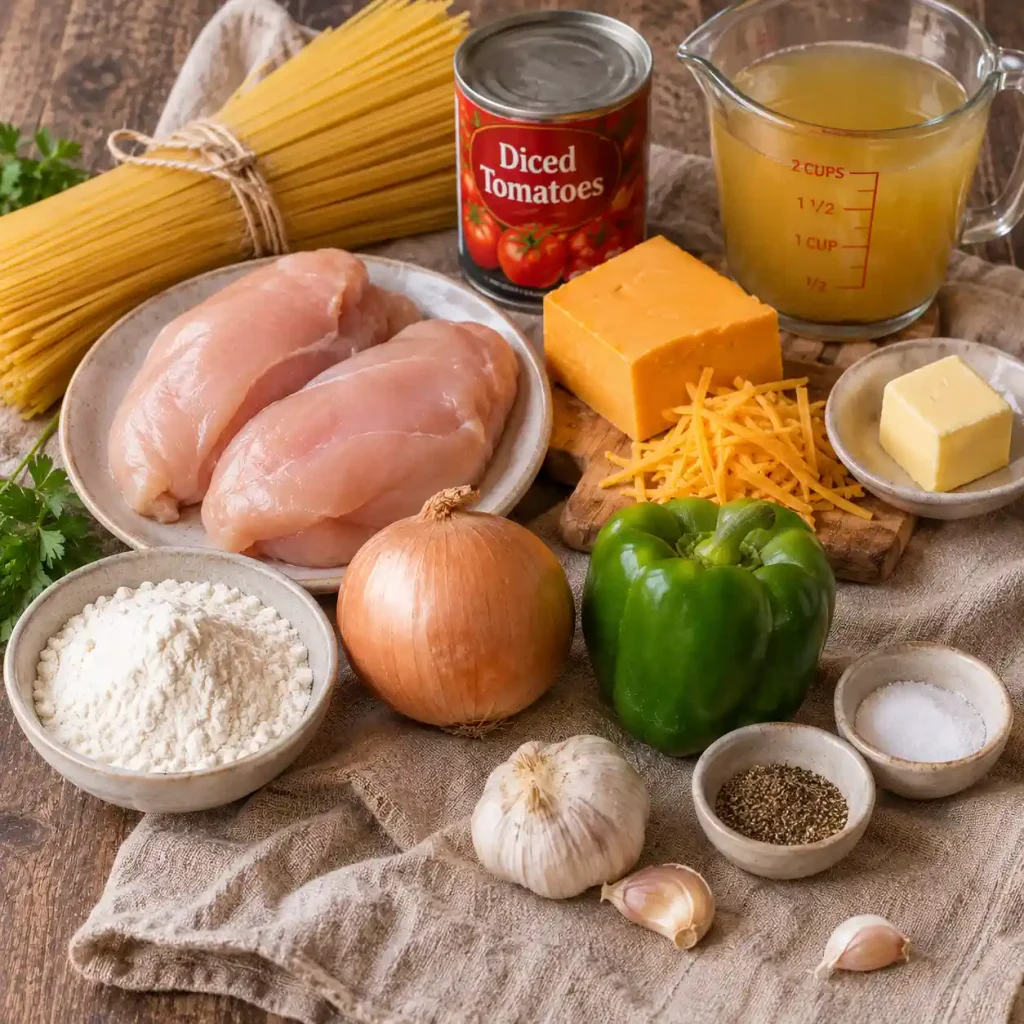
- 450g (1 lb) spaghetti: cook it 2 minutes short of done since it finishes in the oven; fully cooked pasta turns mushy when baked
- 500g (1.1 lb) boneless chicken breasts or thighs: thighs stay juicier when shredded, but breasts work well too
- 2 tablespoons butter: the base of the roux that gives the sauce its silky, coating texture
- 1 medium onion, finely diced: releases sweetness as it softens and adds backbone to the finished sauce
- 1 green bell pepper, finely diced: adds mild crunch and color contrast that keeps the dish from feeling too heavy
- 3 garlic cloves, minced: use fresh, not jarred; the flavor difference in a cream-based sauce is noticeable
- 2 tablespoons all-purpose flour: thickens the sauce without making it starchy when you whisk it in quickly
- 400ml (1 and 2/3 cups) low-sodium chicken broth: low-sodium lets you control the final salt level yourself
- 200ml (3/4 cup) whole milk: whole milk gives the richest result, though 2% works fine
- 1 can (400g) diced tomatoes, well drained: draining is not optional; undrained tomatoes make the sauce watery
- 200g (2 cups) sharp cheddar cheese, shredded and divided: half goes into the sauce, half on top for the golden crust
- 1 teaspoon paprika: adds depth and a gentle warmth without any real heat
- Salt and black pepper to taste
Recipe Timing
Prep Time: 15 minutes
Cook Time: 30 minutes
Total Time: 45 minutes (15 plus 30, confirmed)
Easy Substitutions and Halal Alternatives
No cream of mushroom soup? This recipe builds the sauce from scratch with a simple roux, so you do not need it. The result is fresher and less salty than anything from a can.
No cheddar? Mozzarella melts smoothly and gives a milder, slightly stringier result that still works well in this dish.
Dairy-free? Swap butter for olive oil, whole milk for unsweetened oat milk, and use a good-quality dairy-free shredded cheese on top. The sauce will be a touch thinner but still bakes into a satisfying dish.
Gluten-free? Use certified gluten-free spaghetti and replace the all-purpose flour with a 1:1 gluten-free flour blend. The sauce will thicken at the same rate.
Allergen Information
This recipe contains gluten (spaghetti and flour) and dairy (butter, milk, and cheese). Some chicken broth brands contain soy or other allergens, so check the label. If cooking for guests, confirm dietary needs before starting.
How To Make Chicken Spaghetti Step by Step
Step 1: Cook and shred the chicken.
Place the chicken in a pot and cover with lightly salted water. Bring to a steady simmer over medium heat and cook for 18 to 20 minutes. The internal temperature should reach 75°C (165°F) before you remove it. FOOD SAFETY NOTE: Always verify safe internal temperature with a meat thermometer. Do not return cooked chicken to any surface or bowl that touched raw chicken, and use clean utensils throughout. Once cooked, let the chicken rest on a clean plate for 5 minutes, then shred it with two forks. The resting time lets the juices redistribute, which keeps the meat moist and makes shredding easier.
Step 2: Cook the spaghetti.
Bring a large pot of generously salted water to a full rolling boil and add the spaghetti. Cook it for exactly 2 minutes less than the package direction. It should still have a firm, slightly chalky center when you drain it, since it finishes cooking inside the oven. Drain well, then toss the pasta with a small drizzle of olive oil to prevent clumping while you prepare the sauce.
Step 3: Build the base of the sauce.
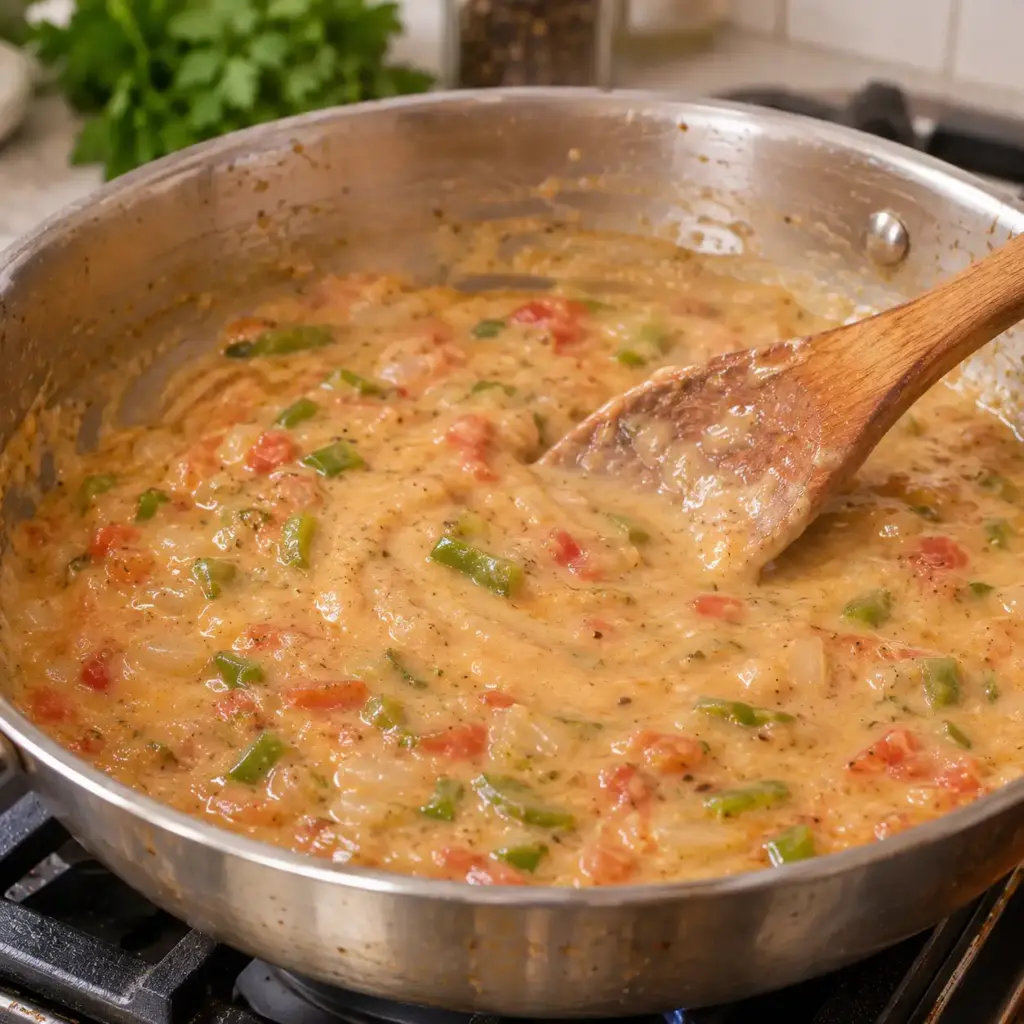
Melt the butter in a large, deep pan over medium heat. Add the diced onion and bell pepper and cook for 4 to 5 minutes, stirring occasionally, until the onion is soft and translucent and the pepper has lost its raw edge. Add the minced garlic and stir for 30 seconds until fragrant, being careful not to let it brown. Sprinkle in the flour and stir continuously for a full minute to cook out the raw flour taste before any liquid is added. This step is what determines whether your sauce turns silky or lumpy, so keep stirring and do not rush it.
This is the midpoint of the sauce and the trickiest part of the whole recipe. You have got it handled.
Step 4: Add the liquids and tomatoes.
Pour the chicken broth into the pan in a slow, steady stream while whisking continuously. Follow with the milk, added the same way. Gradual addition is what keeps the sauce smooth since pouring all the liquid in at once causes lumps that are difficult to smooth out later. Stir in the well-drained diced tomatoes and paprika, then let the sauce simmer over medium-low heat for 4 to 5 minutes until it thickens enough to coat the back of a spoon. Why this works: adding cold liquid gradually to a hot roux gives the starch granules time to absorb the liquid evenly, which produces a silky sauce rather than a paste-like one.
Step 5: Add the cheese and combine everything.
Reduce the heat to low and stir in half the shredded cheddar. Keep stirring until it melts fully into the sauce and no stringy bits remain, then taste and adjust the salt and pepper. Add the shredded chicken and stir to coat it in the sauce, then add the drained spaghetti and fold everything together gently with tongs or a large spoon, making sure every strand of pasta is evenly coated.
The heavy lifting is done. Everything from here is simple and the kitchen should already smell the way it should.
Step 6: Transfer to the baking dish.
Preheat your oven to 190°C (375°F). Pour the pasta mixture into a lightly greased large baking dish and spread it out so the pasta sits in an even layer. Scatter the remaining cheddar evenly across the top. That cheese layer is what creates the golden, slightly crisped crust that makes baked chicken spaghetti different from a stovetop pasta dish, so do not reduce the quantity or skip it.
Step 7: Bake until golden and bubbling.
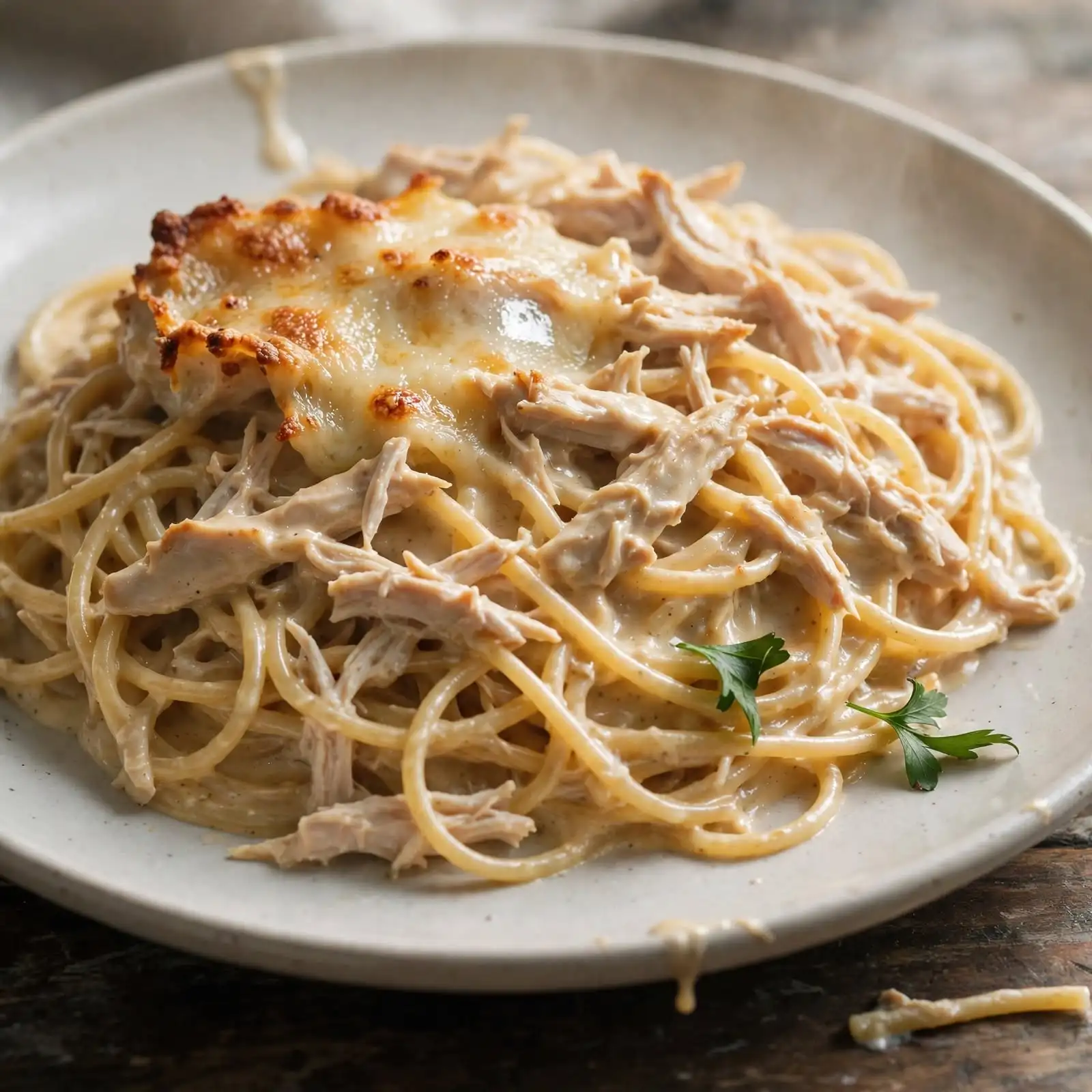
Bake uncovered at 190°C (375°F) for 25 to 30 minutes. The edges should be actively bubbling, the cheese on top fully melted with patches of golden color, and the surface looking set rather than wet. Let the dish rest for 5 minutes before serving. This brief rest helps the sauce settle slightly so the first portion holds its shape on the plate instead of running.
Pro Tips While Making Chicken Spaghetti
If the sauce looks too thick after the cheese is added, stir in 2 to 3 tablespoons of warm broth. This loosens it without diluting the flavor and prevents your chicken spaghetti from turning dense during baking. If the cheese on top is browning faster than the center is setting, lay a sheet of foil loosely over the dish for the last 10 minutes, then remove it for the final 5 minutes to get the color without burning. If the finished dish tastes flat, a very small squeeze of lemon juice, no more than half a teaspoon stirred into the sauce before baking, sharpens the flavor without adding any detectable sourness.
Best Tips For Perfect Chicken Spaghetti Every Time
The best prep move is cooking and shredding the chicken the day before. Refrigerated shredded chicken absorbs sauce more readily than freshly cooked, still-warm chicken, which means better flavor distribution throughout the final bake.
The single most common beginner mistake is cooking the pasta until fully done before baking. Pasta that is fully cooked before it goes into the oven continues to absorb moisture during baking and turns soft in a way that cannot be corrected. Pull it 2 minutes early, every time.
To keep the dish warm and prevent the surface from drying out before serving a group, cover the baking dish tightly with foil the moment it comes out of the oven and leave it covered until you are ready to serve.
The best reheating method is the oven rather than the microwave. Transfer portions to a small oven-safe dish, add a tablespoon of chicken broth, cover tightly with foil, and heat at 160°C (320°F) for 15 to 18 minutes. The pasta rehydrates properly rather than steaming into softness.
Chicken spaghetti freezes well in its unbaked state. Cool the assembled dish completely, cover with two tight layers of foil, and freeze for up to 3 months. Thaw overnight in the fridge and bake from cold at 190°C (375°F), adding 8 to 10 minutes to the standard bake time.
To scale this recipe for a larger group, double every ingredient and divide the mixture between two standard baking dishes rather than using one oversized deep dish. Piling everything into one crowded dish leads to uneven cooking and a center that finishes much later than the edges.
Common Mistakes and Troubleshooting
A watery baked dish almost always traces back to undrained canned tomatoes or sauce that was too thin before the pasta was added. Drain the tomatoes well, pressing them lightly in the strainer to remove as much liquid as possible, and let the sauce reduce until it coats a spoon before combining it with the pasta.
Dry pasta in the finished dish usually means the sauce was too thick going in or the dish was baked uncovered for too long. If the mixture looks stiff before baking, stir in an extra splash of broth. If it dries during baking, cover loosely with foil for the remaining time.
Pale, unmelted cheese on top usually means the oven was not fully preheated. If bake time is up and the top is still pale and soft, switch to the broiler for 2 to 3 minutes and watch closely since cheese browns fast under direct heat.
Bland-tasting easy chicken spaghetti almost always comes from unseasoned pasta water and low-sodium broth with no additional seasoning added after combining. Taste the sauce before assembling and season it correctly at that stage. Once baked, adding salt back evenly is not possible.
Delicious Variations of Chicken Spaghetti To Try
A spicy version adds a teaspoon of red pepper flakes to the oil while the onions cook, plus a tablespoon of harissa stirred in before baking. The heat cuts through the richness of the cheese and gives the dish a brighter, more complex finish without losing the creamy base.
A mild, kid-friendly version uses mild cheddar in place of sharp, skips the bell pepper entirely, and swaps the paprika for a small pinch of dried oregano. The result is simpler and more neutral, which tends to get eaten without negotiation.
A dairy-free variation replaces the butter with olive oil, the milk with unsweetened oat milk, and the cheese topping with a quality dairy-free shredded alternative. The sauce will be slightly thinner and less rich, but it still bakes into a satisfying dish that works for anyone at the table avoiding dairy.
For an Eid or occasion-ready version, use bone-in chicken thighs slow-cooked in spiced broth, shred the meat, and stir a handful of toasted pine nuts into the sauce before transferring to the baking dish. It is richer and more layered than the everyday version without requiring much extra effort.
A restaurant-style upgrade swaps the cheddar for a mix of gruyere and parmesan, adds a layer of sauteed mushrooms beneath the cheese topping, and finishes the baked dish with a drizzle of good olive oil and a few torn fresh basil leaves immediately before serving.
Serving Suggestions
A simple green salad dressed with lemon and olive oil is the cleanest partner for this dish. The acidity cuts through the creaminess and keeps the meal from feeling too heavy. Garlic bread is the crowd-pleasing option and doubles as a way to scoop up any extra sauce from the dish. If you want a vegetable side without a salad, roasted broccoli or green beans take about the same time as the bake, so they can go into the oven alongside the dish. Serve directly from the baking dish at the table with a large spoon and a light scattering of chopped parsley across the surface.
Storage, Reheating and Freezing
Cover the dish tightly and refrigerate within 2 hours of cooking. Stored correctly, chicken spaghetti keeps well in the fridge for up to 4 days. The pasta continues to absorb the sauce as it sits, so portions the next day will be denser. Stir in a tablespoon of broth before reheating to restore the sauciness.
For reheating, the oven produces a much better result than the microwave. Transfer a portion to a small baking dish, add a small splash of broth, cover with foil, and heat at 160°C (320°F) for 15 to 18 minutes. Individual portions done this way come out close to freshly baked.
For freezing, assemble the dish fully but do not bake it. Cool the mixture completely before transferring to a freezer-safe dish, topping with cheese, and covering with a double layer of foil. It keeps for up to 3 months. Thaw overnight in the refrigerator and bake from cold at 190°C (375°F), adding 8 to 10 minutes to the standard time.
Frequently Asked Questions About Chicken Spaghetti
Can I Make Chicken Spaghetti Ahead of Time?
Assembling this chicken spaghetti a day ahead is one of the most practical things about this recipe. Cook and shred the chicken, prepare the sauce, combine with the pasta, and transfer to the baking dish. Cover tightly and refrigerate for up to 24 hours before baking. Add the cheese topping just before the dish goes into the oven so it does not absorb moisture from the refrigerated pasta underneath. Pull the dish out of the fridge 15 minutes before baking so the cold center does not affect the cook time. The overnight rest deepens the flavor because the pasta slowly absorbs the seasoned sauce, and the final result is often better than baking it immediately.
How Do I Make Chicken Spaghetti Without Cream of Mushroom Soup?
Building the sauce from scratch the way this recipe does makes the canned soup completely unnecessary. A basic roux made from butter, flour, broth, and milk gives you a cleaner, fresher base that you season yourself, without the high sodium level or metallic undertone that tinned cream soups sometimes carry. The homemade version takes about 10 minutes longer than opening a can, and the difference in the finished dish is clearly noticeable. Follow this method and the scratch-built sauce will become your standard for easy chicken spaghetti going forward.
Can I Freeze Chicken Spaghetti?
Freezing works best before baking rather than after. Assemble the dish fully, cool it completely, cover with a tight double layer of foil, and freeze for up to 3 months. When ready to cook, thaw overnight in the fridge and bake from cold at 190°C (375°F), adding 8 to 10 minutes to account for the starting temperature. Freezing after baking is possible, but the pasta softens more noticeably on reheating, particularly if it was already fully cooked when it first went into the oven.
How Long Does Chicken Spaghetti Last in the Fridge?
Stored in a sealed container, leftover chicken spaghetti keeps well for up to 4 days in the refrigerator. After that, the pasta breaks down further and the sauce loses its cohesion. Divide large batches into smaller containers rather than storing everything in one dish that gets opened repeatedly, since repeated exposure to air shortens shelf life. Always reheat to a full internal temperature of 75°C (165°F) before eating. Handle it this way and the dish stays safe and good through day four without any decline in quality worth noting.
Why Is My Chicken Spaghetti Turning Out Watery?
Watery results come from one of three sources: undrained canned tomatoes, sauce that was too thin before the pasta was added, or a dish that was covered during baking and trapped steam back into the pasta. Drain the tomatoes thoroughly each time, pressing lightly in the strainer to remove extra liquid. Let the sauce reduce until it coats a spoon before mixing in the pasta. Bake uncovered so moisture can evaporate during cooking rather than condensing back into the dish. Address all three points and this easy chicken spaghetti recipe will turn out saucy and cohesive, not soupy.
Can I Make This Chicken Spaghetti Gluten-Free or Dairy-Free?
Both adaptations are straightforward. For a gluten-free version, swap regular spaghetti for certified gluten-free pasta and replace the all-purpose flour with a 1:1 gluten-free baking flour blend. The roux will behave the same way and the sauce thickens at the same rate. For a dairy-free version, use olive oil in place of butter, unsweetened oat milk instead of whole milk, and a quality dairy-free shredded cheese on top. The sauce will be slightly thinner and less rich, but it still bakes into a satisfying, flavorful dish. Either adaptation produces a version of this chicken spaghetti that fits the table without drawing attention to what was changed.
Conclusion
This chicken spaghetti recipe earns its place in a weekly rotation not because it is impressive on paper, but because it delivers a genuinely good result every single time. The creamy, cheesy sauce coats every strand of pasta, the shredded chicken makes it filling enough to stand on its own, and the baked finish gives it a depth that a stovetop pasta dish does not have. Make it ahead for a busy week, or pull it out the night company arrives. It handles both situations without any extra effort from you.
Chicken Spaghetti
Ingredients
Method
- Simmer chicken in salted water 18 to 20 minutes until internal temperature reaches 75°C (165°F). Rest 5 minutes, then shred.
- Cook spaghetti 2 minutes less than the package time. Drain and toss with a small drizzle of olive oil.
- Melt butter in a deep pan over medium heat. Cook onion and bell pepper 4 to 5 minutes. Add garlic and stir 30 seconds.
- Add flour and stir for 1 minute. Pour in broth and milk gradually, whisking constantly. Add drained tomatoes and paprika. Simmer 5 minutes.
- Stir in half the cheese until melted. Add chicken and pasta. Fold together until evenly coated.
- Transfer to a greased baking dish. Top with remaining cheese.
- Bake uncovered at 190°C (375°F) for 25 to 30 minutes until golden and bubbling. Rest 5 minutes before serving.
Notes
Dairy-free: substitute olive oil for butter, oat milk for whole milk, and dairy-free shredded cheese for cheddar.
Serve with a green salad or garlic bread. Nutrition Per Serving (Estimate):
Calories: 520 | Protein: 38g | Fat: 18g | Carbs: 52g | Fiber: 3g | Sodium: 620mg Nutrition values are estimates only and may vary based on the specific ingredients used.