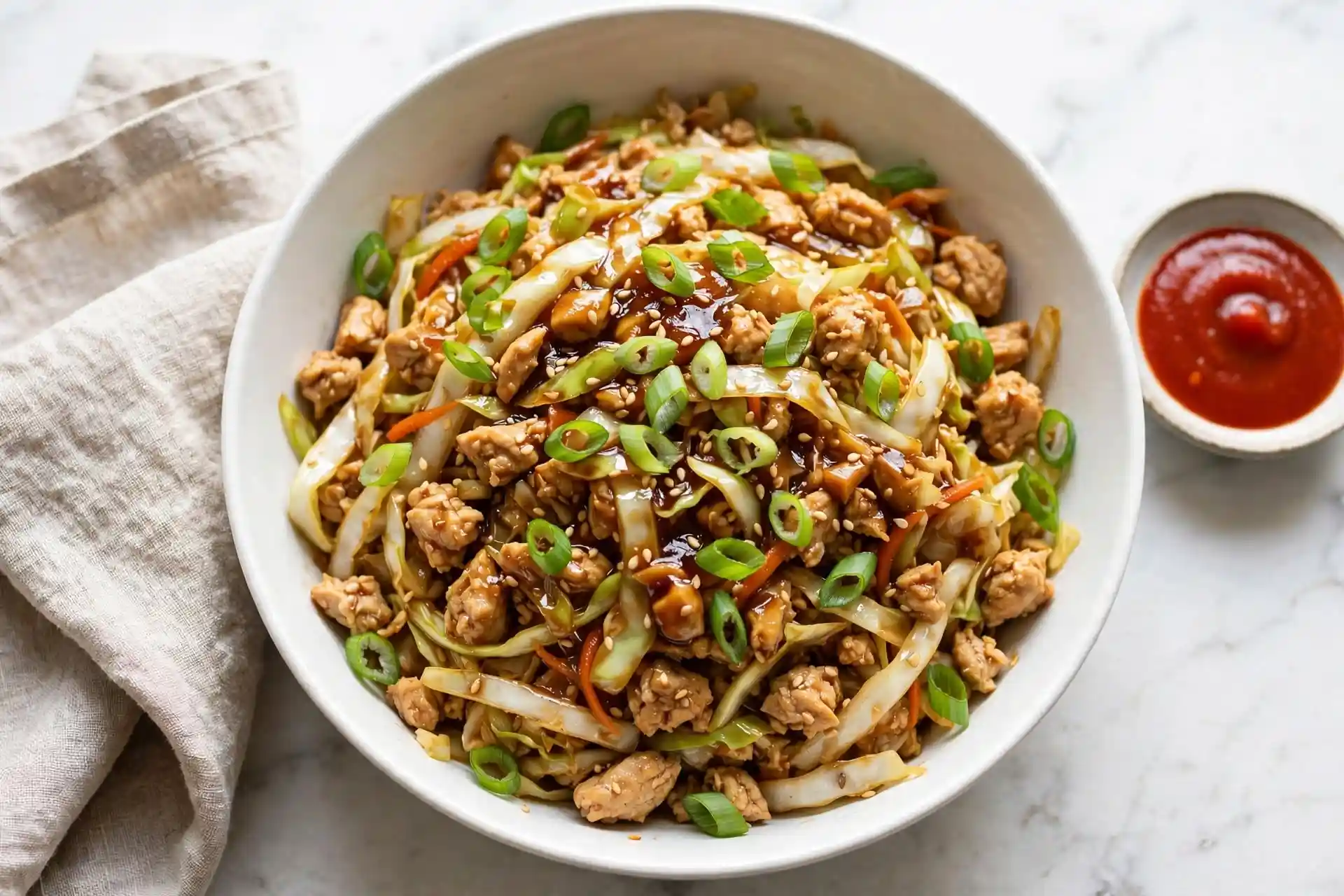
Easy Egg Roll in a Bowl — One Pan, Ready in 20 Minutes
The filling is the whole point of an egg roll. The wrapper is just delivery. Egg roll in a bowl skips the wrapper entirely and puts all that savory ground chicken, shredded cabbage, garlic, ginger, and soy sauce straight into a skillet where it comes together in 20 minutes flat. No deep-frying, no rolling, no mess.
It works as a standalone bowl, spooned over steamed rice for something more filling, or packed into containers for four days of lunches that actually taste good reheated. One pan, one sauce, and a finish of sesame oil off the heat that ties everything together. If you haven’t made egg roll in a bowl yet, this is a solid place to start.
Why You’ll Love This Egg Roll in a Bowl
- One pan, minimal cleanup. Everything cooks in a single skillet. No second pot, no baking sheet, nothing soaking in the sink afterward.
- Twenty minutes, start to finish. Browning the chicken takes the longest. After that, everything moves quickly and the skillet does the work.
- Satisfying without feeling heavy. Ground chicken and cabbage are both light, but the soy-ginger sauce coats every piece and makes the whole bowl taste rich and complete.
- Meal prep ready. The flavor actually improves overnight as the sauce absorbs into the meat and cabbage. Four days in the fridge, still good.
- Flexible by default. Naturally low-carb on its own, more filling over rice, handheld in lettuce cups. The base recipe adapts without changing anything structural.
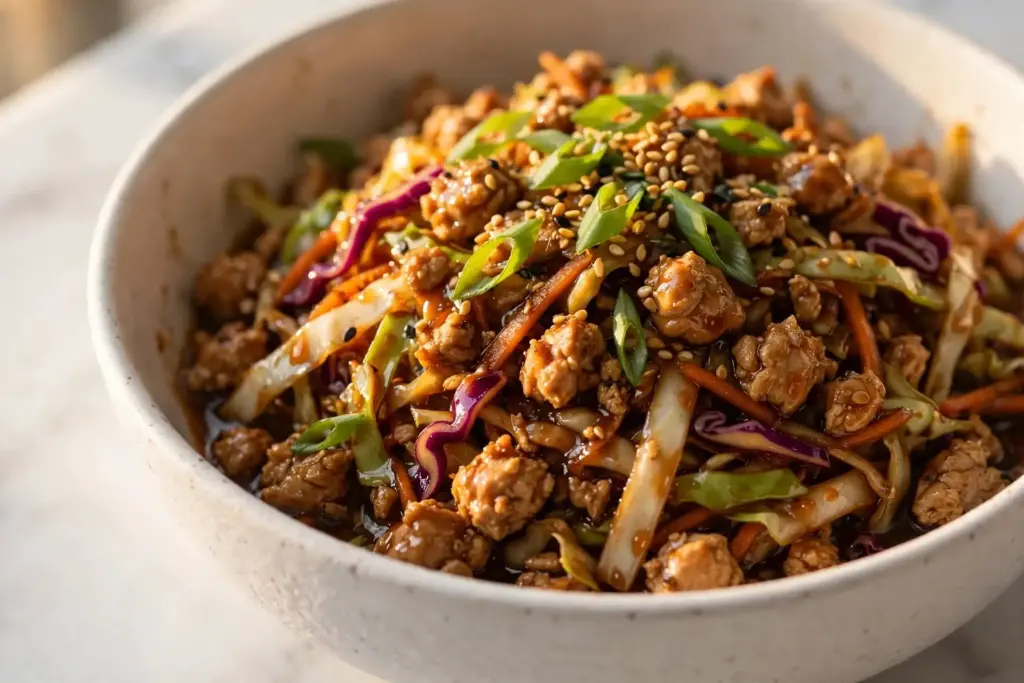
Ingredients You’ll Need
Recipe Timing
| Servings | 4 |
| Difficulty | Easy |
| Course | Main Dish |
| Cuisine | Asian-Inspired |
| Prep Time | 5 minutes |
| Cook Time | 15 minutes |
| Total Time | 20 minutes |
For the cabbage, pre-shredded coleslaw mix from a bag is a completely legitimate shortcut and cuts prep to under two minutes. If you’re shredding your own, green cabbage is slightly sweeter than savoy and holds its texture better over heat.
The sesame oil goes in off the heat at the very end. It’s a finishing oil, not a cooking oil. Its flavor is primarily aromatic and it disappears under sustained heat, so keep it for the final step.
- 500g ground chicken — the protein base. Browning it properly before the vegetables go in is what develops the savory depth that makes this dish worth making.
- 4 cups shredded green cabbage (about 300g) — the main vegetable. It wilts down significantly, so don’t panic when it looks like too much in the pan.
- 1 cup shredded carrots (about 100g) — adds color, a mild sweetness, and a bit of texture against the softer cabbage.
- 4 garlic cloves, minced — builds the flavor base. Fresh cloves work noticeably better than jarred here.
- 1 tablespoon fresh ginger, grated — the ingredient that makes this taste like an actual egg roll rather than stir-fried meat. Don’t substitute dried ginger powder.
- 3 tablespoons soy sauce — the primary seasoning. Tamari is a 1:1 substitute and keeps the dish gluten-free.
- 1 tablespoon oyster sauce — adds an umami depth that plain soy sauce alone doesn’t deliver. Hoisin sauce works as a substitute with a slightly sweeter result.
- 1 teaspoon sesame oil — added off heat at the end. A little goes a long way. It’s the finishing note that pulls the whole dish together.
- 2 tablespoons neutral oil (avocado or vegetable) — for cooking. Olive oil competes with the Asian flavors; keep it neutral.
- 3 green onions, sliced — half cooked in with the sauce, half scattered fresh on top as garnish.
- 1 teaspoon white or black pepper — white pepper is more traditional but either works.
- Sesame seeds — optional garnish, adds a little texture and visual contrast.
- Sriracha or chili flakes — optional, served at the table for anyone who wants heat.
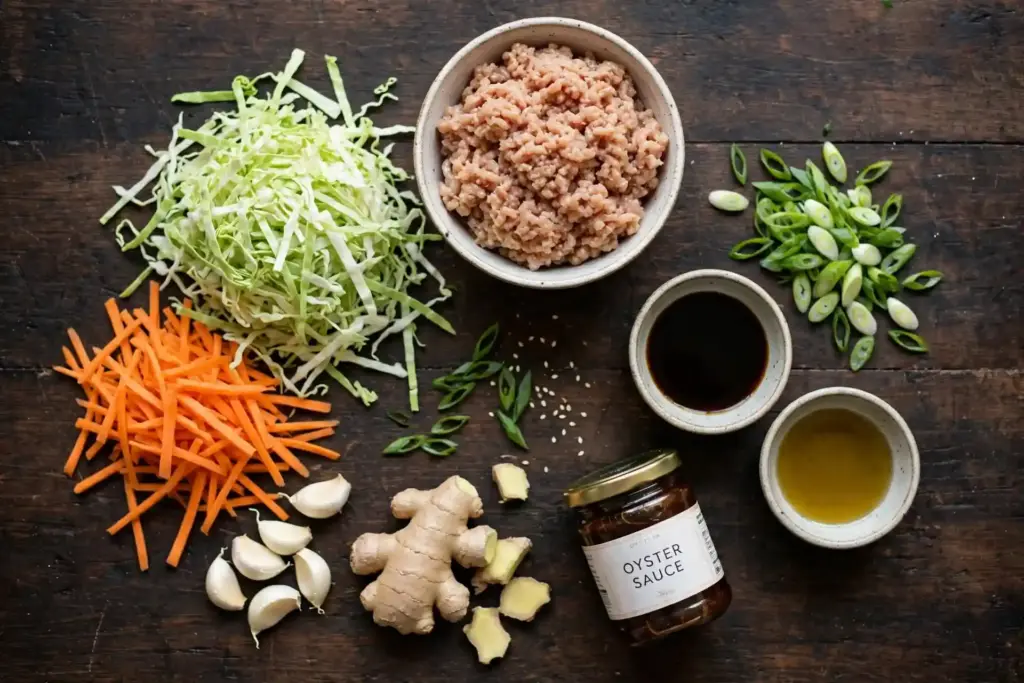
Allergen & Dietary Disclosure
This recipe contains soy (soy sauce, oyster sauce) and sesame (sesame oil). It is naturally egg-free, dairy-free, and nut-free.
For a gluten-free version, swap regular soy sauce for tamari in equal amounts and check that your oyster sauce is certified gluten-free, as some brands contain wheat starch.
For a soy-free version, coconut aminos substitute for soy sauce in equal amounts. The flavor runs slightly sweeter and less salty, so taste and adjust at the end.
Always check individual product labels when managing a severe allergy. This recipe has not been tested in an allergen-free facility.
Step-by-Step Directions
Step 1: Brown the Ground Chicken
Heat a large, wide skillet or wok over medium-high heat and add the neutral oil. Once the oil shimmers, add the ground chicken and press it into a thin, even layer across the pan. Leave it completely undisturbed for 2 full minutes before breaking it apart. That initial contact with the hot pan surface is what creates the golden-brown color and savory crust you’re after. Break it into small crumbles and cook for another 3 to 4 minutes until no pink remains and the edges have some color.
Chef’s Note: Constant stirring steams the meat instead of searing it. The browning that happens when meat sits still against a hot surface is where most of the flavor lives. Two minutes of patience here makes a noticeable difference in the finished dish.
Step 2: Bloom the Garlic and Ginger
Push the cooked chicken to one side of the skillet. In the cleared space, add the garlic and ginger directly against the hot pan surface. Let them sizzle undisturbed for 30 seconds until the garlic smells toasty rather than raw, then stir everything together so the aromatics coat the meat.
Chef’s Note: Giving the garlic and ginger 30 seconds of direct pan contact rather than tossing them in with the other ingredients releases significantly more flavor. It’s a small step with an outsized result.
Step 3: Cook Down the Cabbage and Carrots
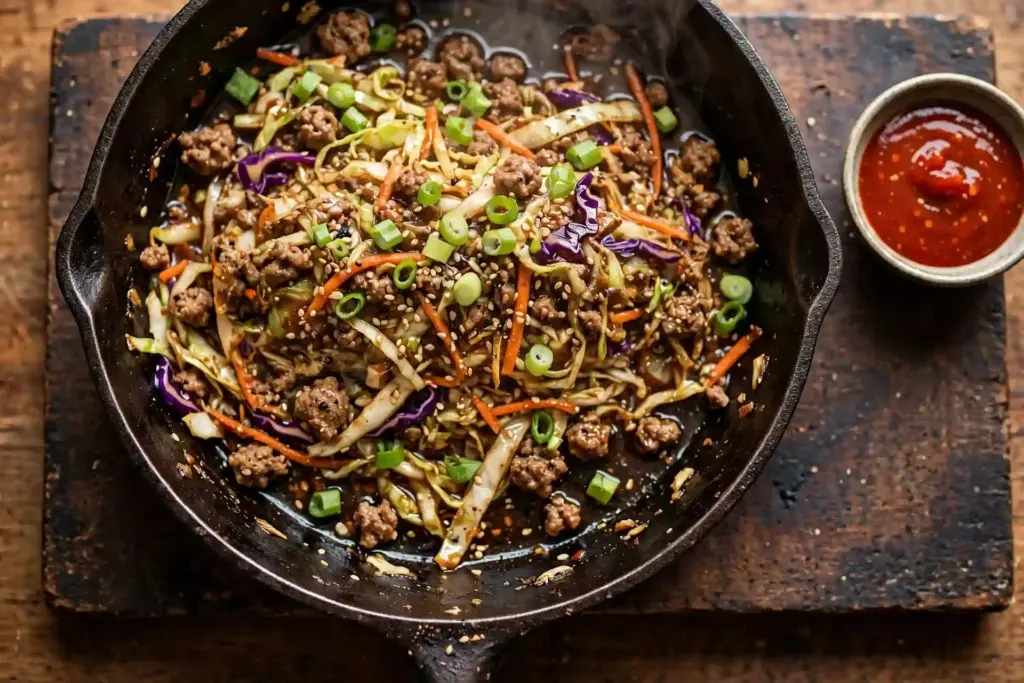
Add all the cabbage and carrots to the skillet at once. It will look like too much. That’s correct. Toss to combine with the chicken and cook over medium-high heat, stirring every minute, for 4 to 5 minutes. The cabbage will wilt down by roughly half. You’re looking for tender but still slightly firm — not raw and stiff, not fully soft and translucent.
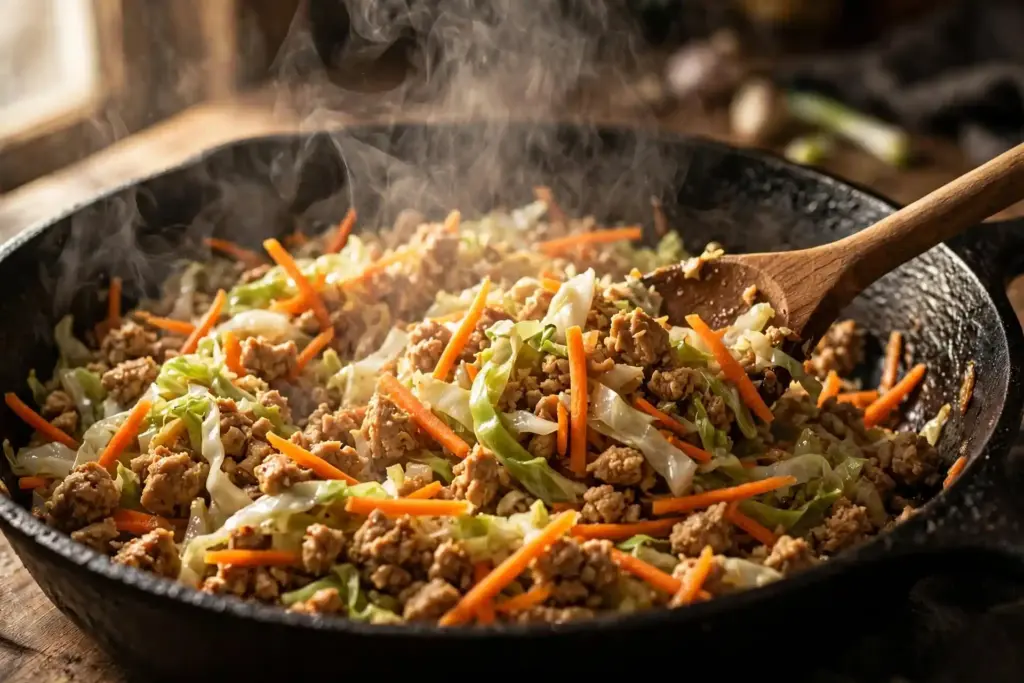
Step 4: Add the Sauce
Pour the soy sauce and oyster sauce over the skillet contents and toss everything to coat evenly. Add the white pepper and half the green onions. Cook for 1 to 2 more minutes, stirring, until the sauce has coated everything and reduced slightly. Taste now and adjust salt if needed, keeping in mind that soy sauce and oyster sauce together are already quite salty.
Step 5: Finish with Sesame Oil
Take the skillet off the heat. Drizzle the sesame oil across the top and give everything one final toss. The residual heat is enough to distribute it without cooking the fragrance away.
Chef’s Note: This is the step people are most likely to skip or do wrong. Sesame oil added into a hot pan loses its toasted, nutty quality almost immediately. Off heat, it perfumes the whole bowl in a way that makes you understand why it’s in the recipe.
Step 6: Garnish and Serve
Scatter the remaining green onions and sesame seeds over the top. Serve straight from the skillet or spoon into individual bowls. Sriracha or chili flakes at the table for anyone who wants heat.
Common Mistakes & Troubleshooting
| Problem | Cause | Solution |
| Filling turns watery and diluted | Cabbage releasing moisture faster than the pan can evaporate it | Use a wide skillet, cook over medium-high heat, never cover the pan. If liquid pools, raise the heat and stir constantly until it cooks off before adding sauce |
| Meat is gray and bland, not savory | Stirred too early during the browning step | Let the meat sit undisturbed against the hot pan for 2 full minutes before breaking apart |
| Garlic tastes sharp and raw | Added with the cabbage instead of bloomed separately | Clear a space in the pan and cook garlic and ginger directly on the surface for 30 seconds before mixing in |
| Dish tastes flat despite correct amounts | Sesame oil added while pan was still on the heat | Always remove the skillet from the burner before drizzling sesame oil |
| Cabbage is mushy with no texture | Pan overcrowded or heat too low | Use the widest skillet you have; higher heat for less time keeps some bite in the cabbage |
Variations & Substitutions
Ground beef version: Ground beef gives a richer, more robust base. Use an 80/20 lean-to-fat ratio for the best browning. Drain excess fat from the pan after cooking and before adding the vegetables.
Vegetarian version: Crumbled firm tofu works well. Press it thoroughly to remove excess moisture first, then brown it the same way you would the meat. Use mushroom-based oyster sauce to keep the umami depth.
Spicy version: Add 1 to 2 teaspoons of gochujang or sambal oelek with the soy sauce for sustained heat built into the base. Sriracha at the table adds surface heat; chili paste added during cooking builds it deeper.
Add extra vegetables: Bean sprouts added in the last 90 seconds stay crunchy and add a nice textural contrast. Thinly sliced mushrooms cooked with the cabbage bring earthiness without changing the flavor profile.
Noodle bowl version: Toss the finished filling with cooked rice noodles or soba noodles for a heartier one-bowl meal. Add an extra tablespoon of soy sauce to account for the noodles absorbing some of the seasoning.
Low-sodium version: Use low-sodium soy sauce and reduce to 2 tablespoons. Skip the oyster sauce or replace it with a small amount of hoisin thinned with water.
Serving Suggestions
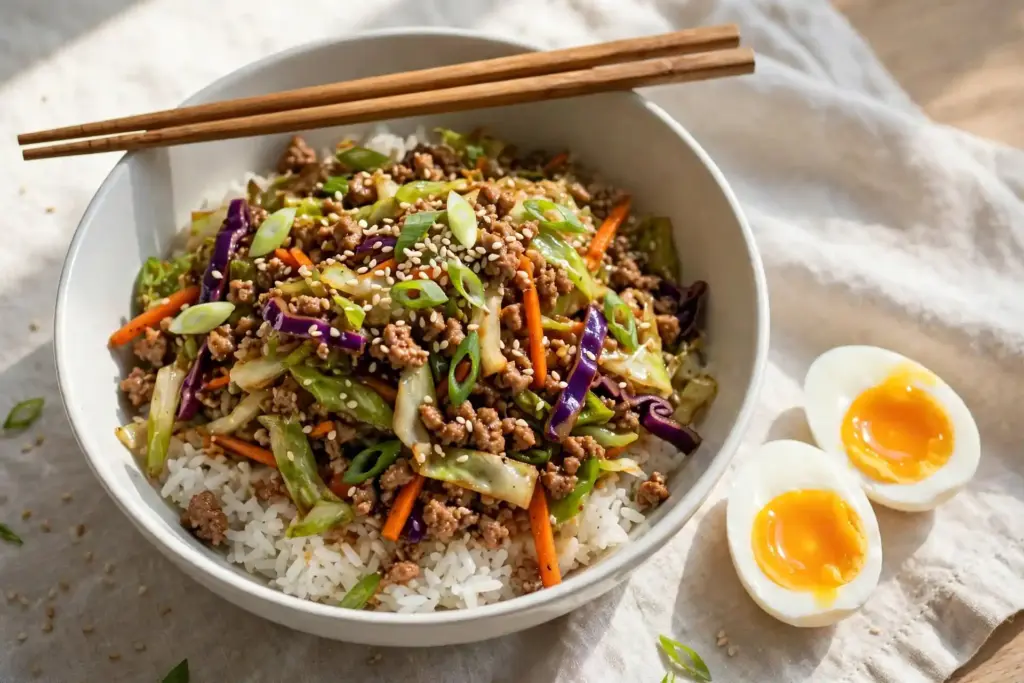
- Over steamed jasmine rice: The rice absorbs the soy-sesame sauce pooled at the bottom of the bowl. Plain white rice works best because it doesn’t compete with the existing flavors.
- Over cauliflower rice: Keeps the meal naturally low-carb while still giving you something to soak up the sauce.
- In lettuce cups: Butter lettuce or romaine leaves used as wraps bring back the hand-held element of the original egg roll with none of the deep-frying.
- With a fried or soft-boiled egg on top: A runny yolk breaks into the filling and enriches the whole bowl. Add it right before eating.
- As meal prep bowls: Divide into four containers with rice. The flavor deepens overnight as the soy-ginger sauce continues to absorb into the meat and cabbage.
- With steamed dumplings on the side: A few steamed dumplings alongside makes this feel like a full takeout-style spread made at home.
Tips for the Best Results
Use a wide skillet or wok. Surface area matters more than anything else here. A crowded pan traps steam and prevents browning. The wider the skillet, the better the cabbage cooks down without going watery.
Don’t substitute dried ginger for fresh. Ground ginger and fresh ginger are functionally different ingredients in this dish. The sharp, warm brightness of fresh ginger is a core flavor note, not background seasoning. Frozen grated ginger (the kind sold in small cubes) is a good fresh alternative when you don’t have a knob on hand.
Taste before you add more salt. Soy sauce and oyster sauce together already carry significant sodium. Many people find this dish needs no extra salt at all once the sauce has been added and reduced.
Let it rest two minutes before serving. The sauce continues distributing across the filling as it sits off the heat. Those two minutes make the difference between sauce pooled at the bottom of the skillet and sauce coating every piece of chicken and cabbage evenly.
Sesame oil off the heat, every time. Worth repeating. This one habit is what separates a good version of this dish from a great one.
Storage Tips
Refrigerator
Leftovers keep in an airtight container for up to 4 days. The flavor genuinely improves on day two as the soy-ginger sauce absorbs more fully into the meat and cabbage overnight. Store rice separately to prevent it from getting waterlogged.
Freezer
The filling freezes well without rice for up to 2 months. Spread it flat in a zip-lock bag to freeze quickly and thaw evenly. Avoid freezing with rice or noodles already mixed in as the texture suffers significantly.
Reheating
A skillet over medium heat with a small splash of water or soy sauce to loosen the filling, stirred for 2 to 3 minutes, keeps the texture closest to freshly cooked. Microwave reheating works (2 minutes, covered) but the skillet method is worth the extra minute. Add fresh green onion garnish after reheating rather than before.
Nutrition Information
Per serving (1 of 4), approximate values:
| Nutrient | Per Serving |
| Calories | 285 kcal |
| Protein | 28g |
| Total Carbohydrates | 12g |
| Fiber | 3g |
| Sugar | 5g |
| Total Fat | 14g |
| Saturated Fat | 2.5g |
| Cholesterol | 85mg |
| Sodium | 780mg |
| Vitamin C | 40mg |
| Calcium | 65mg |
| Iron | 2.1mg |
| Potassium | 520mg |
Nutrition values are approximate and may vary based on brands and portion sizes.
Why This Recipe Works
This version of egg roll in a bowl is built around the two most common failure points with the dish: watery filling and flat flavor.
Watery filling happens when cabbage releases moisture faster than the pan can evaporate it. Cooking over medium-high heat in a wide, uncovered skillet keeps that moisture moving out of the pan. Browning the meat completely before any vegetables go in means the pan stays hot when the cabbage hits it, which is exactly what you need.
Flat flavor usually comes from skipping the garlic-ginger bloom step or adding sesame oil while the pan is still on the heat. Giving the aromatics 30 seconds of direct pan contact before mixing them in builds a noticeably deeper base. The oyster sauce layered with the soy sauce adds an umami roundness that soy sauce alone doesn’t provide.
The finishing step matters too. Sesame oil added off heat stays fragrant and aromatic. The same oil added into a hot pan just disappears. These are technique details rather than recipe secrets, and once you’ve made it this way, the difference is obvious.
Frequently Asked Questions
Can I make egg roll in a bowl ahead of time?
Yes, and it holds up better than most stir-fry style dishes. Cook it fully, let it cool, and store in an airtight container in the fridge for up to 4 days. The soy-ginger sauce continues absorbing overnight, which improves the flavor on day two. Reheat in a skillet with a small splash of water to revive the texture, and store rice separately.
Why is my filling watery?
The cabbage released moisture faster than the pan could cook it off, which also dilutes the sauce. Use a wide skillet, cook over medium-high heat with no lid, and avoid stirring too frequently. If you see liquid pooling, raise the heat and stir constantly until it evaporates before adding any sauce.
Can I use coleslaw mix instead of shredding cabbage myself?
Yes, it’s one of the most practical shortcuts in this recipe. A standard 14-ounce (about 400g) bag of pre-shredded coleslaw mix works perfectly and already contains both cabbage and carrot. Prep drops to under 2 minutes, and the texture and flavor are essentially identical once cooked.
How do I know when the cabbage is cooked correctly?
The cabbage should be wilted but still have a slight resistance when you bite into it. Around 4 to 5 minutes over medium-high heat with occasional stirring gets you there. If it’s going limp and fully translucent, the heat is too low or the pan is too crowded. Tender with a little bite is the target.
Is this recipe gluten-free?
Not as written, but the adjustment is simple. Replace regular soy sauce with tamari in equal amounts and check that your oyster sauce brand is certified gluten-free, as many contain wheat starch. Always read individual labels since formulations vary by brand.
Can I use a different protein?
Ground beef, ground turkey, and crumbled firm tofu all work well. Ground beef gives the richest flavor and browns most easily. Ground turkey is leaner and can dry out if overcooked, so watch the heat and pull it as soon as no pink remains. Tofu needs to be pressed and dried thoroughly before cooking, then treated the same way as ground meat in the browning step.
Conclusion
Egg roll in a bowl earns its place in the weeknight rotation because it delivers the actual flavor you want from an egg roll with almost no effort. Ground chicken, shredded cabbage, fresh ginger, soy sauce, and a finish of sesame oil off the heat. One pan, 20 minutes, and a dish that tastes better the next day than it did when you made it. Once you have the technique down, egg roll in a bowl becomes the kind of recipe you stop thinking about and just make.
If you loved this recipe, save it to your Asian recipes Pinterest board so you can find it easily later!
Easy Egg Roll in a Bowl
Ingredients
Method
- Heat a wide skillet over medium-high heat. Add neutral oil. Once shimmering, add ground chicken in a flat even layer and leave it undisturbed for 2 minutes. Break into crumbles and cook until no pink remains and the edges are golden, about 3 to 4 more minutes.
- Push the cooked chicken to one side of the pan. Add garlic and ginger directly to the cleared surface and let them cook for 30 seconds until fragrant. Stir everything together.
- Add shredded cabbage and carrots all at once. Toss with the chicken and cook over medium-high heat, stirring every minute, for 4 to 5 minutes until the cabbage is wilted but still has a slight bite.
- Pour in soy sauce and oyster sauce. Add pepper and half the green onions. Stir to coat everything and cook for 1 to 2 minutes until the sauce reduces slightly.
- Remove the skillet from heat. Drizzle sesame oil across the top and toss once to combine.
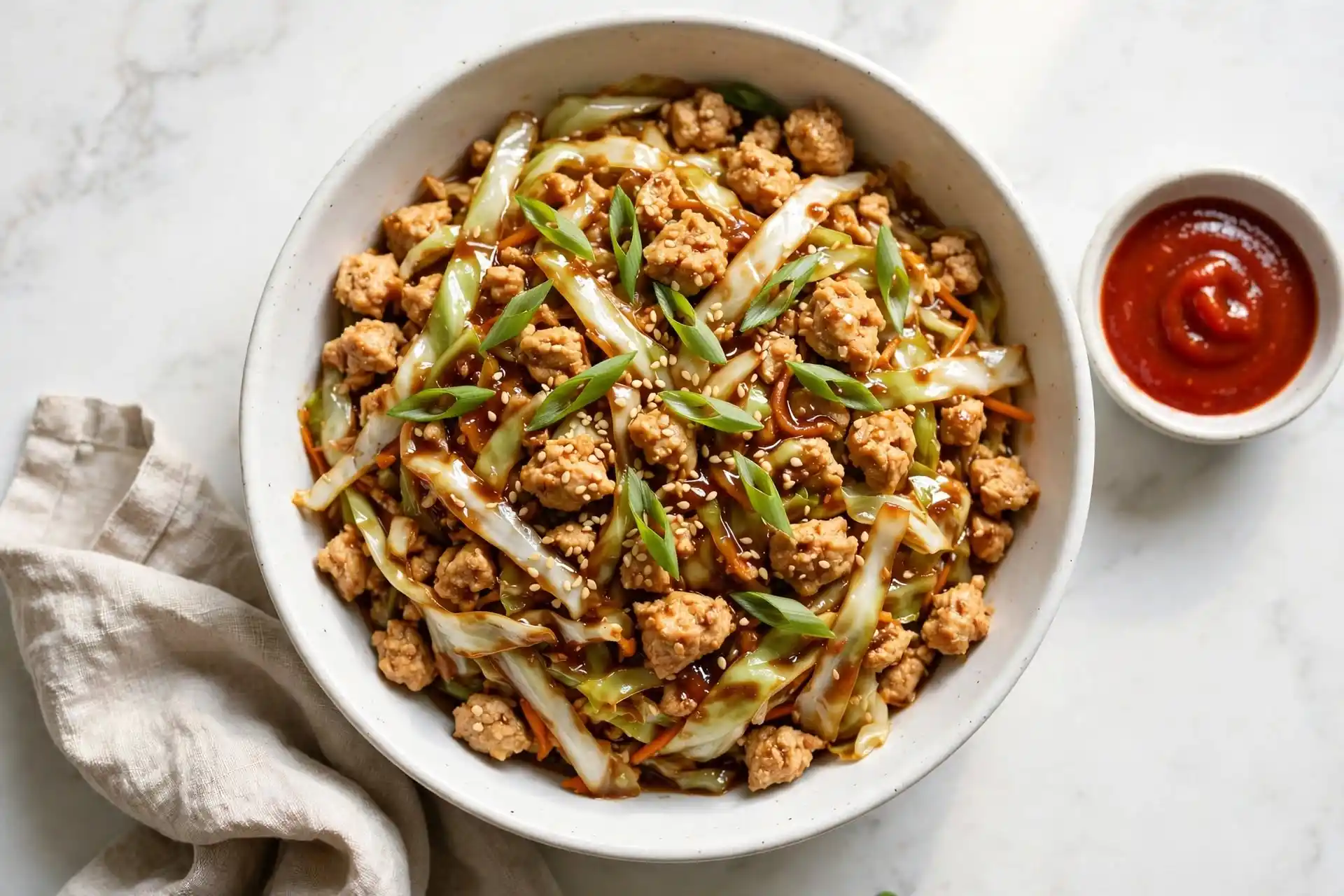
- Scatter remaining green onions and sesame seeds over the top. Serve as is, over rice, or over cauliflower rice.
Notes
- Pre-shredded coleslaw mix is a direct substitute for cabbage and carrot and cuts prep to under 2 minutes.
- Always add sesame oil after removing the pan from heat. It loses its fragrance if cooked directly in a hot skillet.
- Taste before adding any extra salt. Soy sauce and oyster sauce together are already quite salty.
- Leftovers keep 4 days in the fridge. The flavor improves overnight as the sauce absorbs into the filling.
Calories: 285 kcal | Protein: 28g | Total Carbohydrates: 12g | Fiber: 3g | Sugar: 5g | Total Fat: 14g | Saturated Fat: 2.5g | Cholesterol: 85mg | Sodium: 780mg | Vitamin C: 40mg | Calcium: 65mg | Iron: 2.1mg | Potassium: 520mg Nutrition values are approximate and may vary based on brands and portion sizes.