Classic Greek Salad Recipe | Ready in 10 Minutes
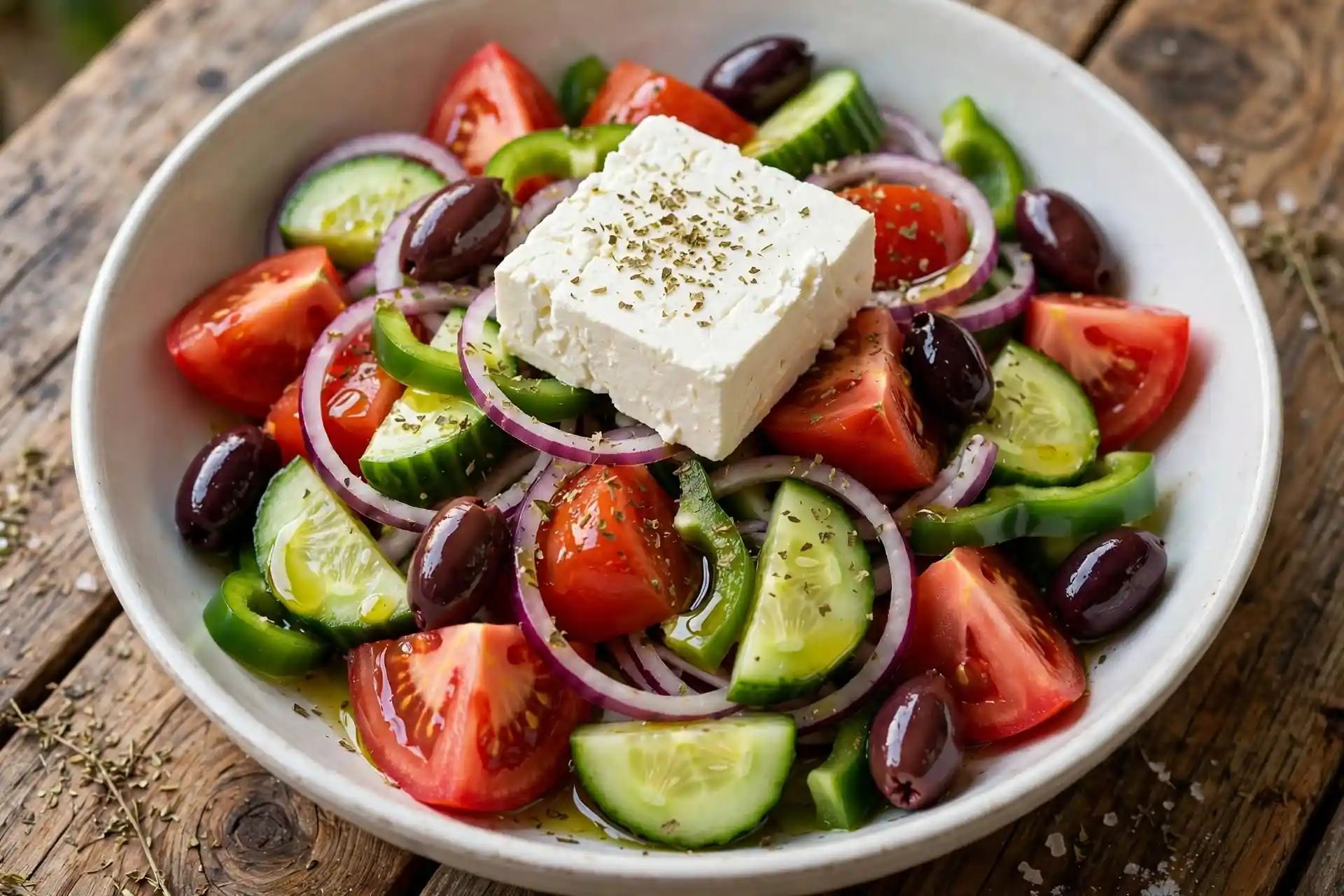
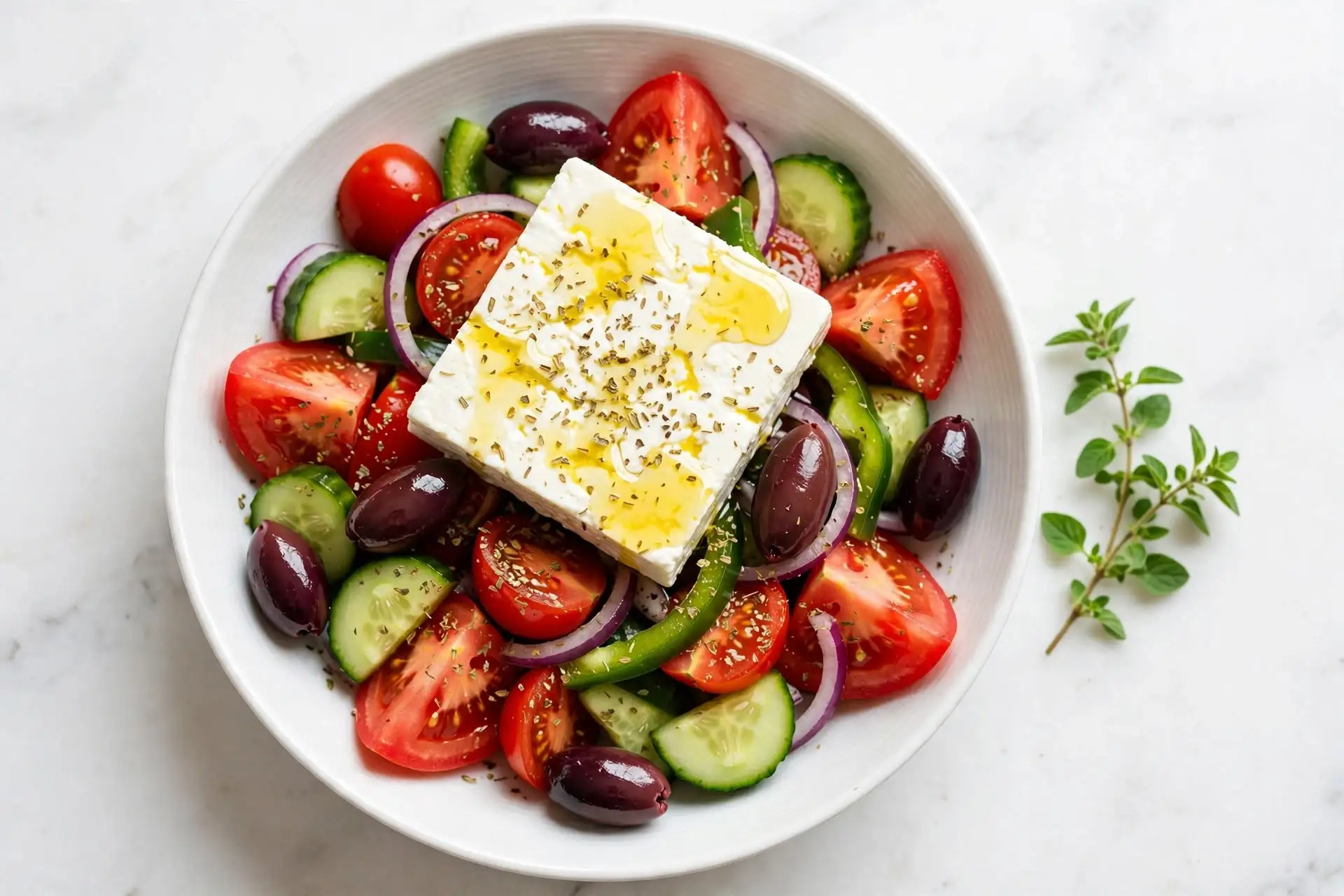
A proper greek salad has nothing to do with lettuce. The real version, called Horiatiki in Greece, is built on fat tomato wedges, thick cucumber slices, briny Kalamata olives, and a slab of feta balanced on top. Everything gets dressed with good olive oil and dried oregano, nothing more. It shows up on every table at every Greek taverna for a reason.
This recipe takes 10 minutes, no cooking required, and tastes noticeably better when you use ripe tomatoes and block feta instead of the pre-crumbled kind. Good as a side with grilled meats, or a light lunch with crusty bread to soak up the olive oil pooling at the bottom of the bowl.
Why You’ll Love This Greek Salad
- No cooking, no heat. The whole thing comes together in one bowl with a knife and a pour of olive oil. On a hot day, that matters.
- Genuinely filling. Between the feta, olives, and olive oil, this salad has enough fat and protein to work as a light meal, not just a side dish.
- Scales easily. Double the ingredients for a crowd or halve them for two. Nothing here needs to be precise.
- Better after it sits. Ten to fifteen minutes at room temperature lets the tomatoes release their juices, which mix with the olive oil into something that functions like an actual dressing.
- Only seven ingredients. When every ingredient is good quality, there’s nothing to hide behind.
Ingredients You’ll Need
Recipe Timing
| Servings | 4 |
| Difficulty | Easy |
| Course | Salad / Side Dish |
| Cuisine | Greek, Mediterranean |
| Prep Time | 10 minutes |
| Cook Time | 0 minutes |
| Total Time | 10 minutes |
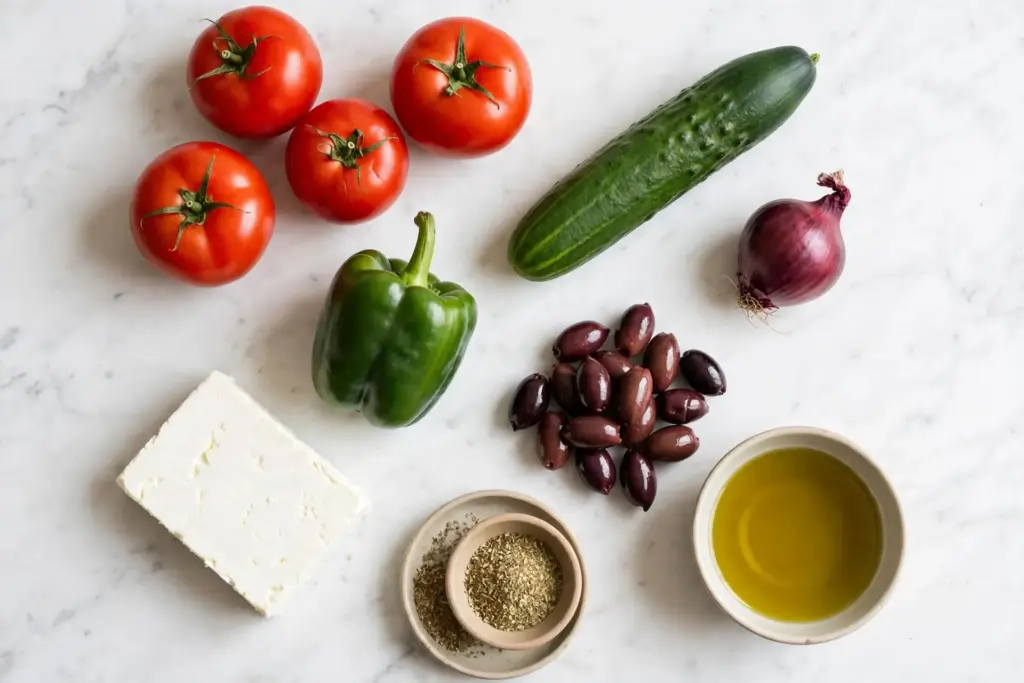
Tomatoes are the backbone of this salad. Use ripe ones. If they’re pale and firm, the salad will taste flat. Vine-ripened or heirloom tomatoes in summer are ideal. In winter, halved cherry tomatoes hold up better than large off-season ones.
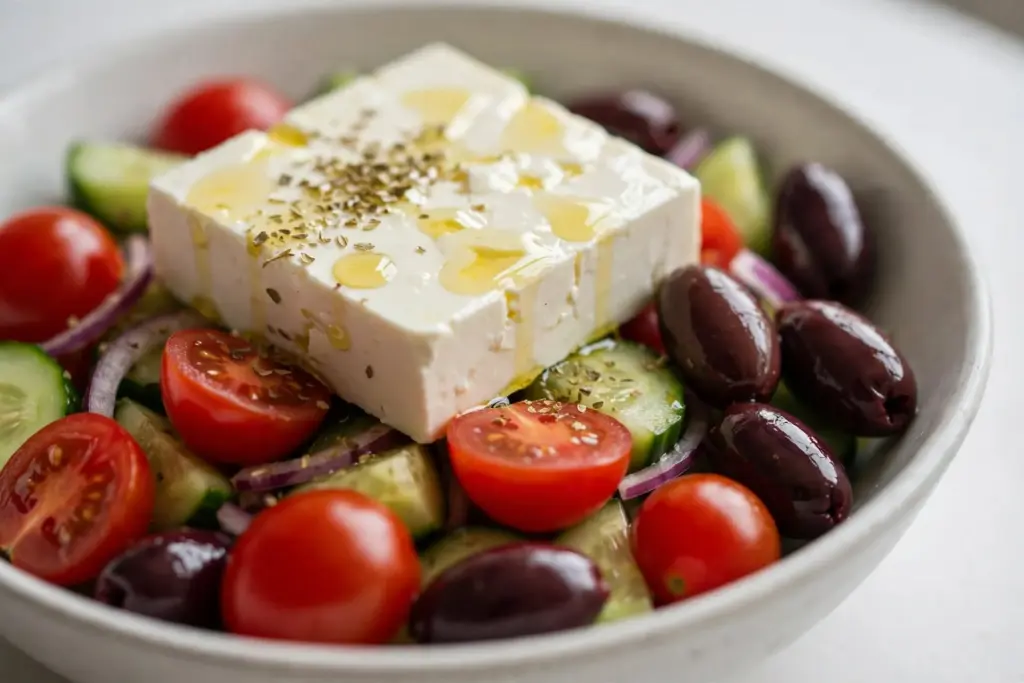
For the feta, buy it in brine if you can. A block sliced thick and placed on top stays firmer and has better texture than the pre-crumbled kind. Greek or Bulgarian feta both work well.
- 4 medium ripe tomatoes — cut into wedges. The main event. Use the ripest ones you can find.
- 1 English cucumber (about 350g) — cut into thick half-moons, roughly 1.5cm. English cucumbers have thinner skin and fewer seeds, so no need to peel.
- 1 small red onion — thinly sliced. Soaking the slices in cold water for 10 minutes tones down the sharpness if raw onion is too strong for you.
- 1 green bell pepper — sliced into thin rings. Traditional in Horiatiki, adds a slight crunch without overwhelming the other flavors.
- 1 cup Kalamata olives (about 150g) — pitted. The brininess is key. Regular black olives work but taste much milder.
- 200g block feta cheese — sliced thick or placed whole on top. Do not crumble it into the salad.
- 3 tablespoons extra virgin olive oil — use good quality here. It is the dressing.
- 1 teaspoon dried oregano — crumble it between your fingers as you sprinkle to release the oils.
- Salt and black pepper — to taste. Feta and olives are already salty, so taste before adding.
- 1 tablespoon red wine vinegar or fresh lemon juice — optional, adds brightness. Apple cider vinegar is a direct substitute.
Allergen & Dietary Disclosure
This recipe contains dairy (feta cheese). It is naturally gluten-free, egg-free, and nut-free. For a dairy-free version, replace feta with marinated firm tofu pressed dry and seasoned with lemon and salt. The texture changes but the salad still holds together well. Always check olive and feta packaging if you have cross-contamination concerns.
Step-by-Step Directions
Step 1: Prep the Vegetables
Cut the tomatoes into rough wedges, about 6 to 8 pieces per tomato. Slice the cucumber into thick half-moons and cut the green pepper into thin rings. Slice the red onion as thinly as you can. If the onion smells very sharp, drop the slices into a bowl of cold water for 10 minutes while you prep everything else, then drain and pat dry.
Chef’s Note: Keeping the vegetables chunky is not just for looks. Smaller pieces release too much liquid too quickly and the salad turns watery within minutes.
Step 2: Arrange in the Bowl
Add the tomatoes to a wide, shallow bowl first, then layer the cucumber, onion, and pepper rings on top. Scatter the olives across the vegetables. Place the feta block or thick slices directly on top. Do not mix it in.
Chef’s Note: Building in layers rather than tossing means the feta stays intact and the vegetables don’t bruise. The mixing happens at the table, which is exactly how it’s served in Greece.
Step 3: Dress and Season
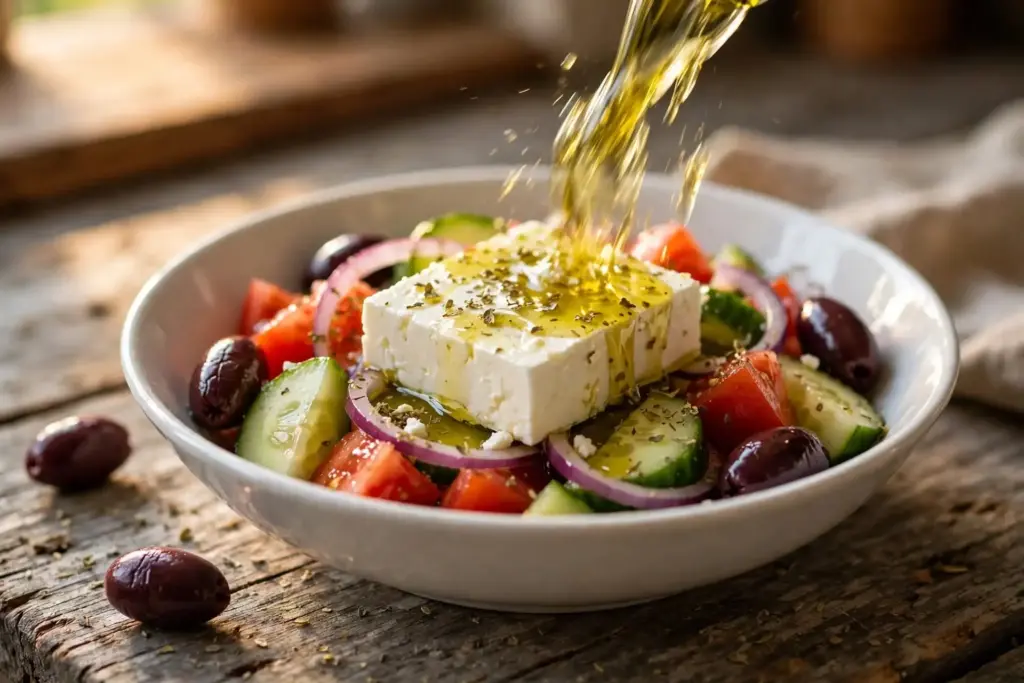
Drizzle the olive oil evenly over everything, then add the red wine vinegar or lemon juice if using. Season lightly with salt and a few cracks of black pepper. Finish with a generous pinch of dried oregano, crushed between your fingers as you sprinkle.
Chef’s Note: The olive oil and tomato juices collect at the bottom of the bowl as the salad sits. That liquid is worth mopping up with bread.
Step 4: Rest and Serve
Let the salad sit at room temperature for 10 to 15 minutes before serving. The tomatoes soften slightly, the onions mellow, and everything gets coated in olive oil. Serve directly from the bowl without tossing. Let each person mix their own portion.
Common Mistakes & Troubleshooting
| Problem | Cause | Solution |
|---|---|---|
| Salad turns watery | Tomatoes cut too small or salted too early | Cut into large wedges; add salt only right before serving |
| Feta disappears into the salad | Used pre-crumbled feta or mixed too aggressively | Buy block feta in brine; place on top, do not toss |
| Onion overpowers everything | Raw red onion used without soaking | Soak sliced onion in cold water for 10 minutes, drain before using |
| Salad tastes flat | Poor olive oil or unripe tomatoes | Use genuine extra virgin olive oil and fully ripe tomatoes |
| Olives taste too mild | Regular black olives used instead of Kalamata | Kalamata olives carry a deeper, brinier, slightly fruity flavor that standard canned olives lack |
Variations & Substitutions
Add protein: Sliced grilled chicken, canned tuna, or chickpeas turn this into a complete meal without changing the character of the salad.
Make it vegan: Swap the feta for marinated firm tofu. Press it dry first, then coat it in olive oil, lemon juice, and a pinch of salt. The texture is different but the salty, creamy role is there.
Cherry tomato version: In winter when large tomatoes are flavorless, halved cherry tomatoes hold their sweetness and texture much better.
Fresh herb addition: A handful of flat-leaf parsley or fresh mint added just before serving brightens the whole bowl without overriding the oregano.
Add some heat: A pinch of dried chili flakes alongside the oregano, or a few sliced pepperoncini tucked in with the olives.
No bell pepper: Some people dislike raw green pepper. Skip it entirely. The salad holds up without it.
Serving Suggestions
- Grilled chicken or lamb: The tomato and olive oil juices at the bottom of the bowl act as a natural sauce alongside grilled meats.
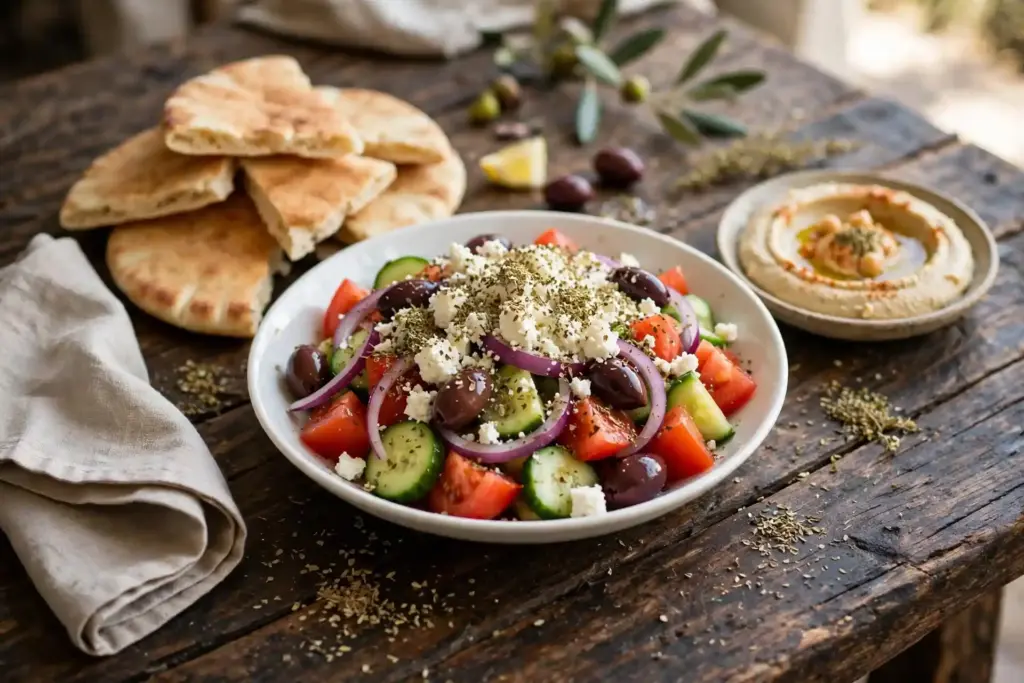
- Pita or crusty bread: Specifically for mopping up the liquid that collects at the bottom. This is not optional if you ask anyone Greek.
- Rice or bulgur pilaf: Works as part of a mezze spread when you have multiple dishes on the table.
- Hummus and flatbreads: A natural pairing for a simple Mediterranean-style meal.
- Lentil soup: The brightness of the salad cuts cleanly through the earthiness of a lentil-based dish.
- As a main: A larger portion with a boiled egg on the side makes a quick, filling lunch.
Tips for the Best Results
Use block feta in brine. Pre-crumbled feta is drier, saltier, and loses the creamy texture that makes feta worth eating. A thick slab on top of the salad is a genuinely different ingredient.
Keep tomatoes at room temperature. Cold storage kills tomato flavor. Even one hour on the counter before cutting makes a noticeable difference.
Taste before you salt. Kalamata olives and feta are both heavily salted. Many people find this salad needs no extra salt at all.
Let it rest. That 10 to 15 minutes at room temperature takes this from decent to genuinely good. The tomato juices release and pool with the olive oil at the bottom of the bowl.
Crush the oregano. Dried oregano releases significantly more flavor when crushed between your fingers than when shaken straight from the jar. It takes two seconds.
Storage Tips
Refrigerator
Leftovers keep for up to 24 hours covered in the fridge, though the texture is best within the first hour of dressing. After 24 hours, the cucumbers soften and the tomatoes release too much liquid to make it worth eating. If you’re making this ahead, store the chopped vegetables separately from the feta and dressing, then combine just before serving.
Freezer
This salad does not freeze. The vegetables lose all texture once thawed and the result is not usable.
Make-Ahead
Chop all the vegetables and store them in an airtight container in the fridge for up to 8 hours. Add the feta, olive oil, and oregano only when you’re ready to eat.
Nutrition Information
Per serving (1 of 4), approximate values:
| Nutrient | Per Serving |
|---|---|
| Calories | 220 kcal |
| Protein | 7g |
| Total Carbohydrates | 11g |
| Fiber | 3g |
| Sugar | 6g |
| Total Fat | 17g |
| Saturated Fat | 6g |
| Cholesterol | 30mg |
| Sodium | 680mg |
| Vitamin C | 35mg |
| Calcium | 180mg |
| Iron | 1.2mg |
| Potassium | 420mg |
Nutrition values are approximate and may vary based on brands and portion sizes.
Why This Recipe Works
This recipe follows the traditional Horiatiki structure — the salad Greek households have made for decades. The ratios here (more tomato and cucumber relative to onion, block feta rather than crumbled, olive oil as the sole dressing base) come from testing multiple versions to find what actually tastes balanced.
The resting step is the most important technical detail. At room temperature, ripe tomatoes release their juices within minutes. Those juices combine with the olive oil and form something close to a natural dressing. Skipping this step produces a dry, underdeveloped bowl.
Block feta matters for two reasons: texture and salt distribution. Crumbled feta over-salts the whole salad and disappears into the vegetables. A whole slab or thick slices let each person control how much ends up on their fork.
With only olive oil, oregano, and salt as the seasoning, there’s nowhere for mediocre produce to hide. Ingredient quality carries unusually heavy weight here.
Frequently Asked Questions
What is the difference between Greek salad and Horiatiki?
They’re the same dish. Horiatiki is the Greek name, translating roughly to “village salad.” Outside Greece, it’s called Greek salad. The traditional version uses no lettuce — just tomatoes, cucumber, olives, pepper, onion, feta, olive oil, and oregano. Some restaurant versions outside Greece add lettuce, but that’s an adaptation rather than the original.
Can I make Greek salad ahead of time?
Chop the vegetables up to 8 hours ahead and refrigerate them separately. Add the feta, olive oil, and oregano just before serving. If you dress the salad too early, the tomatoes release too much liquid and the cucumbers go soft. Fully assembled, it keeps for about 24 hours in the fridge, though the texture is best within the first hour.
What can I use instead of Kalamata olives?
Regular black olives work but taste noticeably milder. Kalamata olives have a deeper, brinier, slightly fruity character that is part of what makes this salad taste distinctly Greek. If Kalamata aren’t available, Castelvetrano or Nicoise olives are closer in flavor than standard canned black olives.
My salad turned watery. What went wrong?
Two common causes: tomatoes cut too small, or the salad dressed and left to sit too long before serving. Cut tomatoes into large wedges, add salt only right before serving, and serve within 30 minutes of dressing. The juices that naturally release during the 10-15 minute rest are ideal; a watery pool an hour later is too much.
Is feta really necessary, or can I leave it out?
Feta provides the salt, creaminess, and richness that the olive oil and vegetables alone don’t deliver. Without it, the salad tastes noticeably incomplete. For a dairy-free version, marinated firm tofu pressed dry and seasoned with lemon and salt is the closest functional substitute.
How do I keep the red onion from tasting too harsh?
Soak the sliced onion in cold water for 10 minutes, then drain and pat dry before adding it to the salad. This pulls out some of the sulfur compounds without cooking the onion. It stays crisp but loses the aggressive bite.
What kind of olive oil should I use?
Extra virgin olive oil. It is the only dressing in this salad, so the quality shows. Greek olive oil made from Koroneiki olives has a slightly peppery finish that pairs naturally with the other ingredients, but any good extra virgin oil works.
Conclusion
Greek salad works because it asks very little of you. Good tomatoes, real Kalamata olives, block feta, and decent olive oil — that’s the whole recipe. The technique is cutting things the right size and giving the salad 10 minutes to come together at room temperature. Once you’ve made a proper greek salad this way, the versions with crumbled feta and bottled dressing stop making sense.
If you loved this recipe, save it to your Greek recipes Pinterest board so you can find it easily later!
Classic Greek Salad (Horiatiki)
Ingredients
Method
- Cut tomatoes into large wedges. Slice cucumber into thick half-moons and green pepper into rings. Slice the red onion thinly. If the onion is very sharp, soak the slices in cold water for 10 minutes, then drain and pat dry.
- Add tomatoes to a wide serving bowl. Layer the cucumber, pepper rings, and onion on top. Scatter olives over the vegetables.
- Place the feta block or thick slices on top of the salad without mixing it in.
- Pour olive oil evenly over everything. Add vinegar or lemon juice if using. Season lightly with salt and black pepper. Crush dried oregano between your fingers and sprinkle over the top.
- Rest the salad at room temperature for 10 to 15 minutes before serving to allow the tomato juices to combine with the olive oil. Serve from the bowl without tossing.
Notes
- Block feta in brine gives significantly better texture than pre-crumbled. Place it on top whole or in thick slices.
- Keep tomatoes at room temperature before using. Cold tomatoes have notably less flavor.
- Taste before adding salt. Between the feta and olives, additional salt is often unnecessary.
- Best served within 30 minutes of dressing. After 24 hours the cucumbers lose their crunch.
Calories: 220 kcal | Protein: 7g | Total Carbohydrates: 11g | Fiber: 3g | Sugar: 6g | Total Fat: 17g | Saturated Fat: 6g | Cholesterol: 30mg | Sodium: 680mg | Vitamin C: 35mg | Calcium: 180mg | Iron: 1.2mg | Potassium: 420mg Nutrition values are approximate and may vary based on brands and portion sizes.