Easy Chickpea Salad That Actually Keeps You Full
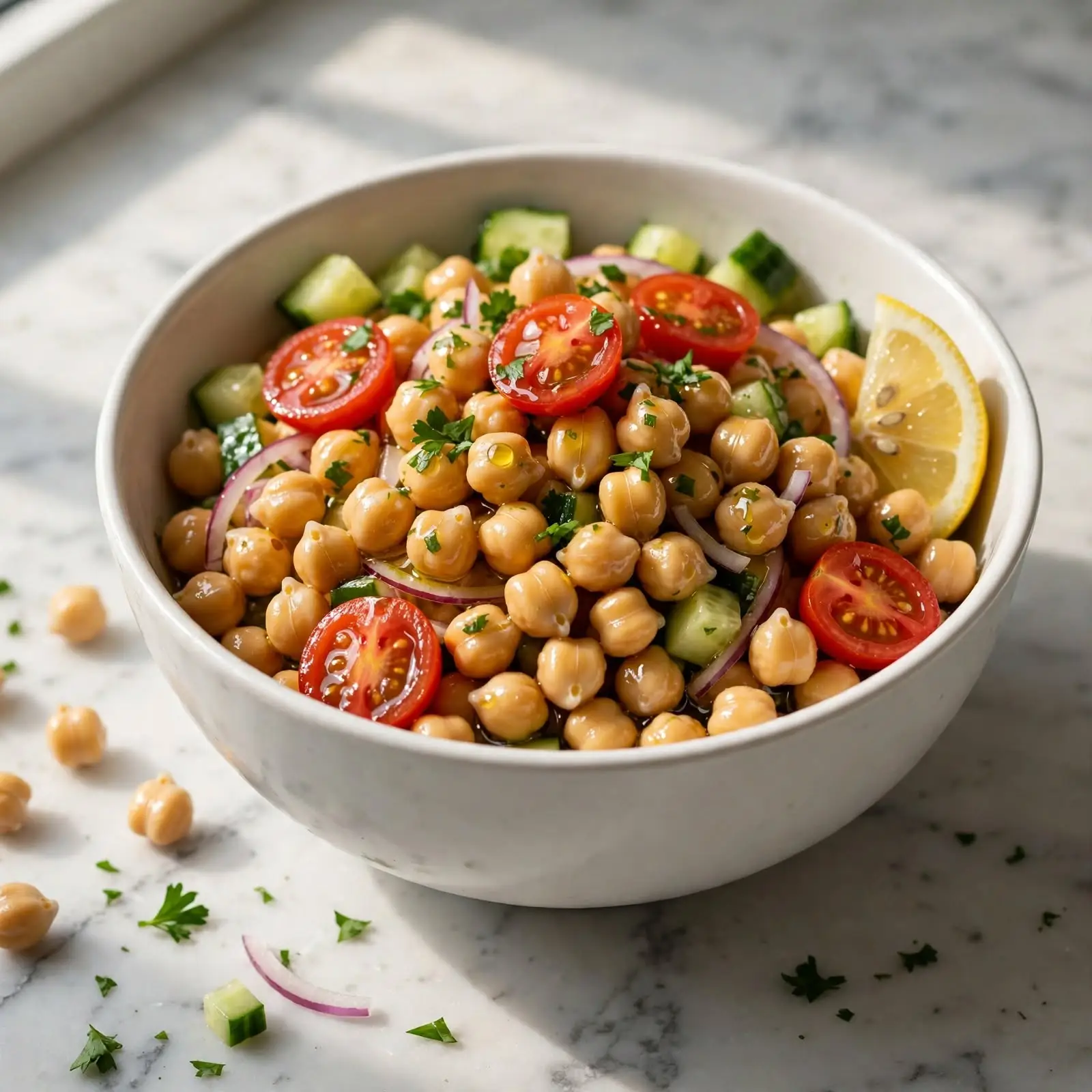
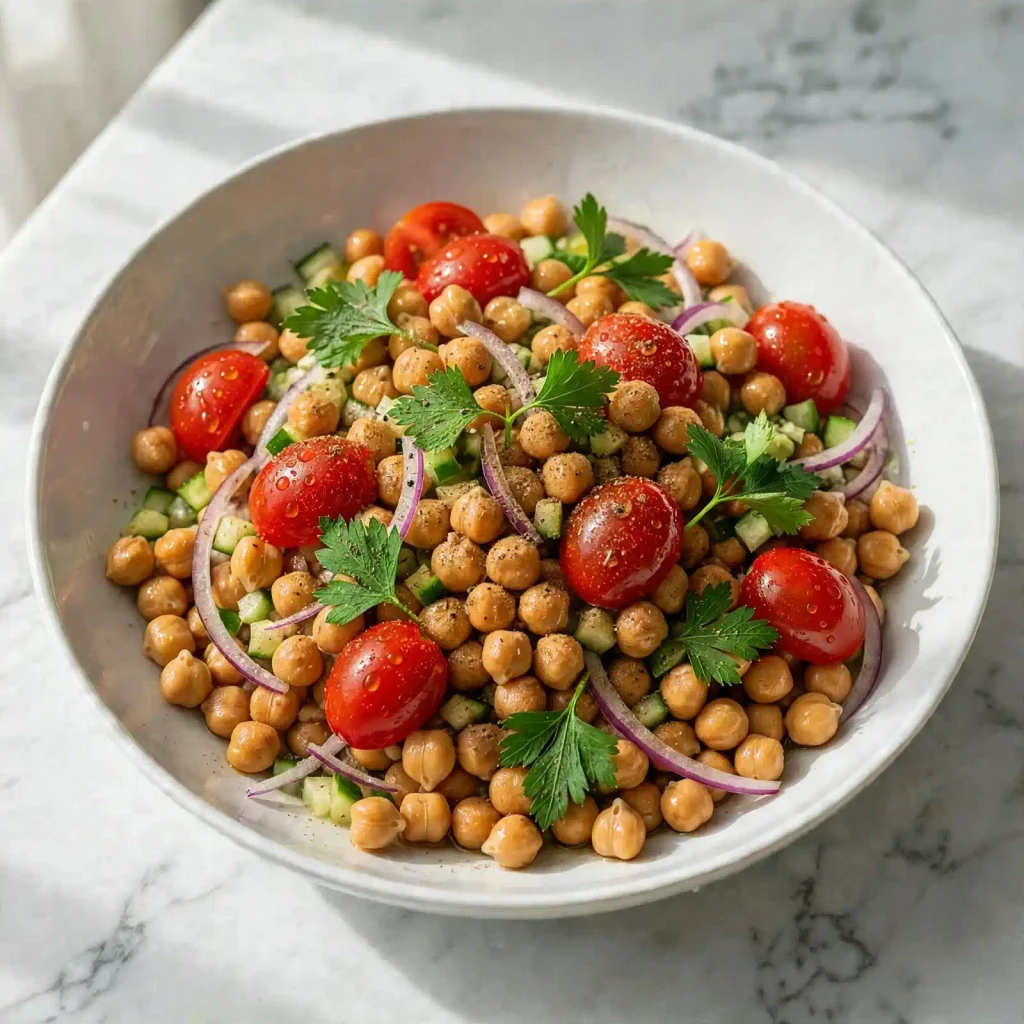
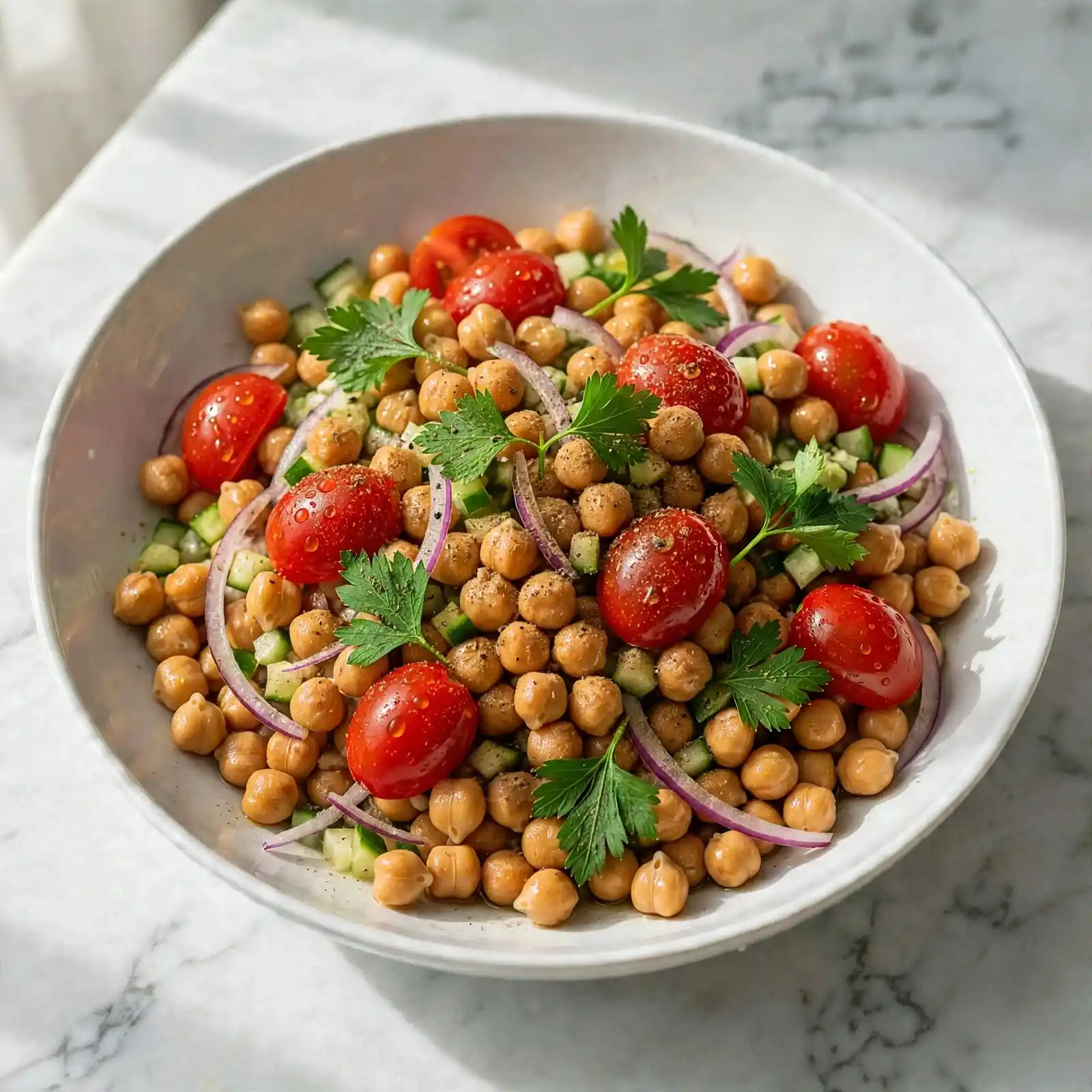
Some salads eat like a side dish. This one doesn’t. A good chickpea salad is hearty enough to be lunch on its own — chickpeas give it real substance, the vegetables keep it crisp, and a lemony olive oil dressing ties everything together without being heavy.
This is a no-cook, one-bowl recipe built for real life. You can put it together in about 15 minutes, it tastes better after sitting for a bit, and it holds up in the fridge for days without going soggy. That makes it one of the most practical things you can prep on a Sunday afternoon.
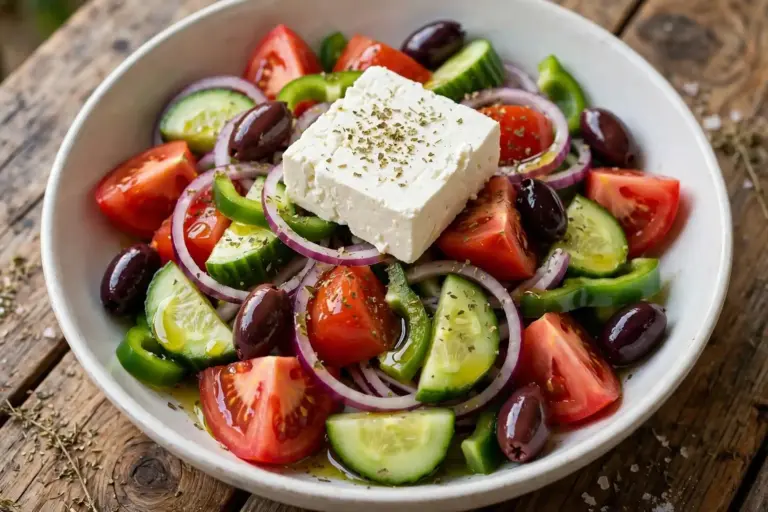
The base recipe is simple, but it’s also flexible. Add feta, olives, roasted red peppers, or fresh herbs depending on what you have. It works as a quick weekday lunch, a potluck dish, or something to pack for work.
Why You’ll Love This Chickpea Salad
- Ready in 15 minutes. No cooking, no waiting. Open a can, chop a few vegetables, whisk the dressing, and you’re done.
- Genuinely filling. Chickpeas have about 7 grams of protein and 6 grams of fiber per half cup, so this salad actually holds you until your next meal rather than leaving you hungry an hour later.
- Better the next day. The chickpeas absorb the dressing as it sits and the flavors deepen. Make it Sunday, eat it Tuesday, and it still tastes great.
- Easy to adapt. The core recipe works as-is, but it also takes add-ins well. Feta, olives, roasted red peppers, fresh mint — none of it breaks the base.
- Cheap, year-round ingredients. Canned chickpeas, cucumber, cherry tomatoes, red onion, and lemon are inexpensive and available in any grocery store regardless of the season.
Ingredients You’ll Need
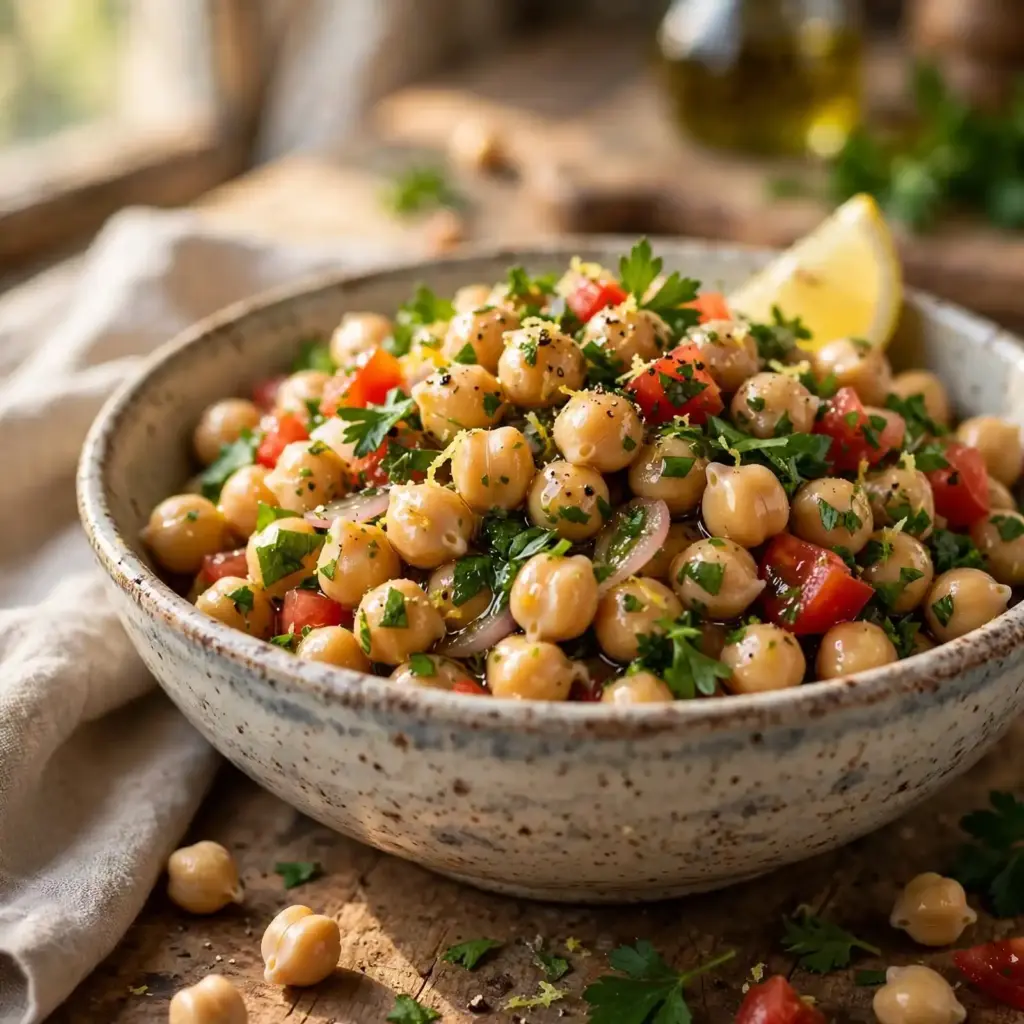
Ingredient quality matters more than technique here. Chickpeas from a good can taste noticeably cleaner than a mediocre brand — look for ones packed in water with minimal sodium. For tomatoes, cherry or grape varieties hold their shape better than large tomatoes, which release too much liquid and water down the dressing. Use an English cucumber since the skin is thinner and less bitter, so there’s no need to peel it.
Recipe Timing
| Detail | Info |
| Servings | 4 |
| Difficulty | Easy |
| Course | Salad, Lunch, Side Dish |
| Cuisine | Mediterranean-inspired |
| Prep Time | 15 minutes |
| Cook Time | 0 minutes |
| Rest Time | 20 minutes (optional but recommended) |
| Total Time | 35 minutes (with rest) / 15 minutes (without) |
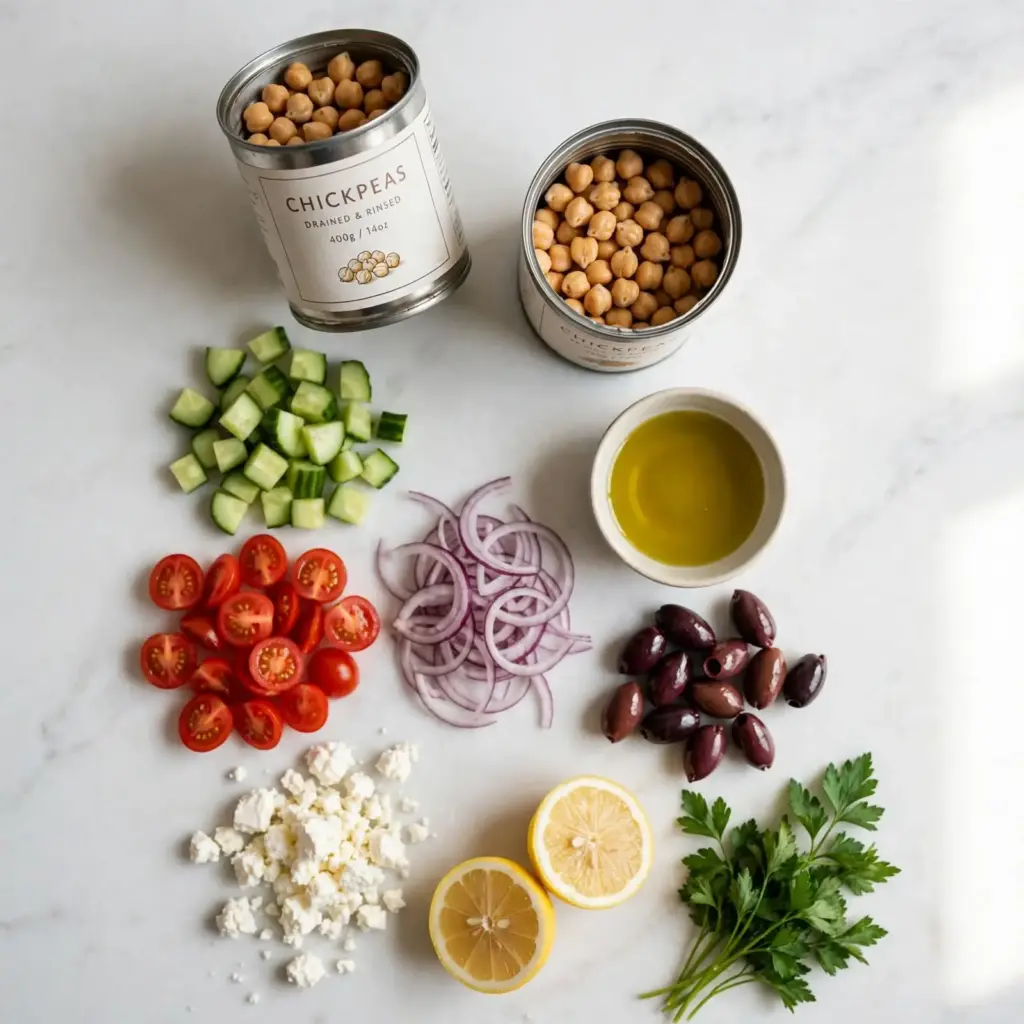
For the salad:
- 2 cans (400g each) chickpeas, drained and rinsed — the protein base; rinsing removes excess sodium and the tinny aftertaste
- 1 English cucumber, diced into 1 cm pieces — adds crunch; no peeling needed
- 1 cup cherry tomatoes, halved — sweeter and firmer than large tomatoes, so they don’t go watery
- 1/3 cup red onion, finely diced — sharp bite that balances the lemon; soak in cold water for 10 minutes if you want it milder
- 1/3 cup fresh parsley, roughly chopped — fresh makes a real difference here; dried won’t deliver the same brightness
- 1/4 cup Kalamata olives, sliced (optional) — adds briny depth; skip if you prefer a cleaner flavor
- 60g feta cheese, crumbled (optional) — salty and creamy; worth adding if you want a more substantial salad
For the dressing:
- 3 tablespoons extra virgin olive oil — use a decent one; this is part of the flavor, not just the base
- 2 tablespoons fresh lemon juice — roughly one lemon; bottled is noticeably flatter
- 1 teaspoon red wine vinegar — sharpens the dressing just enough
- 1 small garlic clove, minced or grated — grating gives smoother distribution than chopping
- 1/2 teaspoon dried oregano
- Salt and black pepper to taste
Allergen & Dietary Disclosure
This recipe contains dairy if you add the optional feta. The recipe without feta or olives is naturally vegan, vegetarian, gluten-free, nut-free, and egg-free.
- Dairy-free: Skip the feta, or use a plant-based alternative.
- Vegan: Same as above — the base salad is already vegan.
- Gluten-free: Naturally gluten-free as written. If you’re cooking for someone with celiac, confirm that your canned chickpeas are certified gluten-free, as some brands are processed alongside wheat.
Not guaranteed safe for any specific allergy. Always check ingredient labels.
Equipment Needed
- Large mixing bowl — big enough to toss everything without chickpeas flying out
- Sharp chef’s knife — a dull knife will crush the cucumber and bruise the parsley
- Cutting board — a larger one makes the prep noticeably faster
- Small bowl and whisk (or fork) — for the dressing
- Can opener and colander — to drain and rinse the chickpeas properly
Step-by-Step Directions
Step 1: Drain and Rinse the Chickpeas
Open both cans of chickpeas and pour them into a colander. Rinse well under cold water for about 30 seconds until the water runs clear. Shake off the excess water and pat them dry with a paper towel if you have a moment — drier chickpeas absorb the dressing instead of diluting it.
Chef’s Note: Don’t skip the rinse. The liquid in the can has a starchy, slightly metallic taste that dulls the dressing and lingers in the finished salad.
Step 2: Prep the Vegetables
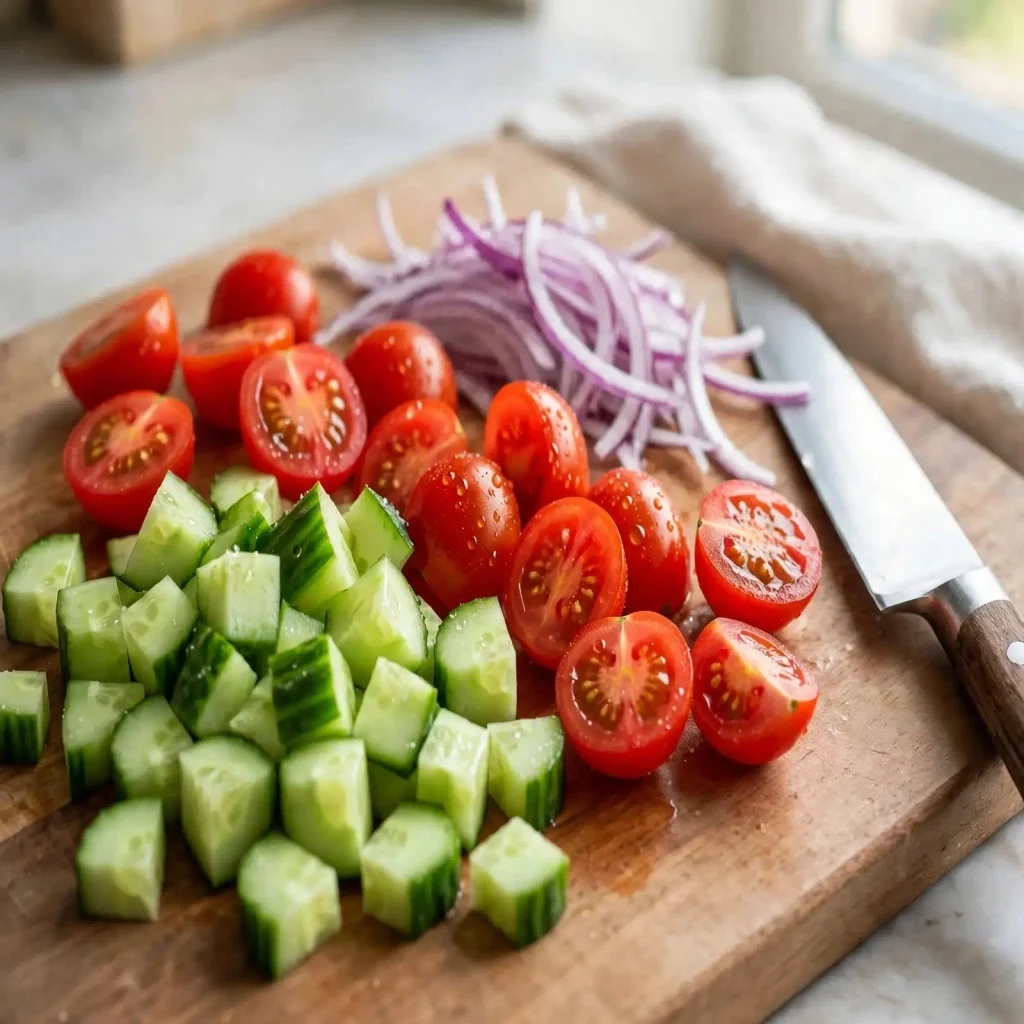
Dice the cucumber into roughly 1 cm pieces. Halve the cherry tomatoes. Finely dice the red onion — the smaller the pieces, the better it distributes through the salad without overpowering individual bites. Roughly chop the parsley, using mostly the leaves and just a little of the tender stems.
Chef’s Note: If your red onion is very pungent, soak the diced pieces in cold water for 10 minutes then drain them. It takes the sharp edge off without losing the flavor.
Step 3: Make the Dressing
In a small bowl, whisk together the olive oil, lemon juice, red wine vinegar, garlic, oregano, salt, and pepper. Taste it on its own before adding it to the salad — it should taste bright and slightly salty, almost too lemony. It will mellow once it coats the chickpeas.
Chef’s Note: The red wine vinegar isn’t redundant alongside the lemon juice. The two acids work differently — the vinegar rounds out the sharpness of the lemon and makes the dressing taste more layered.
Step 4: Combine Everything
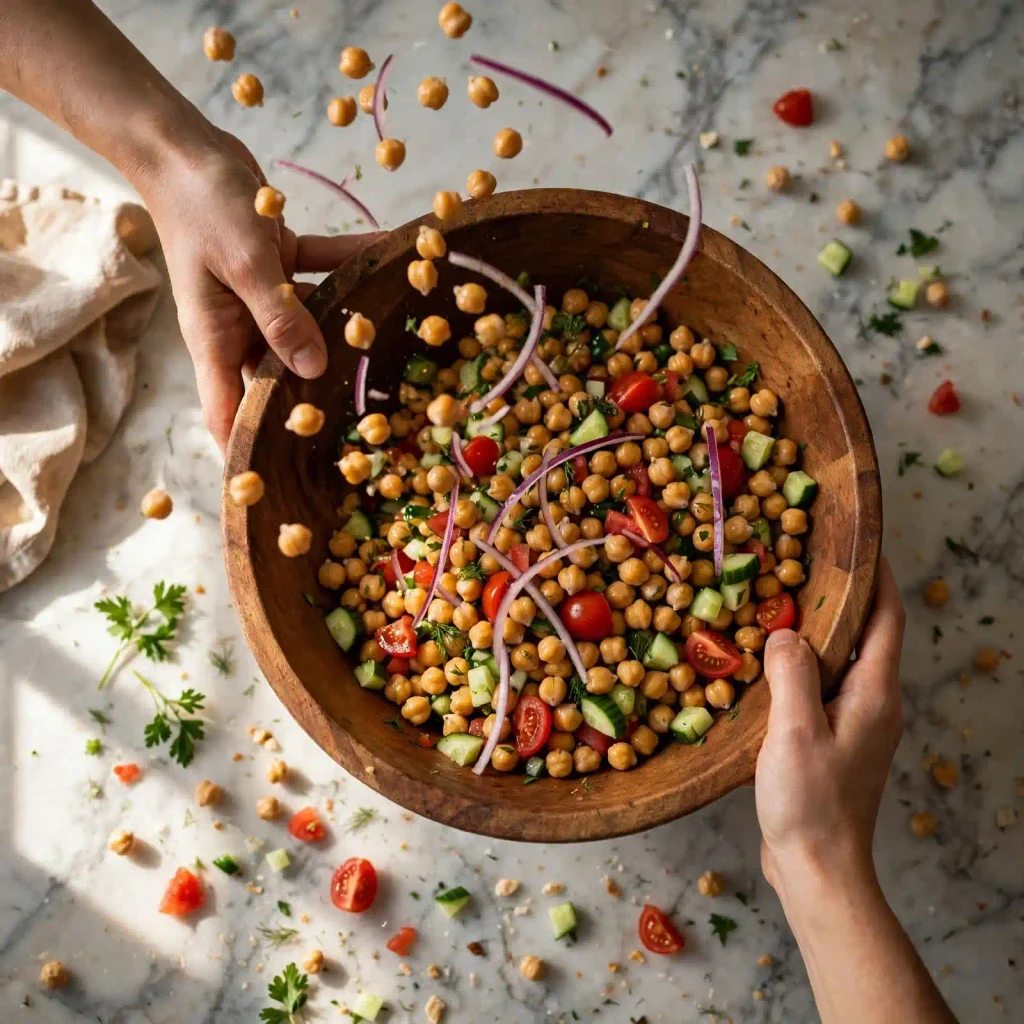
Add the chickpeas, cucumber, tomatoes, red onion, parsley, and olives (if using) to your large mixing bowl. Pour the dressing over and toss gently until everything is evenly coated. If you’re adding feta, fold it in last — gently, so the crumbles stay intact rather than breaking into the dressing.
Step 5: Rest, Then Taste
Let the salad sit for at least 20 minutes before serving. During this time the chickpeas soak up the dressing and the flavors come together much better than they do right after mixing. Taste again before serving and adjust salt, lemon, or olive oil as needed. If it needs a lift, another small squeeze of fresh lemon usually does it.
Step 6: Serve or Store
Serve at room temperature or cold from the fridge. If the salad has been sitting for a few hours, give it a quick toss and add a small splash of lemon juice to freshen it up before bringing it to the table.
Common Mistakes & Troubleshooting
| Problem | Cause | Solution |
| Salad is watery | Tomatoes released liquid, or chickpeas weren’t dried | Use cherry tomatoes instead of large ones; pat chickpeas dry after rinsing |
| Dressing tastes flat | Bottled lemon juice, or not enough salt | Use fresh lemon; taste and season the dressing before adding it to the bowl |
| Red onion is too sharp | Raw onion not treated before adding | Soak diced onion in cold water for 10 minutes; drain before using |
| Chickpeas taste bland | Didn’t rest long enough | Let the salad sit at least 20 minutes before serving |
| Feta turns mushy | Added feta too early and over-mixed | Fold feta in last, gently, right before serving |
Variations & Substitutions
- Spicy: Add 1/4 teaspoon red chili flakes to the dressing, or toss in a few thinly sliced fresh green chilies.
- Roasted chickpeas: Roast the drained chickpeas at 200°C for 20 minutes before adding them. They stay crispier and pick up a nuttier flavor.
- Avocado chickpea salad: Fold in one diced ripe avocado just before serving for a creamier texture. Eat it the same day — avocado doesn’t hold well overnight.
- Grain bowl base: Serve over cooked quinoa or bulgur wheat to make it substantial enough for dinner.
- Herb swap: Cilantro works in place of parsley if you prefer that flavor. Fresh mint is good too, used in smaller amounts (about 2 tablespoons).
- No olives: If you’re not an olive fan, leave them out entirely. A tablespoon of capers adds a similar briny note with a milder intensity.
Serving Suggestions
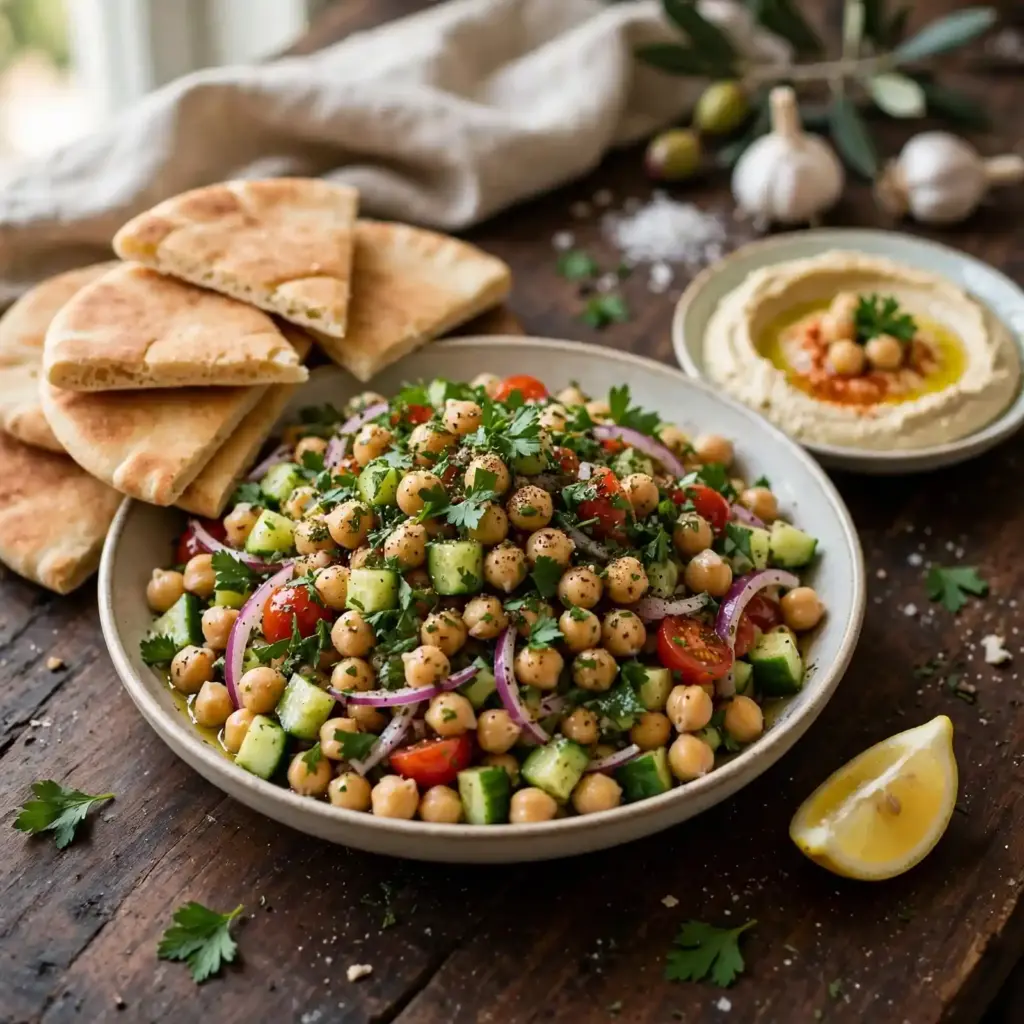
- Stuffed into warm pita bread with a spoonful of hummus — the fastest filling lunch
- Served alongside grilled chicken or lamb as a fresh, bright side
- Topped with a soft-boiled egg for extra protein without changing the flavor
- Scooped with pita chips as an appetizer at a gathering
- Served cold on a bed of arugula for a more composed, restaurant-style plate
- Paired with cold mint lemonade in summer — the acidity echoes the dressing.
Tips for the Best Results
- Don’t skip the rest time. 20 minutes is the minimum. An hour in the fridge is even better. The chickpeas absorb the dressing and the whole salad comes together.
- Season in stages. Season the dressing on its own, then taste the finished salad and adjust again. It usually needs salt at both points.
- Use cold chickpeas. If your canned chickpeas are sitting at room temperature, rinse them under cold water and refrigerate for 10 minutes before assembling. The salad eats better cold.
- Fresh lemon, every time. The whole recipe is built around bright acidity. Bottled lemon juice works in a pinch but the dressing tastes noticeably duller.
- Keep feta on the side for meal prep. It softens and starts dissolving into the dressing after about 24 hours. Store it separately and add a pinch when you serve each portion.
Storage Tips
Refrigerator
Store in an airtight container for up to 4 days. The salad actually improves on day two as the flavors deepen. If you’ve added avocado, that doesn’t hold well — keep it separate and slice fresh before serving.
Freezer
This salad doesn’t freeze. The cucumber and tomatoes turn mushy after thawing. Refrigerator only.
Reheating
This salad is meant to be eaten cold or at room temperature. No reheating needed. If it’s been in the fridge, let it sit for 10 to 15 minutes and add a small splash of fresh lemon juice to wake the flavors back up before serving.
Nutrition Information
Per serving, approximately 1.5 cups, without feta or olives:
| Nutrient | Per Serving |
| Calories | 290 |
| Protein | 10g |
| Carbohydrates | 32g |
| Fiber | 8g |
| Sugar | 5g |
| Fat | 13g |
| Saturated Fat | 2g |
| Cholesterol | 0mg |
| Sodium | 310mg |
| Vitamin C | 22mg |
| Calcium | 60mg |
| Iron | 3mg |
| Potassium | 420mg |
Nutrition values are approximate and may vary based on brands and portion sizes.
Why This Recipe Works
This isn’t a recipe I put together once and left alone. The version here is the result of making chickpea salad probably 40 or 50 times over a few years — adjusting the dressing ratio, testing different cucumbers (English beats Persian for texture here), and figuring out why some batches tasted flat 20 minutes later.
The key finding: chickpeas need time to absorb acid. A lot of recipes skip the resting step and the result tastes like dressed vegetables with chickpeas in it, rather than a cohesive salad where every component tastes like it belongs. The 20-minute rest is non-negotiable if you want real depth of flavor.
The red wine vinegar alongside the lemon juice isn’t redundant. The vinegar adds a rounder, slightly earthier acidity that balances the sharp brightness of lemon. Together they create a more layered dressing than either one alone.
For exact measurements: 3 tablespoons olive oil to 2 tablespoons lemon juice is the ratio that works. More lemon and it’s too sharp; less and it’s flat. That balance took a while to land on.
Frequently Asked Questions
Can I make chickpea salad ahead of time?
Yes, and it genuinely tastes better the next day. Make it up to 24 hours ahead and store it covered in the fridge. Keep feta and avocado separate if you’re meal prepping for multiple days — both break down with extended sitting. The base salad (chickpeas, cucumber, tomato, onion, dressing) holds well for up to 4 days.
Can I use dried chickpeas instead of canned?
You can. Soak dried chickpeas overnight, then simmer them for 45 to 60 minutes until just tender. Cool them completely before assembling the salad. The texture is slightly firmer and they absorb the dressing a little better than canned. One 400g can equals roughly 240g of cooked dried chickpeas, so plan accordingly.
What can I use instead of red onion?
Green onions are the easiest swap — milder flavor, no need to soak. Shallots work well too, with a subtle sweetness. If you have white onion, treat it the same as red: soak the diced pieces in cold water for 10 minutes to soften the sharpness before adding them to the bowl.
How do I know when the salad is ready to serve?
Right after mixing, the dressing sits visibly on top. After 20 minutes, it looks integrated — the chickpeas appear slightly more matte and the dressing pools less at the bottom. The clearest sign is tasting one chickpea: if the seasoning has worked through to the center rather than just coating the outside, it’s ready.
Is this salad safe for people with gluten intolerance?
The core recipe is naturally gluten-free. If you’re making it for someone with celiac disease, check that your canned chickpeas are certified gluten-free, as some are processed in facilities that handle wheat. The dressing ingredients (olive oil, lemon juice, red wine vinegar, dried oregano) are all gluten-free as long as you use a plain, certified red wine vinegar.
Why does my chickpea salad taste bland?
Three common causes: not enough salt in the dressing, not enough rest time, or flat bottled lemon juice. Season the dressing before you add it, let the salad sit for at least 20 minutes, and always use fresh lemon. If it still tastes dull, add a pinch more salt and another small squeeze of lemon just before serving.
Conclusion
Chickpea salad earns its place in regular rotation because it delivers on the things that actually matter during the week — fast to make, filling enough to work as a meal, and reliable as a meal prep option that doesn’t turn sad after a day in the fridge. Once you have the dressing ratio right, the whole thing comes together on autopilot.
The base recipe is complete on its own, but it’s also a good starting point if you want to build on it with whatever’s in your fridge that day.
If you loved this easy chickpea salad, save it to your salads and meal prep Pinterest board so you can find it easily later!
Ingredients
Method
- Pour chickpeas into a colander and rinse under cold water until the water runs clear. Shake off excess water and pat dry with a paper towel.
- Dice the cucumber, halve the cherry tomatoes, finely chop the red onion, and roughly chop the parsley. If the onion is very sharp, soak the diced pieces in cold water for 10 minutes then drain.
- Whisk olive oil, lemon juice, red wine vinegar, garlic, oregano, salt, and pepper in a small bowl. Taste and adjust seasoning — the dressing should be bright and lightly salty.
- Add chickpeas, cucumber, tomatoes, red onion, parsley, and olives to a large mixing bowl. Pour the dressing over and toss until evenly coated.
- If using feta, fold it in gently at the end to keep the crumbles intact.
- Let the salad rest for 20 minutes before serving, or refrigerate and serve cold. Toss again and add a small squeeze of lemon before serving.
Notes
- Soak diced red onion in cold water for 10 minutes before adding if you want a milder flavor.
- The salad tastes noticeably better after sitting — make it at least an hour ahead when you can.
- Keep feta stored separately if meal prepping for multiple days; it softens quickly in the dressing.
- Refresh leftover salad with a splash of fresh lemon juice before each serving.
Calories: 290 | Protein: 10g | Carbohydrates: 32g | Fiber: 8g | Sugar: 5g | Fat: 13g | Saturated Fat: 2g | Cholesterol: 0mg | Sodium: 310mg | Vitamin C: 22mg | Calcium: 60mg | Iron: 3mg | Potassium: 420mg Nutrition values are approximate and may vary based on brands and portion sizes.