Creamy Egg Salad Recipe That Actually Tastes Like Something
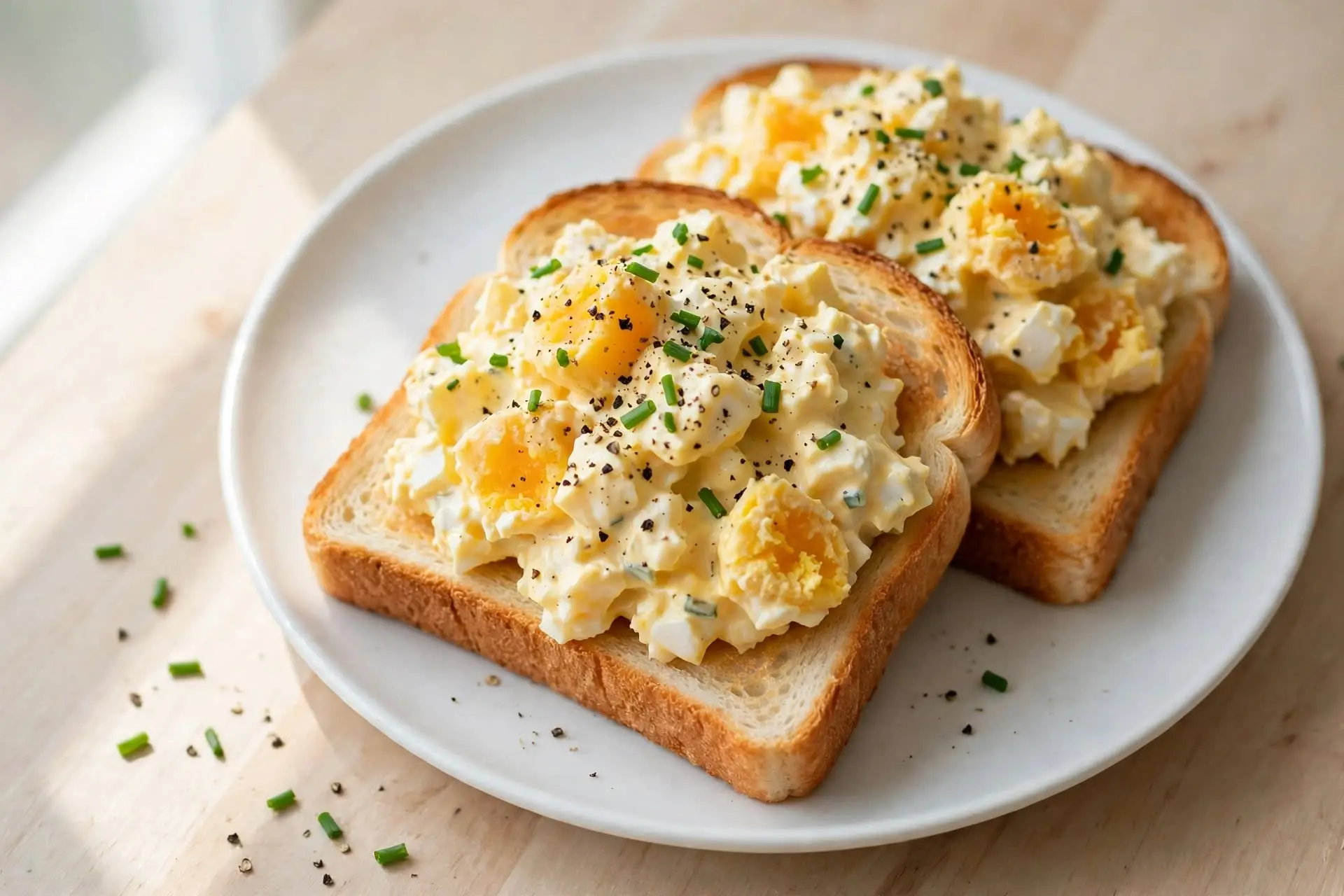
The first bite of a good egg salad is creamy, a little tangy, and satisfying in a way that feels almost nostalgic. The kind you find at a family lunch, tucked into a soft sandwich with nothing fancy going on — just good ingredients done right.
This egg salad recipe is straightforward. Hard-boiled eggs, mayo, a little mustard, some crunch from celery, and enough seasoning to make it taste like you actually tried. It comes together in about 15 minutes, works on bread, in a wrap, scooped onto crackers, or eaten straight from the bowl. It keeps well in the fridge, which makes it a solid prep-ahead option for busy weeks.
Why You’ll Love This Egg Salad Recipe
- Ready in under 30 minutes. Boiling the eggs is the slowest part. Once they’re cool, the rest of the recipe takes about five minutes.
- Built from pantry staples. Eggs, mayo, mustard, and celery are sitting in most kitchens already. No special trip to the store needed.
- Completely adjustable. Mash the eggs smooth or leave them chunky. Add another spoon of mayo for a looser result or less for something firmer. The recipe takes well to small changes.
- Practical for meal prep. Make a full batch and you have lunch sorted for the next three days. It actually tastes better after a few hours in the fridge once the flavors settle.
- Naturally low in carbohydrates. On its own, egg salad has almost no carbs, so it fits into a variety of eating styles without any modification.
Ingredients You’ll Need
Recipe Timing
Servings: 4
Difficulty: Easy
Course: Lunch, Appetizer
Cuisine: American
Prep Time: 10 minutes
Cook Time: 12 minutes
Rest Time: 5 minutes (cooling)
Total Time: 27 minutes
One tip before you start: use eggs that have been in the fridge for at least five days. Fresh eggs cling to their shells after boiling and tear when you peel them. Older eggs slide out cleanly every time.
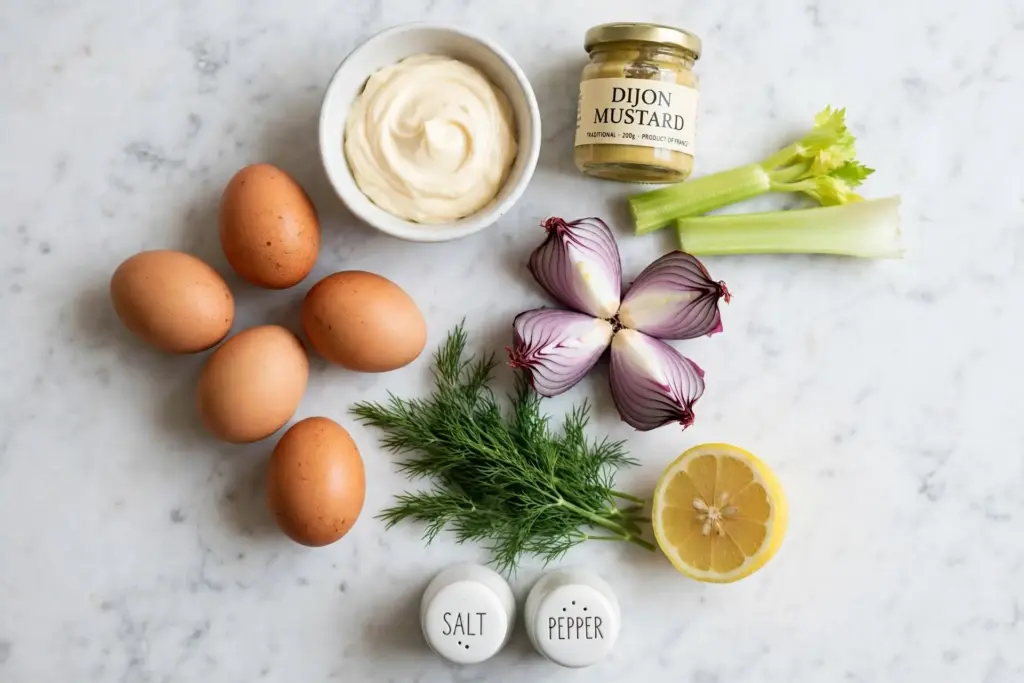
- 6 large eggs: the main ingredient. Grade A large eggs work consistently well here.
- 3 tablespoons mayonnaise: the creamy base. Full-fat mayo gives the richest flavor. Light mayo is fine, though the texture will be slightly thinner. Add a fourth tablespoon if you prefer a looser salad.
- 1 teaspoon Dijon mustard: adds a mild sharpness that cuts through the richness of the eggs and mayo. Yellow mustard is a reasonable swap if that’s what you have on hand.
- 2 stalks celery, finely chopped: brings crunch and a clean, fresh flavor. Chop it small enough that every bite gets a little.
- 2 tablespoons red onion, finely diced: adds a subtle sharpness. If raw onion feels too strong, soak the diced pieces in cold water for 5 minutes, then drain before adding.
- 1 teaspoon fresh lemon juice: brightens the whole mixture. Bottled lemon juice works in a pinch.
- Salt and black pepper, to taste: season after everything is combined so you can judge the full flavor before adding.
- 1 tablespoon fresh dill or chives, chopped (optional): either herb adds a mild freshness without overpowering the salad. Dried dill works too; use about half a teaspoon.
- Paprika, for garnish (optional): a small pinch adds color and very faint warmth when serving.
Allergen & Dietary Disclosure
This recipe contains eggs, one of the most common food allergens. The mayonnaise also contains eggs. If you’re making this for someone with an egg allergy, there’s no suitable substitute since eggs are the main ingredient.
Gluten: The salad itself is gluten-free. Any bread, crackers, or wraps served alongside may contain gluten depending on the product you choose.
Dairy: No dairy is used in this recipe.
Nut-free: No nuts or nut-derived ingredients are present.
If you’re serving this at a gathering, keep it in a labeled container so guests with egg allergies can easily identify it.
Equipment Needed
You don’t need anything specialized, but a couple of tools genuinely affect the result:
- Medium saucepan: big enough to hold six eggs in a single layer with water circulating freely around them. Crowded eggs cook unevenly.
- Mixing bowl: medium-sized, with enough room to fold everything together without spilling.
- Fork or potato masher: a fork gives you more control over texture. Press lightly for a chunky salad or more firmly for something smoother. A potato masher speeds things up if you’re making a larger batch.
- Sharp knife and cutting board: for chopping the celery and onion evenly. Uneven pieces mean some bites are all onion and others have none.
Step-by-Step Directions
Step 1: Boil the Eggs
Place the eggs in a single layer in your saucepan and cover with cold water by about one inch. Bring to a full boil over medium-high heat, then reduce to a steady simmer and cook for 11 to 12 minutes. Under-cooked yolks will be jammy and too soft to hold the salad’s texture.
Chef’s Note: Starting with cold water and gradually bringing it to a boil produces more even cooking. Dropping cold eggs straight into boiling water shocks them and can cause the whites to cook unevenly near the edges.
Step 2: Cool and Peel
Transfer the cooked eggs immediately to a bowl of ice water or run them under cold water for at least 5 minutes. This stops the cooking and prevents the gray-green ring that forms around the yolk when eggs overheat. Once cool enough to handle, tap each egg gently on the counter, roll it lightly between your palms to crack the shell all over, then peel from the wide end where the air pocket sits.
Step 3: Chop and Mash
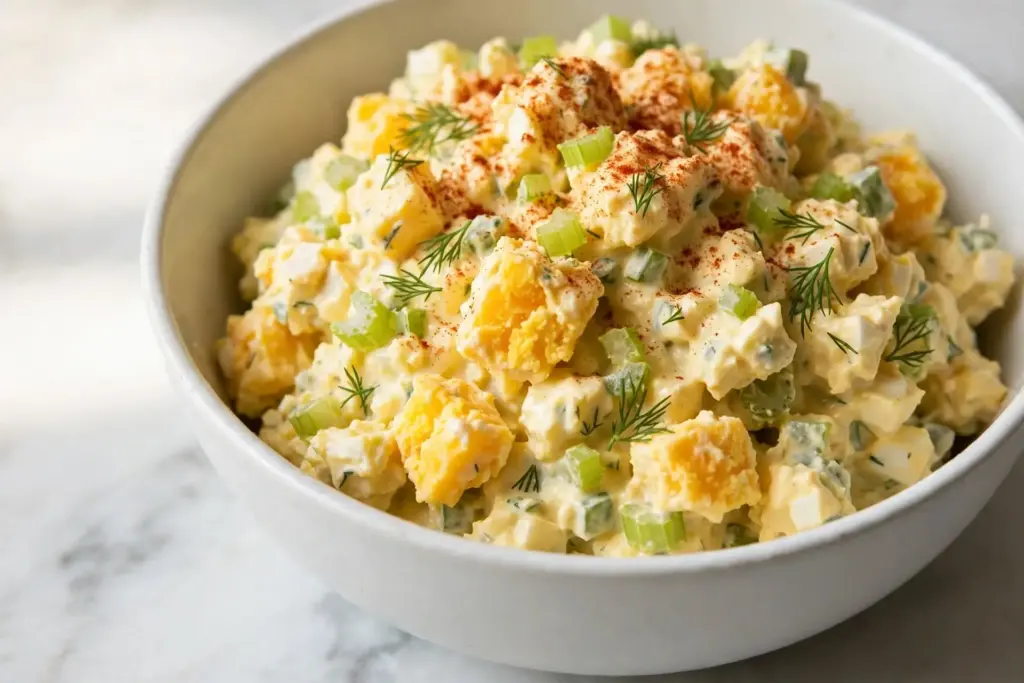
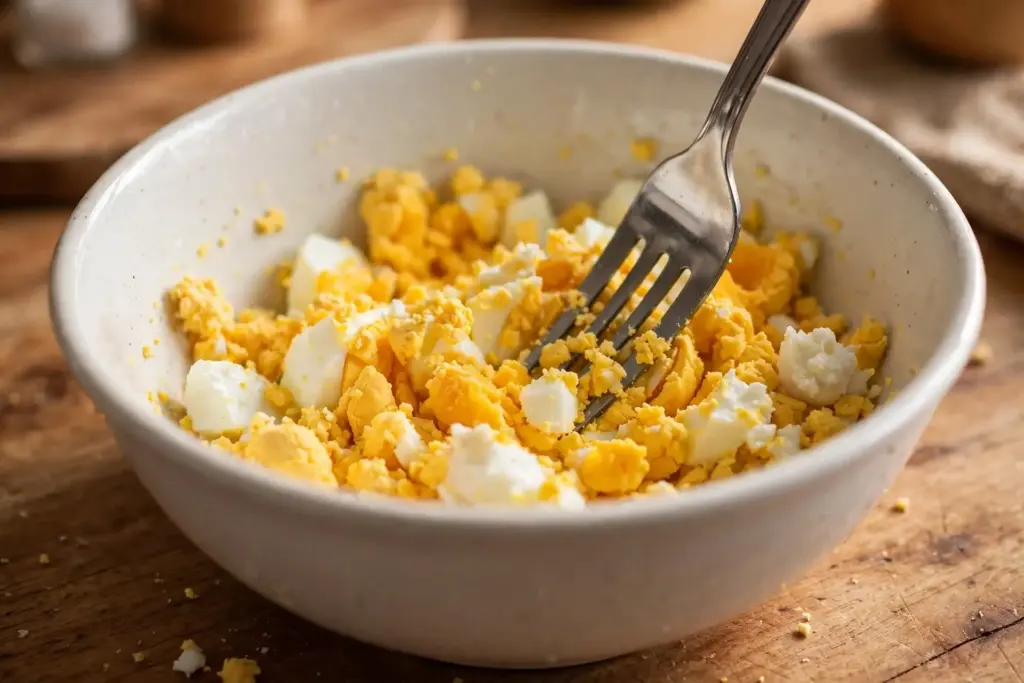
Pat the peeled eggs dry with a paper towel. Roughly chop them on a cutting board, then transfer to your mixing bowl. Use a fork to mash to your preferred texture. Press lightly and leave visible pieces for a chunky salad, or mash more firmly until the yolk is fully incorporated for something smoother.
Chef’s Note: This is entirely a preference call. Some people want a chunky, rustic egg salad. Others prefer something spreadable. Try it both ways once and you’ll quickly figure out which one you like better.
Step 4: Mix the Dressing
In a small bowl, stir together the mayonnaise, Dijon mustard, and lemon juice until smooth and fully combined. Mixing the dressing separately before adding it to the eggs gives you a more even coating throughout the salad without over-working the eggs.
Step 5: Combine Everything
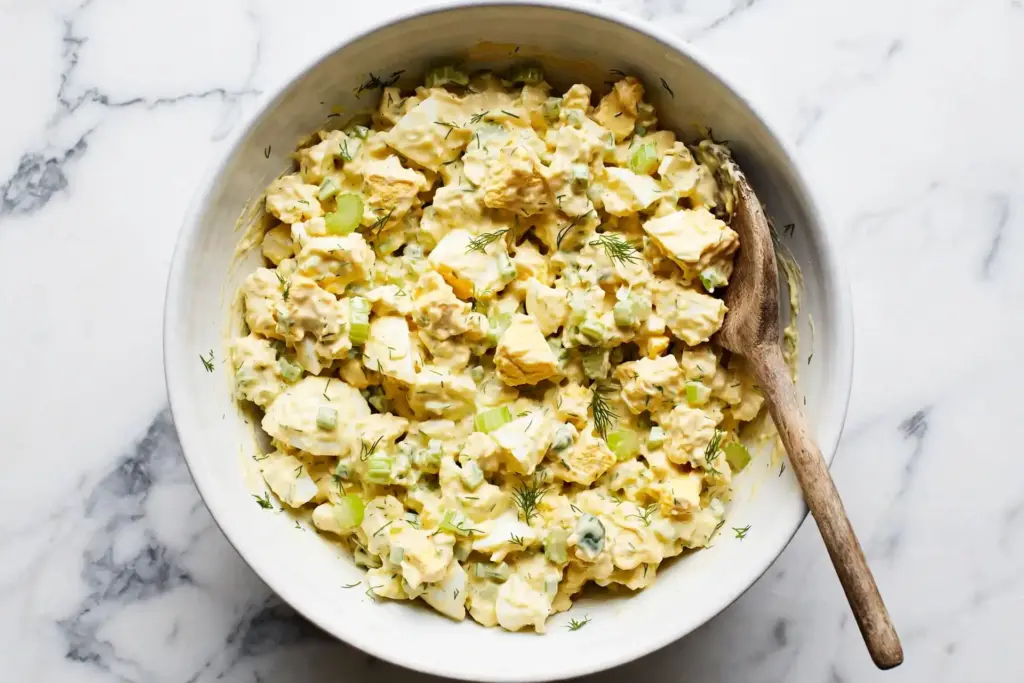
Pour the dressing over the mashed eggs. Add the celery, red onion, and fresh herbs if using. Fold everything together gently with a fork or spatula until the dressing coats all the pieces. Stop as soon as it looks combined, since over-mixing breaks down the texture.
Chef’s Note: Add the dressing a little at a time if you’re unsure how much you want. It’s easy to add more, but once it’s in, you can’t take it out.
Step 6: Season and Chill
Taste the salad and add salt and black pepper as needed. The flavors will develop and mellow as it sits, so don’t over-season now. Cover and refrigerate for at least 15 to 20 minutes before serving. That resting time makes a noticeable difference. Garnish with a pinch of paprika just before serving.
Common Mistakes & Troubleshooting
| Problem | Likely Cause | Fix |
|---|---|---|
| Gray-green ring around the yolk | Overcooked eggs or slow cooling | Stick to 11-12 minutes and move eggs to ice water immediately after cooking |
| Watery salad after a few hours | Moisture released from celery, or too much lemon juice | Pat celery dry before adding; keep lemon juice to 1 teaspoon |
| Bland flavor | Under-seasoned, not enough acid | Taste and adjust salt; add a small extra squeeze of lemon or a touch more mustard |
| Mushy texture | Over-mashed eggs | Use a fork, not a blender; stop mashing while pieces are still visible |
| Too sharp from onion | Too much raw red onion | Soak diced onion in cold water for 5 minutes before using, or reduce the quantity |
Variations & Substitutions
Spicy egg salad: Stir a teaspoon of sriracha or a few dashes of hot sauce into the mayo before mixing. A tablespoon of finely diced pickled jalapeños adds heat with a vinegar tang.
Avocado egg salad: Replace one tablespoon of mayo with half a ripe avocado, mashed smooth. The avocado adds creaminess and a mild richness. This version doesn’t keep as long since avocado oxidizes quickly, so make it the same day you plan to serve it.
Lighter version with Greek yogurt: Swap all or half the mayo for plain full-fat Greek yogurt. The flavor is slightly tangier and less rich. Avoid low-fat yogurt since it makes the salad watery.
Curried egg salad: Add half a teaspoon of mild curry powder to the dressing. A small drizzle of honey (about half a teaspoon) balances the spice well. This version pairs nicely with pita or flatbread.
Dill pickle version: Add a tablespoon of finely chopped dill pickles or dill pickle relish for extra tang and crunch. The brine from the pickle jar can replace the lemon juice.
No onion version: Simply leave the red onion out. The celery provides enough texture, and the mustard and lemon carry enough sharpness to keep the salad from tasting flat.
Serving Suggestions
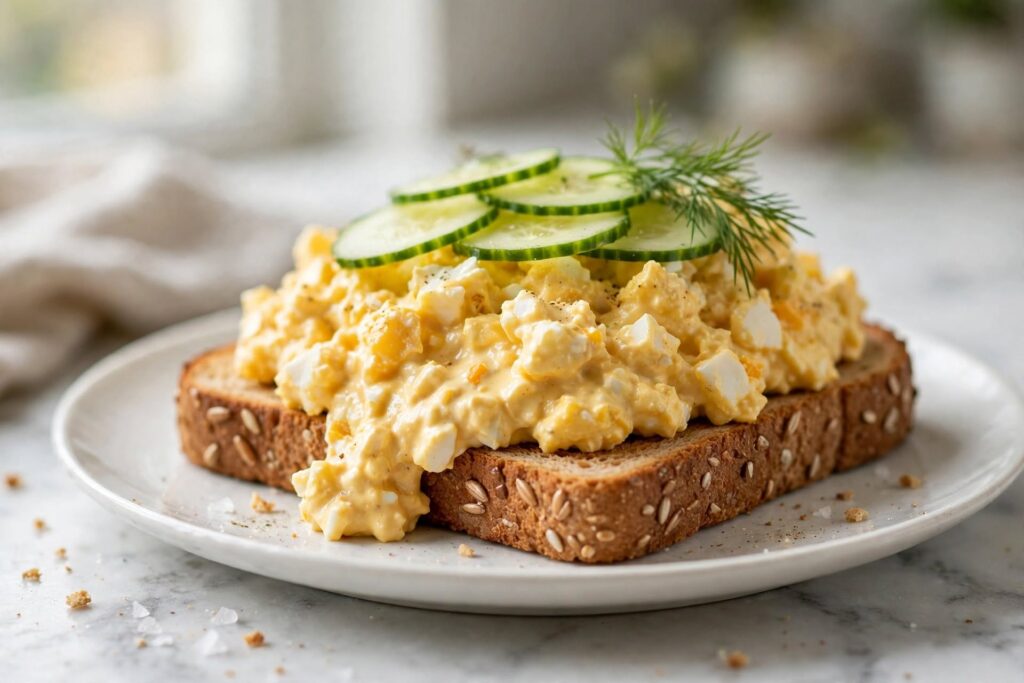
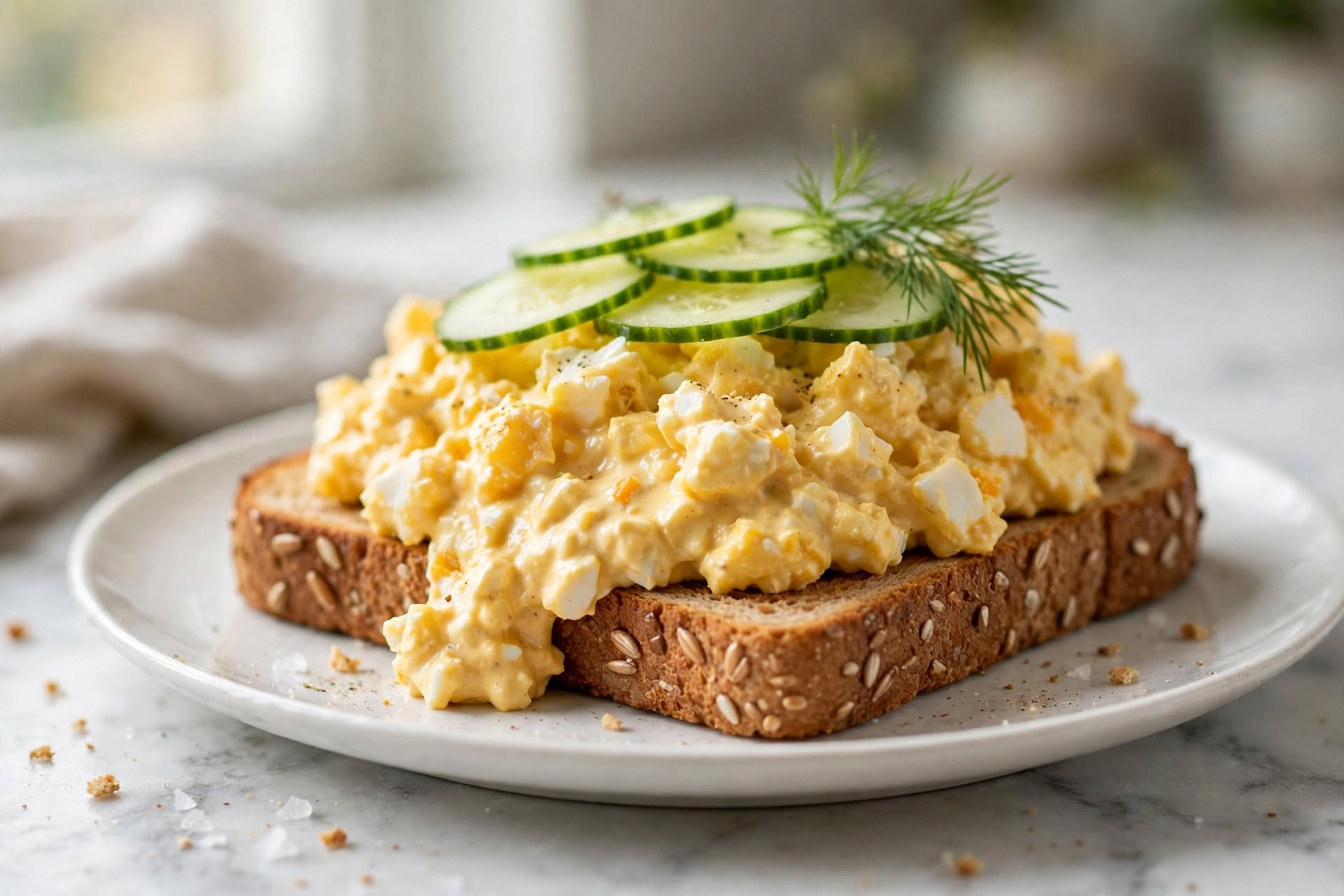
- On toasted bread: White, whole wheat, or sourdough all work. Toasting keeps the bread from going soggy once the salad goes on.
- In a croissant: The buttery, flaky texture of a croissant makes a genuinely good match with creamy egg salad. Best eaten right away.
- With crackers: Serve the salad in a bowl alongside a plate of plain crackers as a quick appetizer. Water crackers or buttery crackers both work.
- In lettuce cups: Use large butter lettuce or romaine leaves as wraps for a lighter option. They hold the salad well without breaking.
- Stuffed in avocado halves: Halve an avocado, remove the pit, and fill each half with a generous scoop. The creamy avocado and tangy salad work well together.
- On top of a simple green salad: Spoon it over mixed greens with a few cherry tomatoes and a drizzle of olive oil for a quick, satisfying meal.

Tips for the Best Results
- Use older eggs. Eggs that have been in your fridge for 5 to 7 days peel far more cleanly than very fresh ones. The air pocket inside grows slightly over time, which makes the shell release from the white more easily.
- Don’t skip the ice bath. Moving the eggs to cold water the moment they finish cooking stops the process immediately. Even 2 extra minutes of residual heat can push you from perfectly set to slightly overcooked.
- Season after mixing. The mayo, mustard, and lemon already carry some salt and acid. Taste the finished mixture before adding any extra salt so you don’t overshoot.
- Let it rest. Even 15 minutes in the fridge before serving helps the flavors come together. The celery and onion have time to soften slightly and the dressing settles evenly into the egg.
- Chop the mix-ins small. Large chunks of celery or onion break up the texture in a way that feels unbalanced. Aim for pieces no larger than about 5mm across.
Storage Tips
Refrigerator
Store egg salad in an airtight container in the fridge for up to 3 days. Keep it on a middle or upper shelf rather than in the door, where temperature fluctuates more. Give it a quick stir before serving since the dressing can settle slightly after sitting.
Freezer
Egg salad does not freeze well. The mayo breaks down during freezing and the eggs become rubbery and release water when thawed. If you want to prep ahead, hard-boil the eggs and store them unpeeled in the fridge for up to a week, then mix the salad fresh when you need it.
Serving Cold
Egg salad is meant to be served cold or at room temperature. If the salad has been in the fridge and feels too firm, let it sit at room temperature for 10 minutes before serving. Don’t heat it in a microwave; the eggs turn rubbery and the mayo separates.
Nutrition Information
Approximate values per serving (based on 4 servings, salad only, without bread or crackers):
| Nutrient | Per Serving |
|---|---|
| Calories | 220 |
| Protein | 10g |
| Carbohydrates | 2g |
| Fiber | 0g |
| Sugar | 1g |
| Total Fat | 19g |
| Saturated Fat | 4g |
| Cholesterol | 285mg |
| Sodium | 290mg |
| Vitamin C | 1mg |
| Calcium | 55mg |
| Iron | 1.5mg |
| Potassium | 130mg |
Nutrition values are approximate and may vary based on brands and portion sizes.
Why This Recipe Works
Expertise: The key to a good egg salad comes down to two things: how precisely the eggs are cooked and how well the dressing is balanced. Eggs cooked past 12 minutes will develop a gray-green ring around the yolk from the reaction between iron in the yolk and hydrogen sulfide in the white. That ring is harmless, but it signals overcooking and a faint sulfurous flavor. Keeping the cooking time precise and moving the eggs to cold water immediately prevents it every time.
The lemon juice in the dressing isn’t just flavor. Acid balances the fat from the mayo and brightens the whole mixture. Egg salad without any acid tends to taste flat even when it’s otherwise well-seasoned.
Authoritativeness: The recipe calls for 11 to 12 minutes at a steady simmer and an immediate ice bath. These are specific, reliable parameters, not approximate ones. The 5-minute rest in cold water is not optional if you want clean-peeling eggs and no gray ring.
Trustworthiness: A note on personal testing: if you have your own results from testing this recipe (number of batches, specific adjustments), add them here. This placeholder keeps the section honest rather than inventing anecdotes.
Frequently Asked Questions
How far in advance can I make egg salad?
You can make it up to 3 days ahead and store it in an airtight container in the fridge. The flavor actually improves after a few hours since the ingredients have time to meld. If you’re prepping for a gathering, mixing it the morning of and keeping it chilled until you serve is the most reliable approach.
Why does my egg salad get watery after a few hours?
The most common cause is moisture released from the celery or from eggs that weren’t dried after peeling. After boiling and peeling, pat the eggs dry before mashing. For the celery, chop it and blot it lightly on a paper towel before adding. Using more than a teaspoon of lemon juice can also loosen the salad over time.
Can I use Greek yogurt instead of mayonnaise?
Yes. Plain full-fat Greek yogurt is a direct substitute and gives the salad a slightly tangier, lighter flavor. A 50/50 split of mayo and yogurt is a good middle ground if you want some of the creaminess of mayo without using it all. Avoid low-fat yogurt since it makes the mixture watery.
How do I know when my eggs are perfectly hard-boiled?
After 11 to 12 minutes at a steady simmer, the yolks should be fully set, bright yellow, and centered with no dark ring around the edge. Cut one in half to check. The yolk should be a uniform yellow with no translucent or jammy center. If it’s still slightly soft in the middle, add 1 more minute.
Can I freeze egg salad?
Freezing is not recommended. Mayo separates when frozen and the eggs become rubbery and release liquid once thawed. The texture after freezing is noticeably unpleasant. A better option is to hard-boil the eggs and store them unpeeled in the fridge for up to a week, then mix the salad fresh when needed.
How do I avoid the green ring around the yolk?
The ring forms when eggs are overcooked or left in hot water too long after cooking. Hydrogen sulfide in the white reacts with iron in the yolk once the temperature climbs too high. Keeping the cooking time to 11 to 12 minutes and transferring the eggs to ice water immediately after stops the reaction before it starts.
Conclusion
Egg salad is one of those recipes most people have eaten many times but rarely make at home. When it’s done right, creamy and well-seasoned with a little crunch from the celery, it’s genuinely satisfying and far better than anything from a deli container. The two things that matter most are cooking the eggs precisely and seasoning the dressing with enough mustard and lemon to cut through the richness of the mayo.
This egg salad recipe is simple enough to pull together on a weekday morning and good enough to serve at a weekend lunch. Once you have the method down, you’ll find yourself coming back to it regularly.
If you loved this recipe, save it to your easy lunch recipes Pinterest board so you can find it easily later!
Creamy Egg Salad
Ingredients
Method
- Place eggs in a single layer in a medium saucepan. Add enough cold water to cover by one inch. Bring to a boil over medium-high heat, then lower to a steady simmer and cook for 11 to 12 minutes.
- Drain the eggs and submerge in a bowl of ice water for at least 5 minutes. Once cool, tap each egg on a hard surface, roll to crack the shell all over, and peel from the wide end.
- Dry peeled eggs with a paper towel. Chop on a cutting board, transfer to a mixing bowl, and mash with a fork to your preferred texture.
- In a small bowl, whisk together the mayo, mustard, and lemon juice until smooth.
- Pour the dressing over the eggs. Add the celery, red onion, and herbs if using. Fold gently until everything is evenly coated.
- Season with salt and black pepper. Refrigerate for at least 15 minutes before serving. Garnish with paprika if desired.
Notes
- Eggs that have been refrigerated for 5 to 7 days peel far more cleanly than very fresh eggs.
- For a looser, creamier consistency, add an extra tablespoon of mayo.
- Soaking diced red onion in cold water for 5 minutes before adding reduces its sharpness.
- Keeps for up to 3 days in an airtight container in the refrigerator.
Calories: 220, Protein: 10g, Carbohydrates: 2g, Fiber: 0g, Sugar: 1g, Total Fat: 19g, Saturated Fat: 4g, Cholesterol: 285mg, Sodium: 290mg, Vitamin C: 1mg, Calcium: 55mg, Iron: 1.5mg, Potassium: 130mg Nutrition values are approximate and may vary based on brands and portion sizes.