Tuna Salad Recipe: 7 Easy Steps for an Ultimate Creamy Result
Tuna salad is one of those recipes that takes ten minutes and delivers genuinely good results. The best version is creamy, slightly tangy, and full of real texture from celery and onion — nothing like the dry, bland versions from a deli counter or a store-bought tub. This recipe covers all 7 easy steps clearly, so whether you’re making a quick weekday lunch or prepping for the whole week, you’ll know exactly what to do. Once you taste a properly made homemade tuna salad, the pre-made versions will seem pointless.
Tuna salad is a no-cook dish made by combining drained canned tuna with mayonnaise, diced celery, onion, and seasonings. Drain the tuna, fold in your dressing and mix-ins, season to taste, and chill briefly before serving. The whole process takes about 10 minutes and uses ingredients most kitchens already have.
Why You Will Love This Tuna Salad
- The whole thing comes together in 10 minutes with zero cooking, making it one of the most practical lunches you can keep in a weekly rotation. No stove, no oven, just a bowl and a fork.
- The texture is genuinely satisfying — creamy from the mayo, with real crunch from the celery and a mild sharpness from the onion in every bite. It is not a paste.
- This tuna salad holds up well in the fridge for three days, so it is a reliable option for meal prep and works equally well on day one and day three.
- The base recipe is easy to customize. You can go spicy, add pickles for brightness, or swap the mayo for Greek yogurt without losing the creaminess that makes it work.
- It calls for pantry staples most people already have, so there is rarely a reason to make a special trip to the store before making it.
Recipe Snapshot
Servings: 4
Difficulty: Easy
Cuisine: American
Course: Lunch / Main
Prep Time: 10 minutes
Cook Time: 0 minutes
Total Time: 10 minutes
Ingredients You Will Need For Tuna Salad
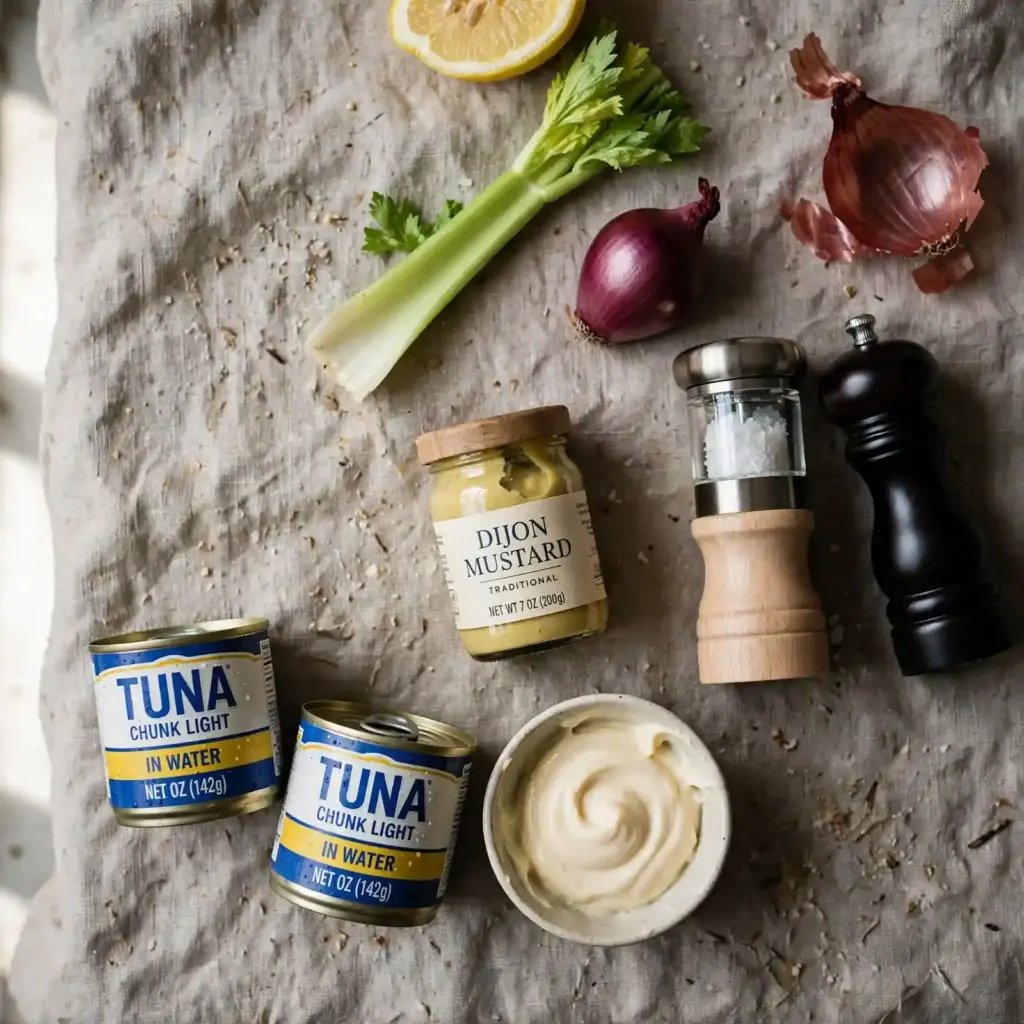
- 2 cans (5 oz each) tuna in water, drained – chunk light works fine here, though albacore gives a firmer, meatier bite
- 1/3 cup mayonnaise – full-fat gives the creamiest result; use halal-certified mayo
- 2 stalks celery, finely diced – adds crunch and freshness that keeps the salad from feeling heavy
- 1/4 red onion, finely diced – brings a mild sharpness that balances the richness of the mayo
- 1 teaspoon Dijon mustard – adds depth and subtle tang without overpowering the tuna
- 1 tablespoon fresh lemon juice – brightens the mixture and prevents the mayo from tasting flat
- Salt and black pepper to taste – season at the end once everything is combined
- 2 tablespoons chopped dill pickles (optional) – adds a briny pop that pairs well with the creamy base
Recipe Timing
Prep Time: 10 minutes
Cook Time: 0 minutes
Total Time: 10 minutes
Easy Substitutions and Halal Alternatives
No mayo? Use plain Greek yogurt instead – the salad stays creamy with a slightly tangier flavor that works well with the lemon. No fresh lemon? A teaspoon of apple cider vinegar gives you a similar acidic brightness without changing the flavor significantly. No celery? Finely diced cucumber adds comparable crunch without altering the taste much. This recipe is already dairy-free as written, but confirm your mayo brand does not carry any dairy-derived additives, since formulations vary.
Allergen Information
This recipe contains eggs (from mayonnaise) and fish. Depending on the mayo brand you use, it may also contain soy or mustard. Always check individual ingredient labels before serving to anyone with known allergies.
How To Make Tuna Salad Step by Step
Step 1: Open both cans of tuna and drain them thoroughly. Press the lid firmly against the tuna while tilting the can over the sink, holding it there for a full 20 to 30 seconds to remove as much liquid as possible. Water left in the can will dilute the dressing and make the finished salad watery, so this step is worth doing carefully.
Step 2: Transfer the drained tuna to a medium mixing bowl and break it apart with a fork. You want it flaked into small, even pieces with some texture still present rather than mashed into a smooth paste. This is what gives the finished salad its satisfying, chunky feel, so stop breaking it down once you lose the larger flakes.
Step 3: Add the diced celery and red onion to the bowl with the tuna and stir briefly to distribute both evenly through the fish. If raw onion is a concern for someone you’re serving, soak the diced pieces in cold water for five minutes before adding them, which takes the edge off without removing the flavor entirely.
You have done the foundational work here. Getting the tuna properly drained and the vegetables cut small enough to blend into every bite is what separates a tuna salad people ask for again from one they forget after one sandwich.
Step 4: In a small separate bowl, whisk together the mayonnaise, Dijon mustard, and lemon juice until smooth before adding it to the tuna. Mixing the dressing separately gives you full control over the quantity and ensures it coats everything evenly rather than landing in one spot.
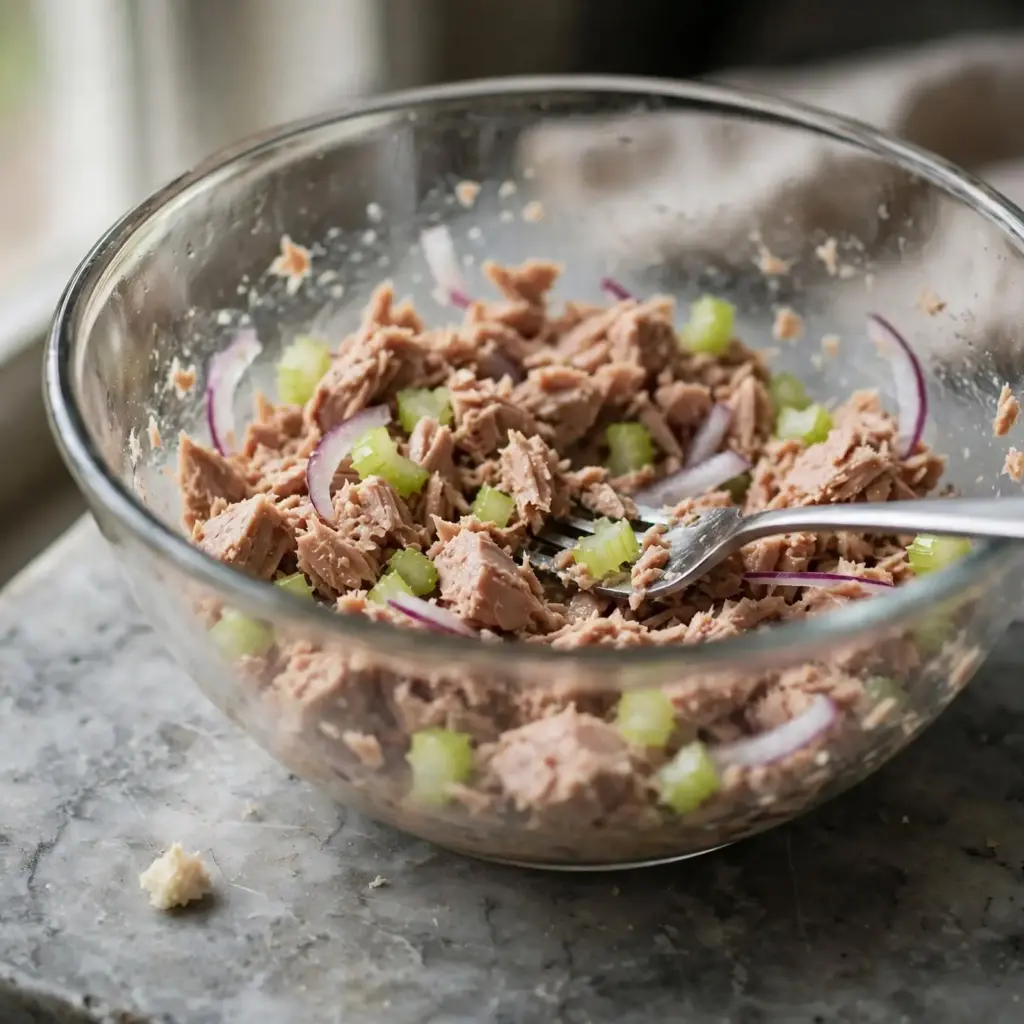
Step 5: Pour the dressing over the tuna and vegetables, then fold everything together gently using a spatula or large spoon. Use light folding motions rather than aggressive stirring, which keeps the tuna flakes intact and gives the finished salad its chunky texture. Stop folding as soon as the mayo has coated every piece.
Right here is where the whole thing comes together. If the mixture looks slightly thick, a small extra squeeze of lemon loosens it perfectly without changing the flavor.
Step 6: Taste the mixture and season with salt and black pepper. If it feels flat, add a little extra mustard or a few more drops of lemon. Season after combining rather than before, because the canned tuna carries its own salt and the final balance can shift once the dressing goes in.
Step 7: Cover the bowl and refrigerate for at least 15 minutes before serving. Chilling gives the flavors time to meld and the dressing time to fully absorb into the tuna. If you need to serve it immediately, the salad is still good, but a short rest makes a noticeable difference in flavor.
Pro Tips While Making Tuna Salad
If your tuna salad turns out watery after sitting in the fridge, the most common cause is under-drained tuna; press the lid harder next time and blot the tuna briefly on a paper towel before mixing, which keeps the texture consistent from start to finish. If the flavor tastes flat even after seasoning, a pinch of garlic powder or a few drops of hot sauce usually fixes it without changing the character of the dish. When making a larger batch, fold the dressing in a little at a time rather than all at once, which lets you dial in the right consistency before the salad is overdressed.
Best Tips For Perfect Tuna Salad Every Time
Draining the tuna well is the single most important prep step in this recipe. Press the lid of the can down hard and hold it over the sink for at least 20 seconds. Some cooks place the drained tuna on a clean paper towel for a minute before mixing, which eliminates any remaining moisture and keeps the salad from going watery later.
The most common beginner mistake is adding too much mayo at once. Start with slightly less than you think you need, fold it in, then taste and assess. You can always add more, but once the salad is overdressed the only fix is adding more tuna to bring it back into balance.
To keep tuna salad fresh and ready for a crowd, store it in an airtight container with a layer of plastic wrap pressed directly onto the surface of the salad before closing the lid. This limits air contact and keeps the texture consistent for the full three days.
Tuna salad should not be reheated. It is a cold dish by design, and heat changes the texture of both the mayo and the tuna in ways that do not improve either. Serve it straight from the fridge, or leave it on the counter for five minutes if it is very cold.
Tuna salad made with mayonnaise does not freeze well. Mayo is an emulsion, and freezing destroys the structure, leaving a broken, oily texture when thawed that stirring will not fix. Make it in small batches that you can finish within three days.
Scaling up or down is straightforward since all quantities are proportional. For a single serving, use one can of tuna and roughly half the dressing ingredients. For a large batch, double everything but add seasoning conservatively and adjust at the end after tasting.
Common Mistakes and Troubleshooting
Under-draining the tuna is the most frequent problem, and it shows up as a loose, watery salad that soaks through bread within minutes of being assembled. Press the can lid down firmly, tilt it, and if moisture is still a problem, blot the drained tuna on a paper towel before it goes in the bowl.
Adding the dressing before tasting the tuna and vegetables on their own leads to over-salting, since canned tuna already carries a good amount of sodium from the packing liquid. Season at the end once the dressing is in and you can judge the full flavor accurately.
Over-mixing turns the tuna from flaky to pasty, which changes both the texture and the eating experience significantly. Use a fork or spatula and fold gently, stopping as soon as the dressing is evenly distributed throughout the bowl.
Cutting the celery and onion into pieces that are too large means you end up with large bites of raw vegetable that overwhelm the tuna rather than complement it. Dice both small so they blend into every forkful rather than standing out as separate ingredients.
Delicious Variations of Tuna Salad To Try
For a spicy version, stir in a teaspoon of sriracha and half a teaspoon of smoked paprika along with the dressing. The heat cuts through the richness of the mayo and gives the whole bowl a noticeably different character without changing the method.
A mild, kid-friendly version works well with sweet relish in place of the raw onion, plus a small handful of shredded cheddar stirred in at the end. The sweetness of the relish balances the savory tuna in a way most younger eaters take to easily.
For a dairy-free and lighter option, replace the mayo entirely with mashed ripe avocado and a squeeze of lime. The result is a creamier, greener bowl with fresh flavor that works especially well over lettuce or in a wrap.
Around late summer when fresh herbs are plentiful, stir in a tablespoon each of fresh dill and chives along with a pinch of lemon zest. The herb version feels closer to a cafe-style salad and pairs well with toasted sourdough.
For a restaurant-style upgrade, add a teaspoon of capers and a small handful of finely chopped sun-dried tomatoes to the base recipe. These two additions bring a salty, tangy depth that elevates the salad from a weekday staple to something worth plating properly.
Serving Suggestions
Tuna salad works best served cold, piled generously into a sandwich with thick slices of whole grain bread, sliced tomato, and a few leaves of romaine for crunch. For a lighter meal, spoon it over crisp lettuce with sliced cucumber and a few cherry tomatoes. It also works well as a dip served alongside crackers or sliced vegetables for a midday snack. For a nicer presentation, serve it in a halved avocado and finish with a pinch of black pepper and a few capers on top.
Storage, Reheating and Freezing
Store tuna salad in an airtight container in the refrigerator for up to three days. Press a piece of plastic wrap directly onto the surface of the salad before sealing the lid to prevent the top layer from drying out or discoloring. Give it a brief stir before serving if any liquid has settled to the bottom.
This dish does not need reheating and should not be warmed. Mayonnaise breaks down under heat, and tuna becomes rubbery when warmed, so serve it cold straight from the fridge. If it has been in the refrigerator for a long time and feels very cold, five minutes on the counter is enough.
Tuna salad made with mayonnaise should not be frozen. Mayo is an emulsion, and freezing destroys that structure, leaving a broken, oily mess when thawed that cannot be recovered. If you want a tuna dish that freezes better, a baked tuna pasta is a more suitable option.
Frequently Asked Questions About Tuna Salad
Can I Make Tuna Salad Ahead of Time?
Yes, and it actually benefits from a rest. Making tuna salad a few hours before serving gives the flavors time to meld together and the dressing time to fully absorb into the tuna and vegetables. Store it covered in the fridge and stir briefly before serving. It stays fresh and flavorful for up to three days, making it one of the better meal prep options for a busy week. Your tuna salad will come out even more cohesive once it has had time to chill properly.
How Do I Make Tuna Salad Without Mayo?
Plain Greek yogurt is the most reliable substitute, giving roughly the same creaminess with more protein and a slightly tangier flavor. Mashed avocado is another option that works well when you plan to serve the salad over greens rather than in a sandwich. Use the same quantity as the mayo and add a little extra lemon juice to sharpen the flavor. Either swap produces a tuna salad that works in its own right rather than feeling like a compromise.
Can I Freeze Tuna Salad?
Freezing a mayo-based tuna salad is not recommended. Mayo separates during freezing and thaws into a greasy, broken texture that stirring will not fix. If you need to plan further ahead, store unopened cans of tuna in the pantry and mix a fresh batch when needed. A fresh tuna salad recipe takes only 10 minutes, so the better approach is to make it in small batches and keep it refrigerated for up to three days. Your tuna salad will stay at its best through that full window without any freezing needed.
How Long Does Tuna Salad Last in the Fridge?
Properly stored in a sealed container, tuna salad lasts up to three days in the refrigerator. After that the texture softens and the flavor becomes noticeably sharper. Always use a clean spoon when serving from the container to avoid introducing bacteria that speed up spoilage. If you notice an unusual smell or the mayo has separated significantly, discard it and start fresh. Sticking to these basic storage practices keeps your tuna salad safe and good for the full three days.
Why Is My Tuna Salad Turning Out Watery?
Insufficient draining is almost always the cause. When water from the canned tuna mixes into the mayo, it breaks the emulsion over time and the salad turns loose and wet. Press the can lid firmly against the fish and hold it over the sink for at least 20 seconds before transferring to the bowl. Blotting the tuna with a paper towel adds another layer of protection. If you’ve added cucumber as a mix-in, that can also release water over time, so cut it small and add it right before serving if watery texture has been a recurring issue.
Can I Make This Tuna Salad Gluten-Free or Dairy-Free?
This tuna salad recipe is naturally dairy-free as written since it contains no milk, cream, or cheese. For a gluten-free version, the salad itself needs no changes, but check the labels on your canned tuna and mayonnaise to confirm neither contains wheat-derived additives, as a small number of brands include them. Serve over lettuce, in certified gluten-free wraps, or with gluten-free crackers instead of regular bread. With those small adjustments, this easy tuna salad works well for both dietary needs.
Conclusion
A well-made tuna salad is creamy, balanced, and ready in the time it takes to toast a slice of bread. This recipe walks through all 7 easy steps with the detail needed to avoid the common problems that make most versions fall flat. Keep a couple of cans of tuna in your pantry and you are always about ten minutes from a genuinely satisfying lunch.
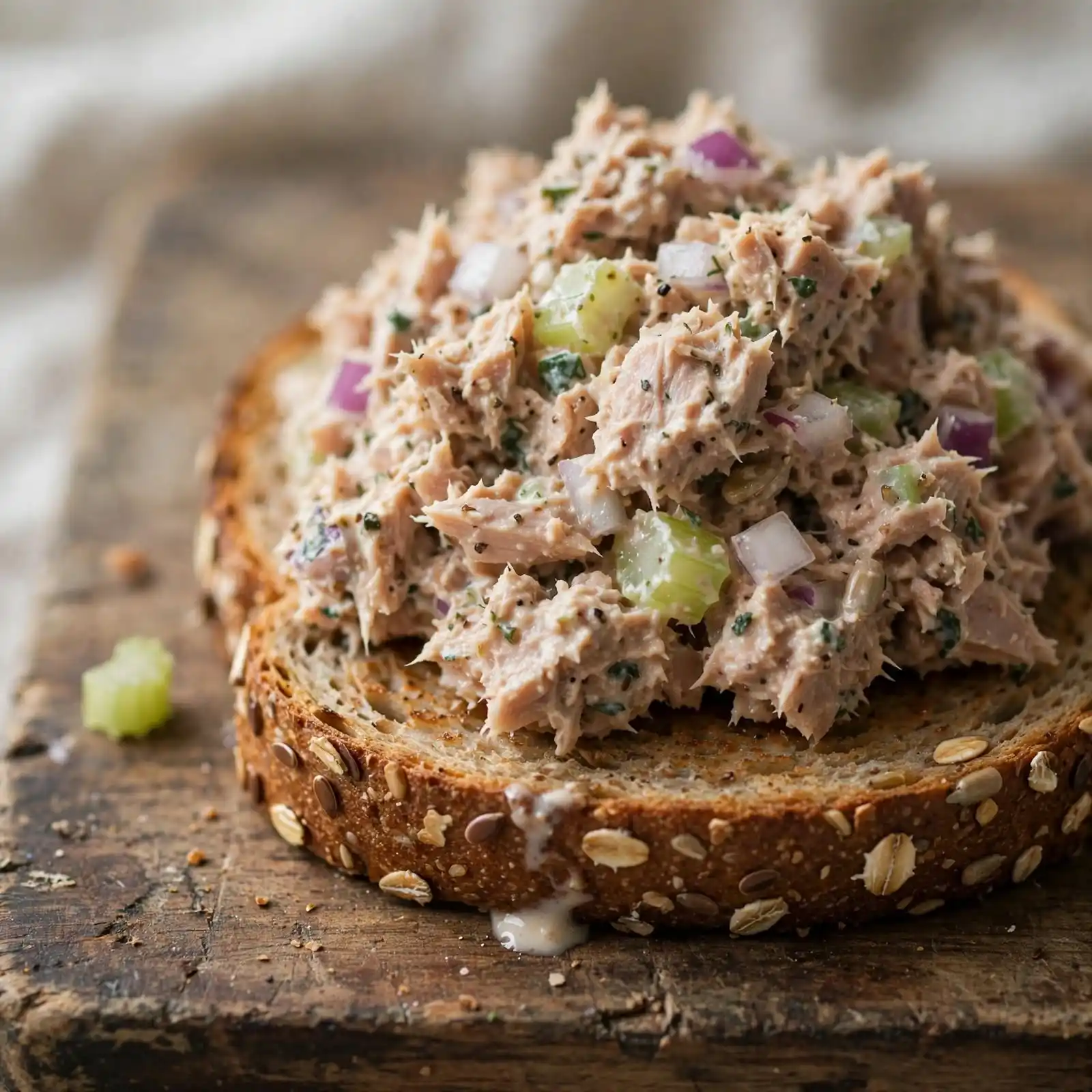
Tuna Salad
Ingredients
Method
- Open cans and drain tuna thoroughly, pressing the lid firmly to remove all liquid.
- Transfer tuna to a bowl and flake with a fork into small, even pieces.
- Add diced celery and red onion and stir to distribute evenly.
- In a separate small bowl, whisk together mayo, Dijon mustard, and lemon juice.
- Pour dressing over tuna and fold gently until every piece is coated.
- Season with salt and pepper; adjust lemon or mustard to taste.
- Cover and refrigerate at least 15 minutes before serving.
Notes
For a fully halal version, use halal-certified mayo and confirm your canned tuna brand carries no non-halal additives.
Serve on whole grain bread, over lettuce, or with crackers. Nutrition Per Serving (Estimate):
Calories: 220 | Protein: 20g | Fat: 13g | Carbs: 3g | Fiber: 0.5g | Sodium: 420mg
Nutrition values are estimates only and may vary based on specific ingredients used.