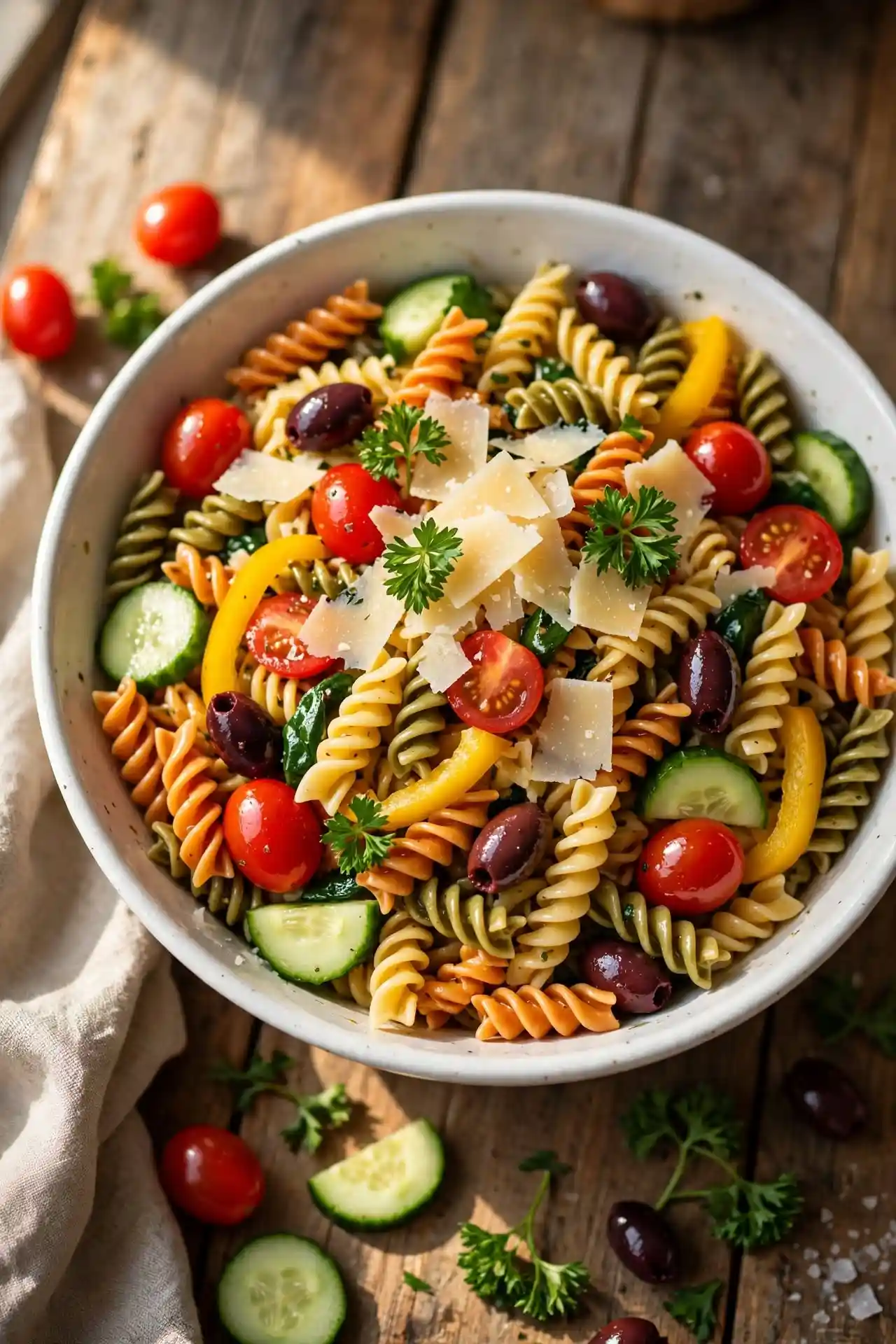
Zesty Italian Pasta Salad — Bold, Make-Ahead and Built for a Crowd
There’s a moment at every summer gathering when someone asks what they should bring, and the answer is almost always this. Italian pasta salad shows up cold, holds for hours without wilting, and leaves the bowl empty before the main course is finished. The dressing soaks into every twist of rotini overnight, the vegetables stay crisp, and the whole thing genuinely gets better the longer it sits.
This version skips the watery, underseasoned versions you’ve probably encountered at a deli counter. It uses a punchy homemade Italian dressing, a full spread of fresh vegetables, halal beef salami, and enough Parmesan to actually taste it in every bite. The kind of pasta salad people ask you for the recipe of on the way out the door.
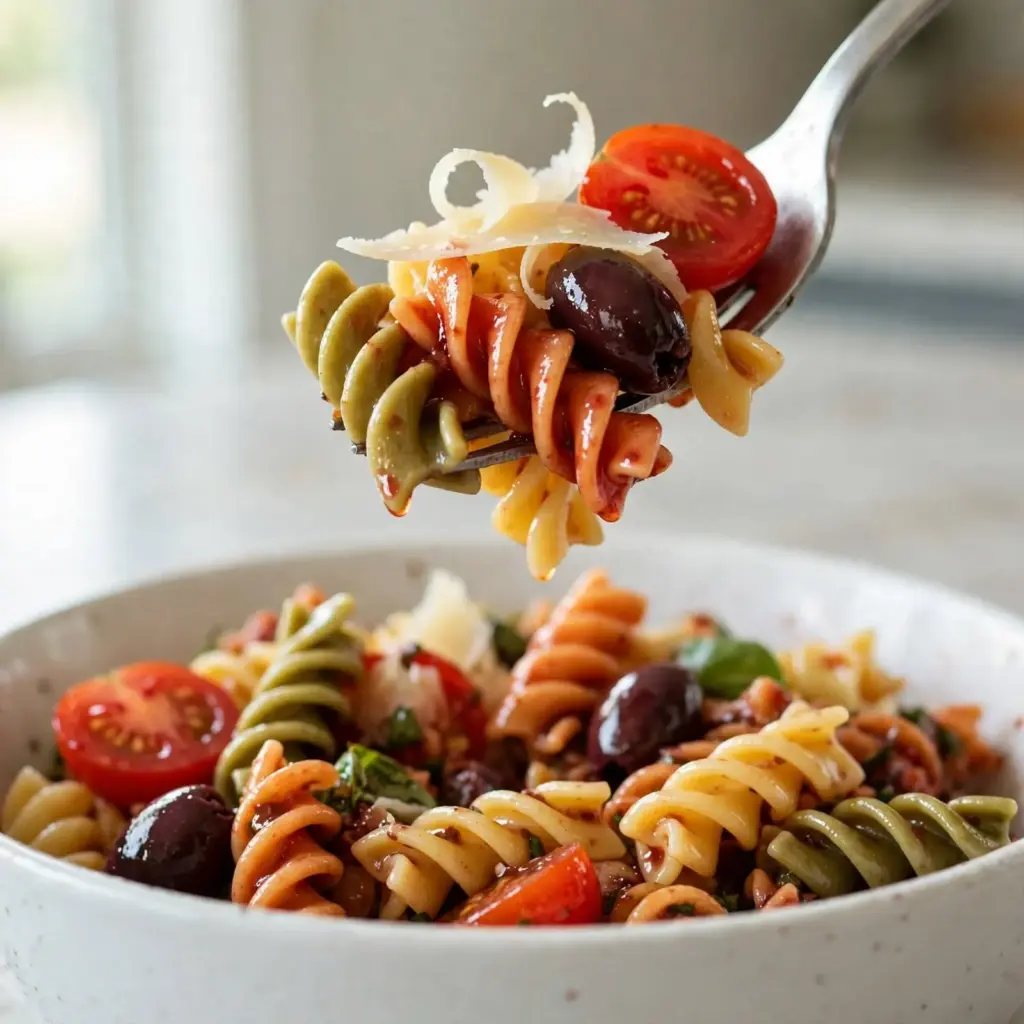
Why You’ll Love This Italian Pasta Salad
- Genuinely make-ahead friendly. Unlike most salads that get soggy overnight, this one is built to rest. The flavors knit together as it chills, and it tastes noticeably better after 4 hours than after 1.
- One bowl, no reheating. Everything goes into a single mixing bowl. No timing pressure, no last-minute warming, no watching the stove.
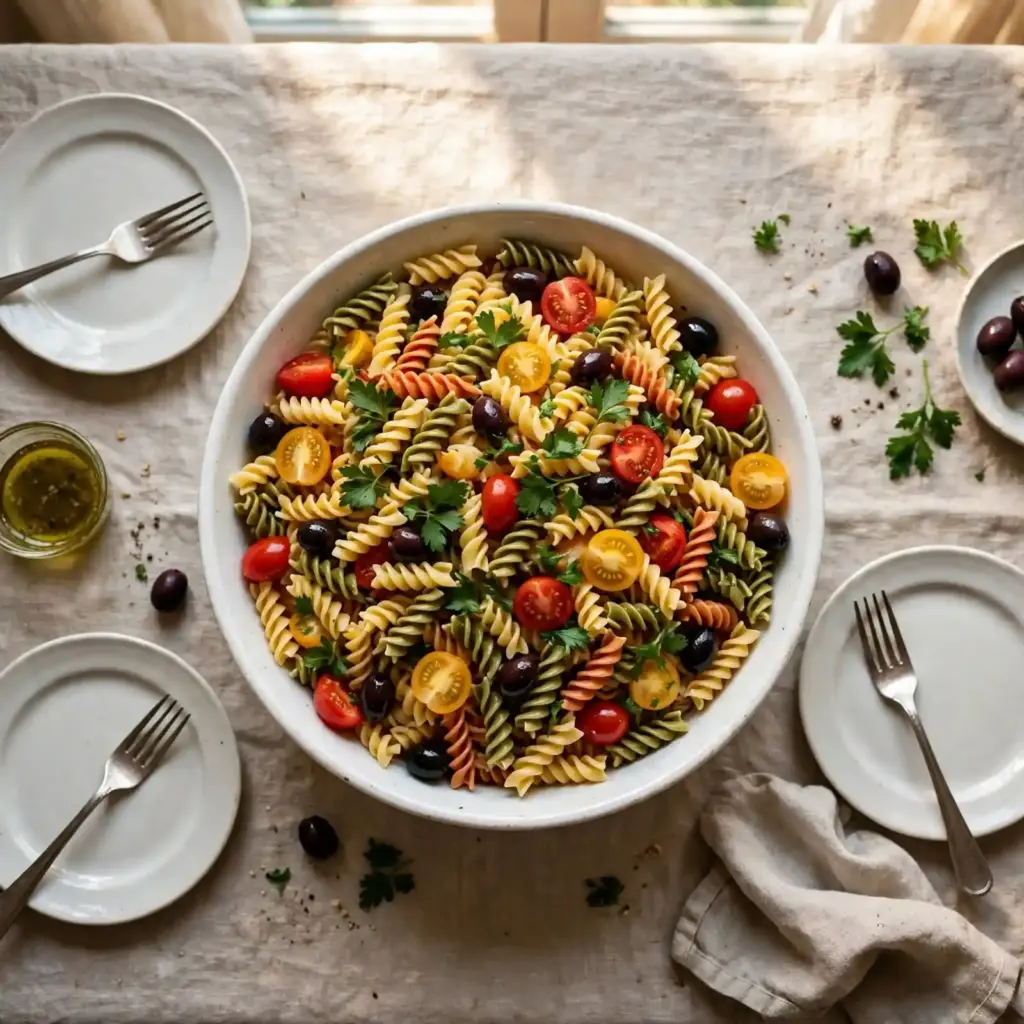
- Scales without breaking. Doubling the recipe works exactly the same way. The dressing ratio scales proportionally, and the method doesn’t change whether you’re feeding 8 or 24.
- Holds at room temperature. Most of the ingredients are sturdy enough to sit out for 2 hours at a party without going limp or unsafe — unlike potato salad or anything mayo-based.
- Customizable core. Swap vegetables, skip the meat, or change the cheese. The pasta-to-dressing ratio holds everything together regardless of what else you add or remove.
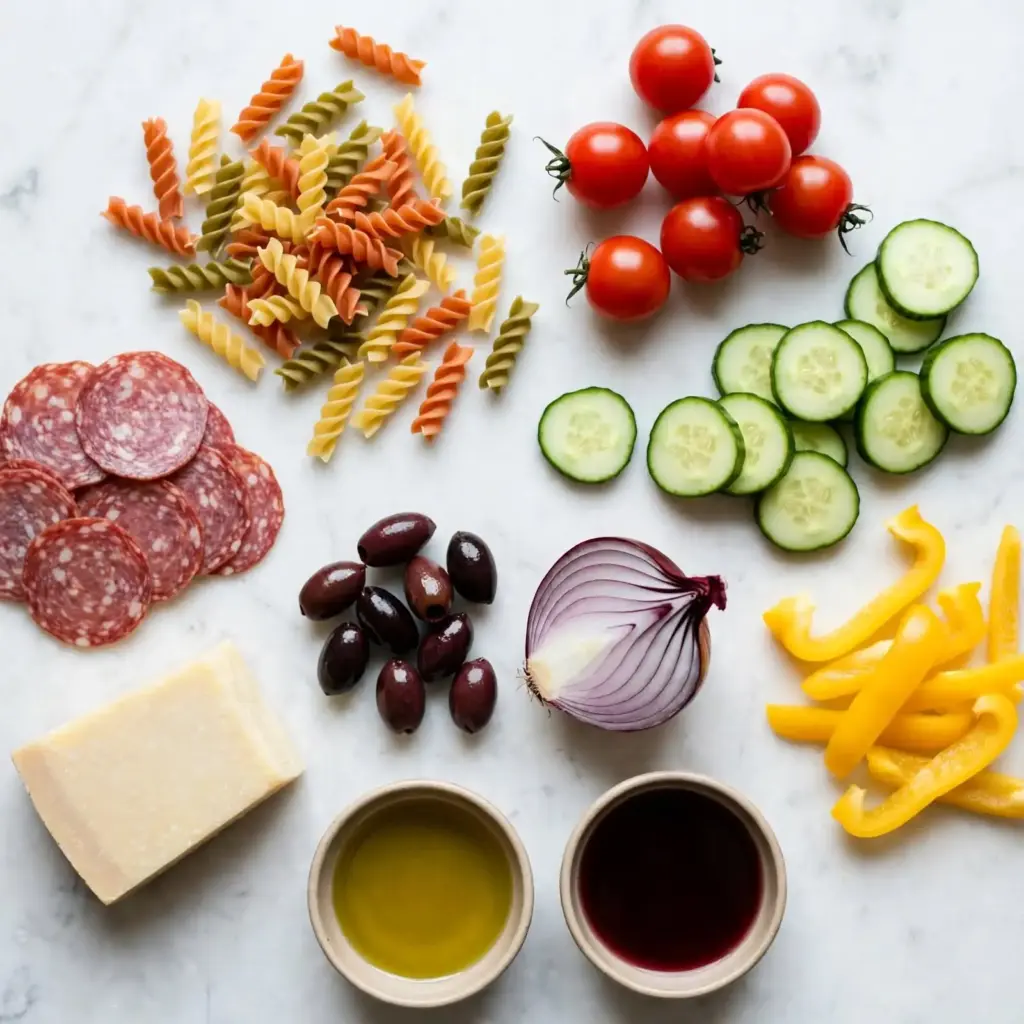
Ingredients You’ll Need
Recipe Timing
| Servings | 8 |
| Difficulty | Easy |
| Course | Side Dish, Salad |
| Cuisine | Italian-American |
| Prep Time | 20 minutes |
| Cook Time | 10 minutes |
| Chill Time | 1 hour (minimum) |
| Total Time | 1 hour 30 minutes |
For the Salad:
- 12 oz (340g) tri-color rotini — The spiral shape traps dressing in every groove better than penne or farfalle. Any short pasta works, but rotini gives the best coverage per bite.
- 1 cup cherry tomatoes, halved — Firm, ripe ones only. Soft or overripe tomatoes collapse and water down the dressing after chilling.
- 1 medium English cucumber, quartered and sliced — Thinner skin, fewer seeds, no need to peel. Regular cucumbers work but peel them first.
- 1/2 cup kalamata olives, sliced — Brininess and depth. Regular canned black olives are milder if you’re feeding pickier eaters.
- 1/2 yellow bell pepper, diced — Color and mild sweetness. Red bell pepper works just as well.
- 1/2 red onion, thinly sliced — For a less sharp onion flavor, soak the sliced onion in cold water for 5 minutes, then drain before adding.
- 100g halal beef salami, quartered — Diced small so every forkful picks up a piece. Leave it out entirely for a vegetarian version.
- 1/2 cup Parmesan, freshly grated or shaved — The powdery pre-grated kind doesn’t hold up the same way. Use a vegetable peeler for thin, curling shavings.
- 1/4 cup fresh flat-leaf parsley, roughly chopped — Adds a clean, bright finish right at the end.
For the Italian Dressing:
- 1/3 cup extra virgin olive oil
- 3 tablespoons red wine vinegar
- 1 teaspoon Dijon mustard — Keeps the dressing emulsified so it doesn’t separate overnight.
- 1 teaspoon dried oregano
- 1/2 teaspoon garlic powder
- 1/2 teaspoon onion powder
- 1/4 teaspoon red pepper flakes — Optional, but adds a good background heat.
- Salt and black pepper to taste
Allergen & Dietary Disclosure
This recipe contains gluten (pasta) and dairy (Parmesan).
- Gluten-free: Use certified gluten-free rotini or penne. Cook it toward the shorter end of its package time since gluten-free pasta softens faster when chilled.
- Dairy-free: Skip the Parmesan or replace it with a dairy-free Parmesan alternative. A light dusting of nutritional yeast adds a similar savory note.
Prepared in a standard home kitchen. Not guaranteed safe for anyone with severe allergies.
Step-by-Step Directions
Step 1: Cook the Pasta
Bring a large pot of well-salted water to a full rolling boil. Cook the rotini 1 minute less than the package’s shortest recommended time. You want it firmly al dente because it will continue softening slightly as it absorbs dressing in the fridge. Drain it and rinse immediately under cold running water until it feels cool to the touch all the way through. Shake out as much water as you can.
Chef’s Note: Rinsing hot pasta breaks the standard rule, but for cold pasta salad it’s the right move. It stops cooking immediately, cools the pasta fast, and washes off surface starch that would otherwise turn the dressing gluey after a night in the fridge.
Step 2: Make the Dressing
Combine the olive oil, red wine vinegar, Dijon mustard, oregano, garlic powder, onion powder, and red pepper flakes in a small jar or bowl. Whisk or shake vigorously until fully combined into a cohesive dressing. Taste a small amount on a piece of cooked pasta. It should taste noticeably sharp, almost aggressively seasoned — that intensity softens once the pasta absorbs it.
Step 3: Dress the Pasta While Still Slightly Damp
Transfer the drained pasta to a large mixing bowl. Pour two-thirds of the prepared dressing over it while it’s still cool but not fully dry. Toss thoroughly so every piece is coated. The residual surface moisture from the pasta helps the dressing absorb into the pasta rather than pool at the bottom of the bowl.
Chef’s Note: The two-stage dressing approach is the difference between pasta salad that tastes seasoned all the way through and one where the dressing is sitting at the bottom. Reserve the remaining third to add right before serving.
Step 4: Add the Vegetables and Meat
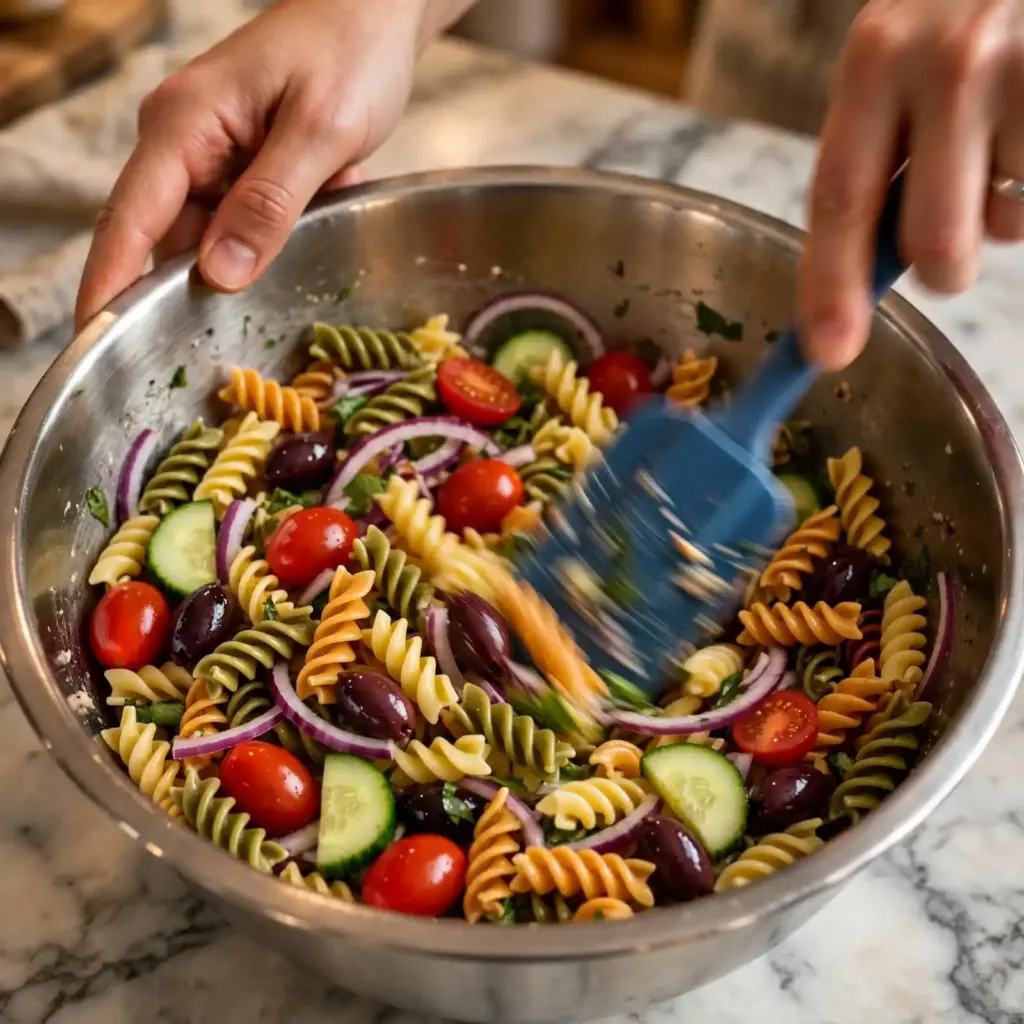
Add the cherry tomatoes, cucumber, olives, bell pepper, red onion, and beef salami to the dressed pasta. Fold gently with a rubber spatula — it’s gentler on the tomatoes than tongs and keeps everything from breaking apart.
Step 5: Chill and Let It Rest
Cover the bowl tightly and refrigerate for at least 1 hour. If you have the time, 4 hours or overnight is significantly better. The pasta absorbs the dressing, the onion mellows, and the whole salad settles into something more cohesive than a freshly tossed bowl can offer.
Step 6: Finish and Serve
Pull the salad from the fridge about 15 minutes before serving. Add the remaining dressing, the Parmesan, and the fresh parsley. Toss gently, then taste carefully. Cold temperatures suppress seasoning, so this salad almost always needs an extra pinch of salt, a few extra grinds of pepper, or a small splash more red wine vinegar at this stage before it’s ready.
Chef’s Note: This final taste and adjust step is not optional. A pasta salad that tasted well-seasoned yesterday will taste muted straight from the fridge. Fixing it takes 30 seconds and completely changes the result.
Common Mistakes & Troubleshooting
| Problem | Cause | Solution |
| Pasta salad dry after chilling | All the dressing was added upfront | Reserve 1/3 of the dressing; always add it right before serving |
| Pasta turned mushy | Overcooked, or not rinsed fast enough | Cook 1 minute under package time; rinse immediately with cold water |
| Dressing pooled at the bottom | Pasta was completely dry when dressed | Dress the pasta while slightly damp; toss again after adding vegetables |
| Vegetables watery and limp | High-water vegetables sat too long in the dressing | For best texture, add cucumber and tomatoes within 2 hours of serving |
| Salad tastes flat | Cold dulls seasoning significantly | Re-season with salt, fresh black pepper, and a small splash of red wine vinegar just before serving |
Variations & Substitutions
Spicier version: Add an extra 1/4 teaspoon of red pepper flakes to the dressing and fold in 1/4 cup of sliced pepperoncini peppers with the other vegetables.
Vegetarian: Skip the beef salami. Marinated artichoke hearts and oil-packed sun-dried tomatoes together give the salad a savory, meaty depth the meat would otherwise provide.
Extra protein: Sliced grilled chicken or canned chickpeas fold in cleanly during Step 4. Either adds substance without changing how the dressing works.
Different cheese: Crumbled feta brings a tangier, saltier note than Parmesan. Use about 1/3 cup since feta has a stronger flavor per gram.
Pasta swap: Penne, farfalle, or orecchiette all hold dressing well when cold. Avoid long pasta shapes — spaghetti and linguine tangle when served cold and don’t coat as evenly.
Bottled dressing shortcut: A good-quality Italian dressing (around 1/2 cup) works in place of the homemade version. Taste it on a piece of pasta first — many bottled versions lean sweet, so you may want a splash more red wine vinegar and a pinch of dried oregano.
Serving Suggestions
- Pairs naturally with grilled chicken, burgers, or any barbecue spread that needs a cold, sturdy side dish.
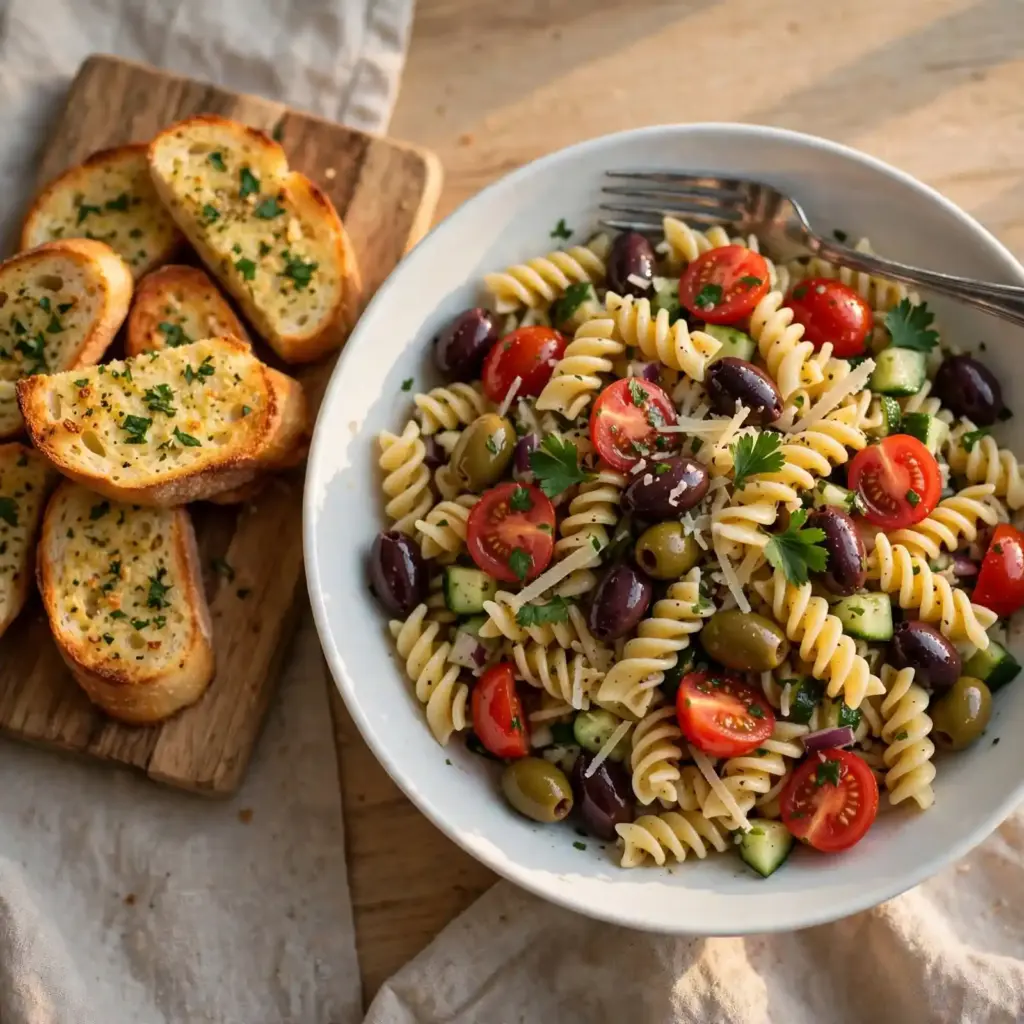
- Serve alongside warm garlic bread or toasted pita — the bread is well-suited for catching extra dressing at the bottom of the bowl.
- Works as a standalone lunch with a handful of chickpeas or a few slices of grilled chicken folded in for extra protein.
- Pairs well with a simple green salad and a cold pitcher of lemonade for an easy backyard lunch.
- Packs cleanly into individual containers for weekday meal prep. It stays fresh and flavorful through day 4 without any reheating required.
Tips for the Best Results
Salt the pasta water generously. It should taste like mild seawater before you add the pasta. Pasta cooked in well-salted water has better baseline flavor that carries through even after a night in the fridge, in a way that adding salt to the finished salad can’t replicate.
Make it the night before. The difference between a 1-hour chill and an overnight rest is real. Overnight, the dressing absorbs fully and the whole salad tastes built together rather than just tossed.
Cut everything to similar sizes. When the tomatoes, cucumber, and bell pepper pieces are roughly the same size as the pasta, every forkful picks up a balanced bite. Large vegetable chunks mean some bites are mostly pasta, others mostly vegetable.
Always taste and re-season right before serving. Cold food needs more seasoning than the same dish at room temperature. A small addition of salt, a fresh grind of pepper, or a splash of vinegar right before the bowl goes out can completely revive a flat-tasting salad.
Add the Parmesan last. Folded in too early, it dissolves into the dressing and disappears. Added just before serving, it stays in distinct, flavorful pieces throughout the salad.
Storage Tips
Refrigerator
Stored in an airtight container, Italian pasta salad keeps well for 4 to 5 days. The vegetables soften slightly after day 2, but the pasta and dressing flavor only improve. When pulling it out to serve again, drizzle a little olive oil over the top and add a small pinch of salt before tossing.
Freezer
Pasta salad doesn’t freeze well. The vegetables become waterlogged after thawing and the pasta turns grainy. Skip the freezer entirely for this one.
Reheating
This salad is designed to be served cold or at room temperature. No reheating required. If it comes straight from the fridge and feels a little stiff, leave it on the counter for 15 minutes before serving.
Nutrition Information
Per serving (based on 8 servings). Values are approximate.
| Nutrient | Per Serving |
| Calories | 320 kcal |
| Protein | 11g |
| Total Carbohydrates | 34g |
| Dietary Fiber | 2g |
| Sugar | 3g |
| Total Fat | 15g |
| Saturated Fat | 4g |
| Cholesterol | 20mg |
| Sodium | 540mg |
| Vitamin C | 18mg |
| Calcium | 90mg |
| Iron | 2mg |
| Potassium | 220mg |
Nutrition values are approximate and may vary based on brands and portion sizes.
Why This Recipe Works
This recipe has been tested across multiple pasta types, dressing ratios, and chilling times. The 2-stage dressing method and the 1-minute undercooking rule are both direct results of testing failures: batches that turned mushy overnight, and batches where all the dressing had been absorbed by the time the salad hit the table.
The specific pairing of red wine vinegar with Dijon mustard isn’t arbitrary. Red wine vinegar has the right level of acidity to cut through olive oil without overwhelming the other flavors, and Dijon acts as a natural emulsifier, keeping the dressing in suspension rather than separating into an oil layer and an acid layer after chilling overnight.
Frequently Asked Questions.
How far in advance can I make Italian pasta salad?
Up to 24 hours ahead works well, and is genuinely the sweet spot for this recipe. Make it the night before, refrigerate it overnight, then add the reserved dressing, Parmesan, and parsley about 15 minutes before serving. Beyond 24 hours, the cucumber and tomatoes start softening noticeably, though the dressing flavor in the pasta only gets better.
Why does my pasta salad taste dry after sitting in the fridge overnight?
The pasta keeps absorbing dressing even after it’s already dressed. The fix is to hold back about one-third of the dressing when you first mix the salad, then add it right before serving. If yours still tastes dry, drizzle a little extra olive oil and a splash of red wine vinegar over the top, toss again, and taste before adding any more.
Can I use store-bought Italian dressing instead of homemade?
Yes, about 1/2 cup of a good-quality bottled Italian dressing works. Taste it on a piece of pasta before you commit to the full amount. Many bottled versions lean sweet, so you may want to add a teaspoon of red wine vinegar and a pinch of dried oregano to give it a sharper edge.
How do I keep the cucumber and tomatoes from making the salad watery?
Use firm cherry tomatoes rather than soft or overripe ones, and pat the cucumber slices dry with a paper towel after cutting. For the crispest result, fold in the tomatoes and cucumber within 2 hours of serving rather than including them in the overnight rest. They’ll stay crunchy instead of releasing liquid into the dressing.
Can I make this pasta salad without meat?
Easily. Marinated artichoke hearts, oil-packed sun-dried tomatoes, or a handful of chickpeas each bring the savory, substantial quality the salami provides. The dressing and Parmesan carry the flavor well on their own regardless, so the salad doesn’t feel incomplete without the meat component.
Is this recipe gluten-free?
Standard pasta salad made with regular pasta is not gluten-free. For a gluten-free version, use certified gluten-free rotini or penne and check the beef salami label as well, since some processed meats contain wheat as a filler. Cook gluten-free pasta on the shorter end of its time range — it goes soft faster than regular pasta when chilled.
Conclusion
Italian pasta salad earns its place in regular rotation because it rewards preparation. Once the dressing ratio and the two-stage method are in your head, it takes about 30 minutes of active work, then takes care of itself in the fridge. It travels well, feeds a crowd without stress, and adjusts cleanly for vegetarian, gluten-free, or dairy-free needs without breaking the recipe.
Whether you’re bringing it to a gathering or packing it for the week, this Italian pasta salad is the kind of dish people ask about on the way out the door.
If you loved this recipe, save it to your Italian recipes or summer salads Pinterest board so you can find it easily later!
Zesty Italian Pasta Salad
Ingredients
Method
- Bring a large pot of well-salted water to a full boil. Cook rotini 1 minute under the package minimum. Drain and rinse under cold water until fully cooled. Shake out excess water.
- Whisk olive oil, red wine vinegar, Dijon mustard, oregano, garlic powder, onion powder, and red pepper flakes in a jar until fully combined. Season with salt and pepper.
- Pour two-thirds of the dressing over the still-damp pasta in a large bowl. Toss until every piece is coated.
- Add cherry tomatoes, cucumber, olives, bell pepper, red onion, and beef salami. Fold gently with a rubber spatula.
- Cover and refrigerate for at least 1 hour, or overnight for best flavor.
- Remove from fridge 15 minutes before serving. Add remaining dressing, Parmesan, and parsley. Taste and adjust salt, pepper, or vinegar as needed before serving.
Notes
- Always reserve 1/3 of the dressing to add right before serving. The pasta absorbs a significant amount as it chills.
- For the crispest vegetables, add cucumber and tomatoes within 2 hours of serving if making very far in advance.
- Gluten-free rotini works well. Cook it toward the shorter end of its time range.
- Keeps in the fridge for 4 to 5 days. Does not freeze well.
Calories: 320 kcal | Protein: 11g | Carbohydrates: 34g | Fiber: 2g | Sugar: 3g | Fat: 15g | Saturated Fat: 4g | Cholesterol: 20mg | Sodium: 540mg | Vitamin C: 18mg | Calcium: 90mg | Iron: 2mg | Potassium: 220mg Nutrition values are approximate and may vary based on brands and portion sizes.